Middle East Tensions Rise as Washington Rebuts Iranian Attack Claim
Tehran, Saturday, 21 November 2026.
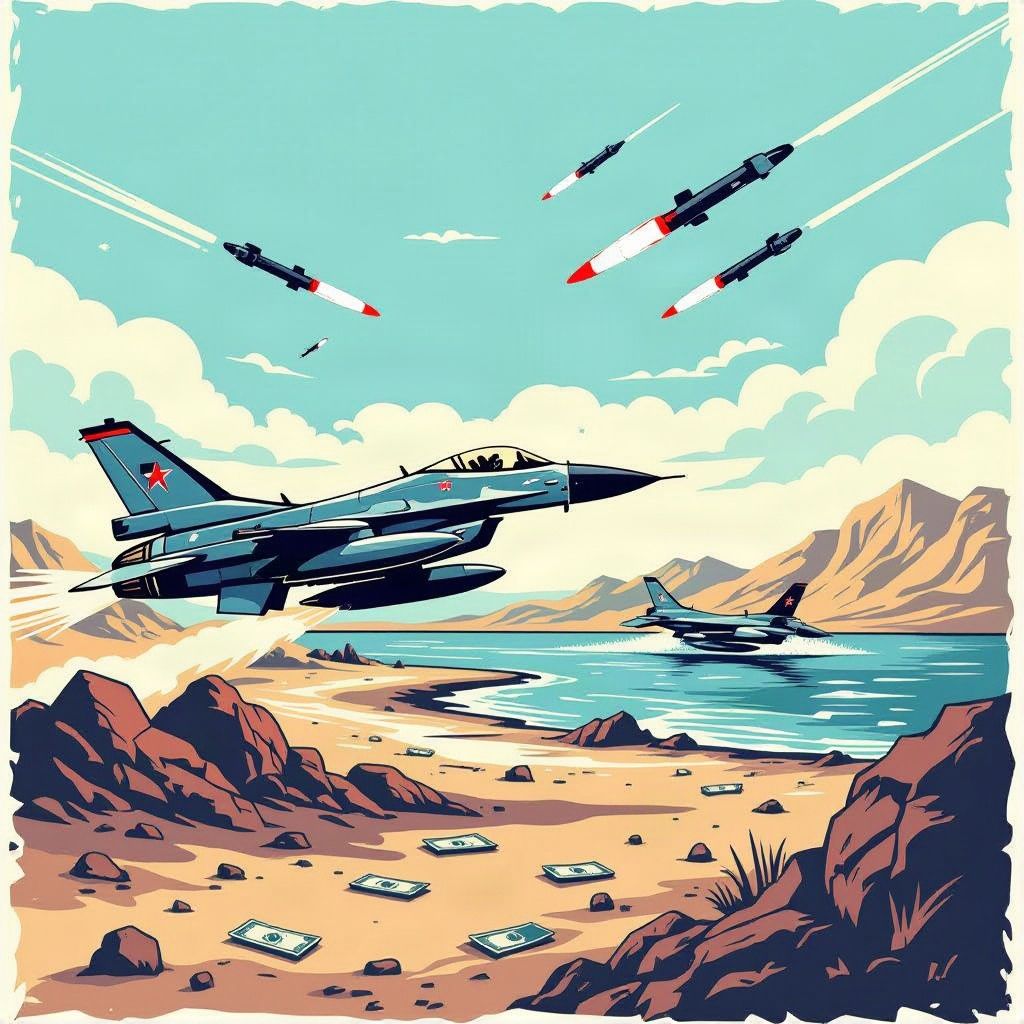
CENTCOM firmly denied Iran’s claims of damaging an American warplane over the Persian Gulf, reassuring markets as Tehran unveiled an underground missile facility amid critical Strait of Hormuz disputes.
Background: Escalating Regional Tensions
The current crisis follows a rapid escalation that began with retaliatory U.S. precision strikes on Qeshm Island, which threatened the Strait of Hormuz—the transit route for approximately 20% of global oil supply [GPT]. These strikes triggered immediate energy market volatility, with crude prices surging by 40% within hours of the operation [https://wsnext.com/d0f44df-Strait-of-Hormuz-energy-markets/]. The latest developments represent a dangerous intensification of hostilities in a region already strained by multiple overlapping conflicts and geopolitical rivalries.
Iran’s Claims and Military Displays
On Friday, November 20, 2026, Iran’s military leadership made two significant claims through state media channels. First, Iranian army officials asserted that air defense systems had struck a U.S. F-16 fighter jet over the Persian Gulf, damaging the aircraft and forcing an emergency landing [2][3][4]. The claim was accompanied by a video purporting to show the incident, which circulated widely on social media platforms [3]. Second, Iranian authorities unveiled what they described as a new underground ‘missile city’ facility, showcasing expanded aerospace capabilities amid escalating tensions [2]. These announcements came as Iranian Foreign Minister Abbas Araghchi reiterated demands for U.S. commitments before considering reopening the Strait of Hormuz, stating that Iran maintains ‘two red lines’ regarding nuclear materials [2].
U.S. Military Rejection and Strategic Reassurance
The Pentagon’s Central Command (CENTCOM) moved swiftly to dismiss Iran’s attack claims, issuing a categorical denial through official statements and social media channels. On Saturday, November 21, 2026, CENTCOM posted on X (formerly Twitter) that ‘Iran did not attack a U.S. F-16 fighter aircraft yesterday — at all,’ adding that ‘all U.S. military fighter jets in the Middle East are safe and accounted for’ [5][6][7]. This direct rebuttal followed similar denials from U.S. military spokespeople who emphasized that no emergency landings had occurred and that all aircraft remained operational [1][4]. The statements came as global markets closely monitored the situation, with energy traders particularly sensitive to any disruption in the Strait of Hormuz, where multiple incidents involving maritime assets have been reported [1][2].
Maritime Incidents Compound Regional Instability
The aerial confrontation claims coincide with a series of concerning maritime incidents in critical shipping lanes. Iranian naval authorities reported that an oil tanker sustained fire damage after hitting a naval mine in a restricted area east of the Strait of Hormuz [1]. Meanwhile, the UK Maritime Trade Operations agency documented two separate incidents involving oil tankers struck by ‘unknown projectiles’ north and east of Oman’s Khasab port [1]. These developments follow a U.S. military operation conducted Thursday night, November 19, which Iranian officials have linked to subsequent maritime incidents [2]. The convergence of aerial and maritime tensions underscores the multifaceted nature of the current crisis, with implications for global energy security and supply chain stability.
Geopolitical Implications and Market Reactions
The dueling narratives from Tehran and Washington have injected fresh uncertainty into an already volatile geopolitical landscape. Iranian officials have framed the claimed F-16 strike as evidence of their expanded deterrence capabilities, with IRGC Aerospace Force commander Majid Mousavi stating that ‘our aerospace capabilities have expanded significantly’ [2]. Conversely, U.S. President Donald Trump has adopted a firm stance, asserting during a November 20 press conference that Iran ‘will never have a nuclear weapon’ and warning against any aggressive actions [2]. The conflicting claims come amid reports of a potential ‘dirty bomb’ development in Iran, which Trump stated the U.S. would not permit [2]. For global commodity markets, the uncertainty has translated into heightened risk premiums, with energy traders factoring in the possibility of disruptions to one-fifth of global oil supply through the Strait of Hormuz [GPT].
Sources
- www.aljazeera.com
- www.ynetnews.com
- www.timesofisrael.com
- www.jpost.com
- x.com
- www.aa.com.tr
- wsnext.com