Illinois Halts Data Center Tax Breaks Over Surging Energy and Water Concerns
Springfield, Saturday, 6 June 2026.
Illinois Governor JB Pritzker is pausing data center tax incentives starting July 1, 2026, to shield residents from a projected $37 billion spike in statewide electricity costs.
The Economic Weight of the Cloud
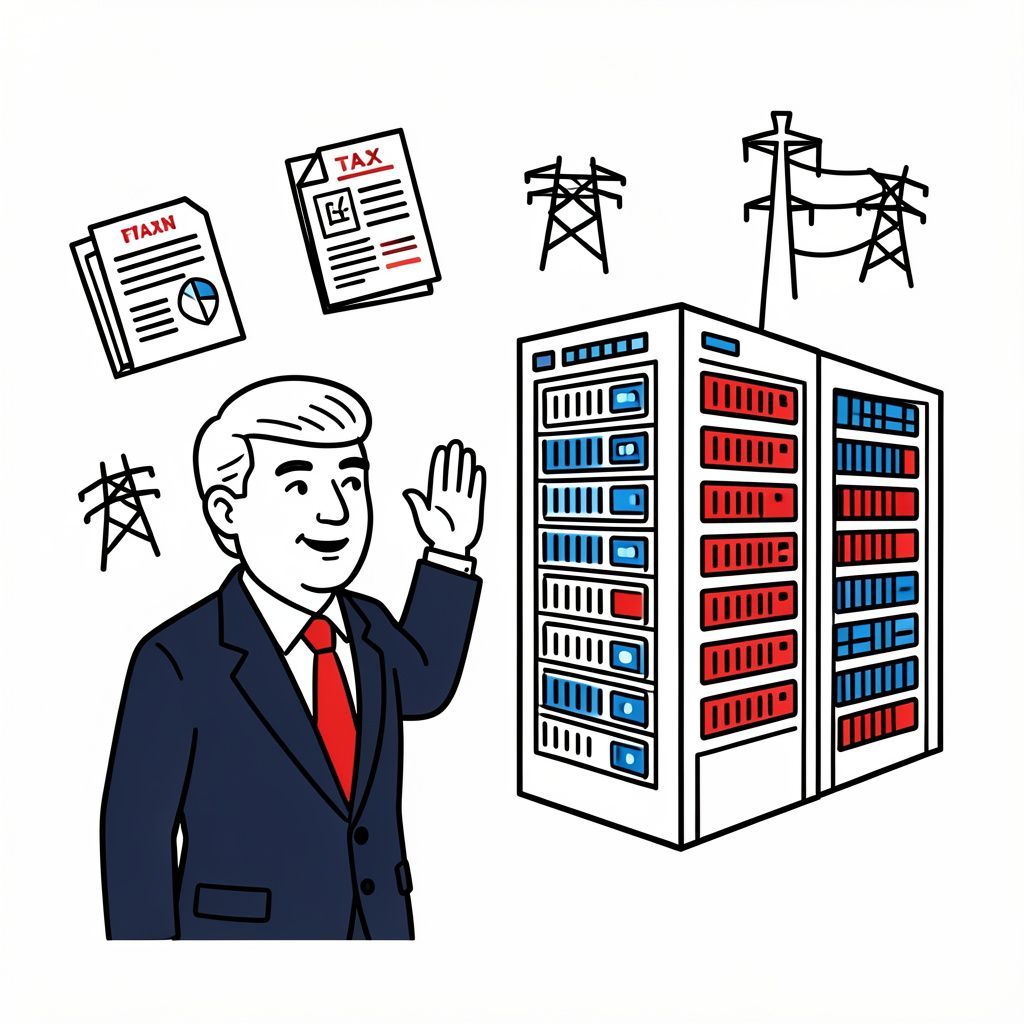
On Friday, June 5, 2026, Democratic [GPT] Governor JB Pritzker directed the Illinois Department of Commerce and Economic Opportunity (DCEO) to officially pause the processing of new tax incentive agreements under the state’s Data Center Investment Program [1][2][6]. This administrative halt, scheduled to take effect on July 1, 2026, marks a significant shift in the state’s economic strategy [1][2]. Between 2020 and 2024, Illinois aggressively courted tech infrastructure, awarding over $983 million in tax incentives to 27 data centers [5]. On average, this translates to roughly 36.407 million in tax benefits per facility [5]. However, existing agreements signed before the July 1 deadline will be honored, ensuring that projects already in motion remain unaffected by the sudden freeze [2].
Environmental Toll and the Push for Sustainability
Beyond electricity, the physical footprint of data centers presents severe environmental and public health challenges [2]. Modern data centers, particularly those powering artificial intelligence, require massive cooling systems. A single facility can consume up to 18,927 cubic meters—equivalent to 5 million gallons—of water every single day [2][6]. Furthermore, the fossil fuels often required to generate the continuous power for these centers contribute heavily to air pollution. State officials project that by 2030, data center power generation could create a $20 billion public health burden nationwide [2][6].
Political Gridlock and Labor Pushback
Pritzker’s unilateral directive on June 5 followed a highly contentious spring legislative session [3]. Earlier in 2026, the governor asked state lawmakers to suspend the incentives for two years to study their impact [1]. This effort materialized as the POWER Act (House Bill 5513), which ultimately failed to pass before the General Assembly adjourned its spring session on June 1, 2026 [3][5]. The legislative roadblock was largely driven by fierce opposition from labor unions concerned about the potential loss of lucrative construction jobs [3]. As Marc Poulos, Executive Director of the International Union of Operating Engineers Local 150, stated regarding the tech infrastructure boom, “Like any other industry, we want to build all these things.” [3].
A Nationwide Blueprint for Tech Infrastructure
The regulatory battle unfolding in Illinois is a microcosm of a broader national tension [3]. Throughout 2026, state legislatures across the United States introduced hundreds of bills attempting to manage the explosive growth of data centers fueled by massive investments in artificial intelligence [3]. Pritzker’s approach seeks to balance technological advancement with community protection by mandating transparency [1][4]. The governor’s framework calls for a strict ban on nondisclosure agreements between data center developers and local governments, requires public notices for permit applications, and mandates community benefit agreements [2][4].
Sources
- www.nbcnews.com
- gov-pritzker-newsroom.prezly.com
- www.politico.com
- abc7chicago.com
- capitolnewsillinois.com
- www.reddit.com