New Jersey Warns Ports to Reject Incoming Russian Fuel
Trenton, Tuesday, 3 November 2026.
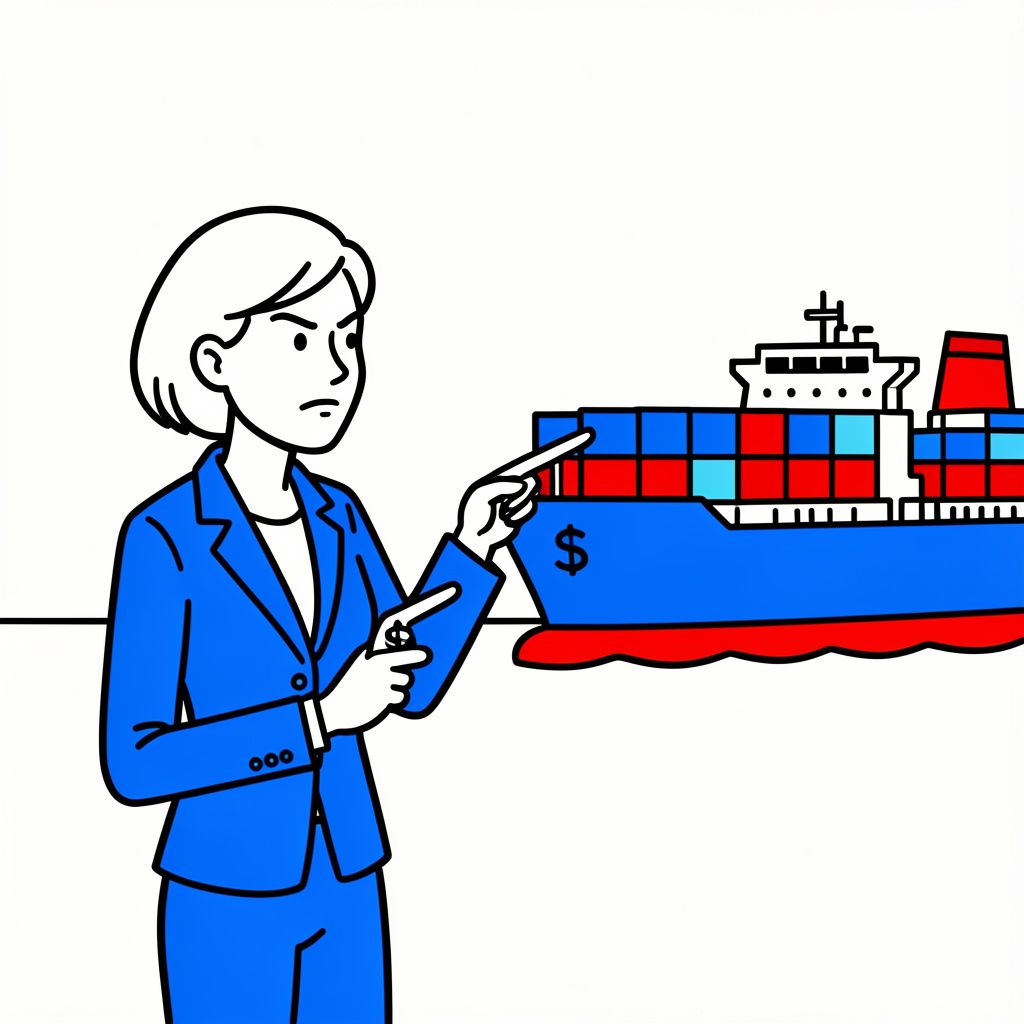
Governor Mikie Sherrill cautioned terminal operators that unloading incoming Russian fuel could trigger severe, multi-million-dollar penalties, asserting federal law supersedes recent White House efforts to bypass energy import sanctions.
A State-Level Crackdown on Russian Energy Imports
On Monday, 2 November 2026, New Jersey Governor Mikie Sherrill, a Democrat, issued formal warnings to 12 port and marine terminal operators across the state, cautioning them that accepting Russian diesel shipments could result in multi-million-dollar penalties under federal law [1][2][3][8][9]. The directive, delivered via letter, underscores a growing rift between state-level enforcement and federal policy, as Sherrill argues that recent White House actions to permit Russian fuel imports conflict with existing sanctions legislation. In her letter, Sherrill emphasized that businesses participating in such imports would face severe civil and criminal penalties, including financial penalties equal to the value of the imported fuel, enforced via a five-year statute of limitations under 19 U.S.C. § 1621 [2][3][8][9].
Federal Policy vs. State Enforcement: The Legal Dispute
The warning letters follow President Donald Trump’s October 2026 decision to lift a ban on Russian diesel imports, a move framed as an effort to lower fuel costs amid rising gasoline and diesel prices after U.S. and Israeli attacks on Iran in late February 2026 [1][3][5]. However, Sherrill contends that the Trump administration’s authorization—issued through the U.S. Treasury Department’s Office of Foreign Assets Control (OFAC) General License No. 135 on 9 October 2026—conflicts with the 2022 Ending Importation of Russian Oil Act (Public L. 117-109), which bans imports of Russian energy products under Chapter 27 of the Harmonized Tariff Schedule [2][3][6][8]. The governor asserts that OFAC’s general license lacks required congressional review and presidential certification of a Russian withdrawal from Ukraine, conditions stipulated under the 2022 law [2][3][6][8].
Potential Consequences and Political Tensions
The standoff highlights broader tensions over U.S. energy policy and its geopolitical implications. Sherrill, a Navy veteran, has framed the issue as a national security concern, arguing that purchasing Russian diesel funds Moscow’s war effort in Ukraine and supports a nation allied with Iran—both of which pose direct threats to U.S. interests [2][3][5][9]. Her warning letters stress that New Jersey will not ‘stand by’ while federal policy enables what she describes as illegal trade, and she has pledged to use every available legal and regulatory tool to prevent shipments from entering the state’s ports [2][3][8][9]. Meanwhile, the White House has defended the policy change, stating that lowering fuel prices for American farmers, truckers, and families remains a top priority, even as it urges both sides in the Russia-Ukraine conflict to halt strikes on refineries [1][5].
Operational Implications for Maritime Businesses
The enforcement directive introduces significant compliance risks for logistics firms, maritime handlers, and energy traders operating within New Jersey’s mid-Atlantic maritime infrastructure. Terminal operators, including major companies like IMTT, Kinder Morgan, and Phillips 66, have yet to report any confirmed receipt of Russian diesel shipments as of 3 November 2026 [3][5][9]. However, a Russian official confirmed that three diesel-carrying tankers were en route to the U.S., and shipping analysts identified the tanker Agioi Fanendes—which departed Russia on 23 October 2026 with nearly 40,000 metric tons of diesel—as a vessel potentially bound for the Port of New York and New Jersey [3][5][6][8]. While the tanker’s destination has since been listed as ‘for orders’ and it is currently in the North Atlantic, its estimated arrival date was originally set for 7 November 2026 [3][5][6][8]. The uncertainty surrounding the tanker’s status underscores the immediate operational challenges facing port authorities [alert! ‘status of Agioi Fanendes as of 3 November 2026 remains unverified’].
Broader Context: Rising Fuel Costs and Geopolitical Fallout
The policy dispute unfolds against a backdrop of soaring fuel prices, with the national average diesel price reaching $6.29 per gallon—a 70≈70% increase since the start of hostilities with Iran [GPT][3]. Proponents of the Trump administration’s decision argue that easing import restrictions could alleviate price pressures, particularly for key industries like agriculture and transportation [1][5]. Critics, including Senator Richard Blumenthal (D-CT), have demanded that shipping companies recall tankers carrying illegal Russian diesel, further escalating the political and operational stakes [1][3][5]. Sherrill’s actions signal a proactive stance by state officials to challenge federal policy in court or through administrative enforcement, with potential long-term implications for maritime compliance and energy trade [2][3][8][9].
Sources
- www.nytimes.com
- www.nj.gov
- www.inquirer.com
- www.bloomberg.com
- x.com
- www.facebook.com
- njbiz.com
- wrnjradio.com