Fuel Shipments from South Korean Ports Reach Russia via Sanctioned Vessels
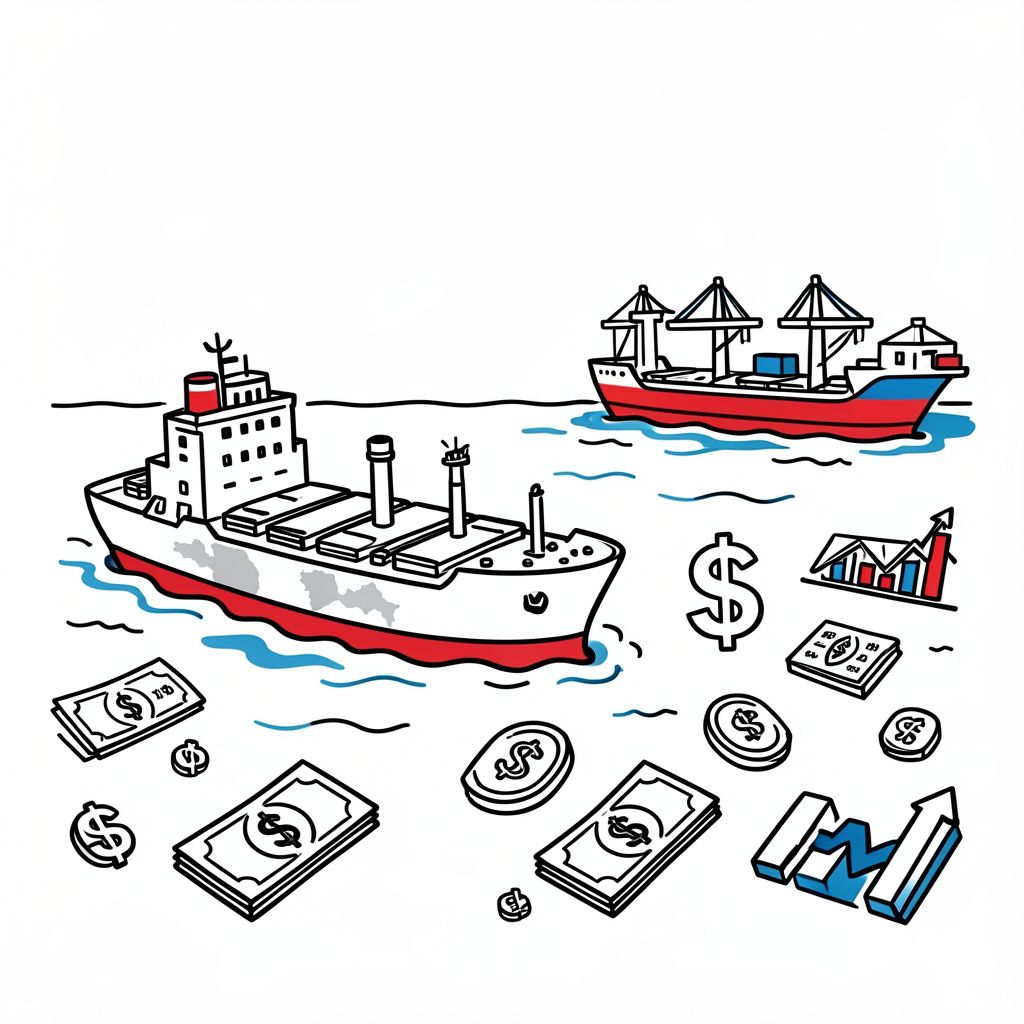
Seoul, Wednesday, 7 October 2026.
Investigative data reveals over 176,000 tonnes of fuel left South Korea for Russia on sanctioned tankers using deceptive destination declarations, offsetting Russian supply shortages caused by Ukrainian refinery strikes.
Fuel Shipments from South Korean Ports Reach Russia via Sanctioned Vessels
Investigative data reveals over 176,000 tonnes of fuel left South Korea for Russia on sanctioned tankers using deceptive destination declarations, offsetting Russian supply shortages caused by Ukrainian refinery strikes [1][2]. Between July and August 2026, seven tankers completed 14 voyages from South Korean ports to Russia’s Far East, with three vessels operating under UK and EU sanctions [2][4]. This trade underscores expanding evasion strategies within global maritime supply chains as Ukrainian strikes continue to impair domestic Russian oil refining capacity [1]. The shipments signal increased sanctions compliance risks and geopolitical scrutiny for international energy trading firms and regulatory authorities [3].
Specific Vessel Involvement and Cargo Volumes
Three sanctioned vessels were identified in the shipments: the Layla, the Astoria, and the Chongchon [1][2]. The Layla transported approximately 57,000 tonnes of diesel from Ulsan to Vladivostok across two voyages [2][4]. The Russian-flagged Astoria loaded nearly 11,000 tonnes of fuel at Ulsan on 1 August 2026 [2]. The Chongchon received roughly 26,000 tonnes during a ship-to-ship transfer near Yeosu before heading to Vladivostok [1][4]. Recipients of the fuel included Rosneft and NNK, both of which are under various international sanctions [1].
Deceptive Voyage Tactics and Destination Masking
Specific circumvention tactics included the Layla listing Niigata, Japan, as its destination before sailing to Vladivostok on its second trip [1][2]. The Astoria declared a Japanese destination before sailing to Vladivostok after loading in Ulsan [2][4]. The Chongchon listed Singapore as its destination despite receiving fuel in South Korean waters [1][2]. On 6 October 2026, a Guardian investigation revealed that these sanctioned tankers falsified destinations to mask voyages to Russian ports [1]. These actions occurred between 19 July 2026 and 10 August 2026 [2][4].
Market Dynamics and Import Volumes
According to Kpler data analyzed by CREA, Russia imported 368,000 tonnes of seaborne petroleum products in August 2026 [1][4]. South Korea provided 112,000 tonnes, representing 30.435 percent of the total, ranking as the second-largest supplier behind India [1][4]. This volume marks a sevenfold increase from July 2026 [1]. Luke Wickenden, a CREA analyst, noted that August 2026 was by far the largest month for Russia’s seaborne oil product imports since the full-scale invasion began [4]. Moscow previously reported plans to import up to 400,000 metric tons of fuel per month from foreign suppliers to counter shortages [1].
Legal Framework and Diplomatic Context
South Korean law does not currently prohibit the export of petroleum products, only industrial and technology goods [1][4]. In 2023, South Korea pledged $2.3 billion in support to Ukraine, primarily through loans and non-lethal aid [2][4]. However, on 5 October 2026, the South Korean President warned of additional measures regarding a diplomatic dispute over North Korean prisoners of war [3][4]. On 6 October 2026, South Korean Foreign Minister Cho Hyun stated that Ukrainian Foreign Minister Andrii Sybiha had sent messages apologizing for the incident, though Seoul deemed the apology insufficient [4]. The South Korean Foreign Ministry maintains that the government supports international efforts to help end the war in Ukraine [2][3].
Future Sanctions and Regulatory Outlook
On 1 October 2026, the UK government granted a temporary exemption for South Korea’s existing gas contracts from a maritime services ban on Russian LNG [2]. The UK maritime services ban on Russian LNG is scheduled to take effect in January 2027 [2][4]. The UK Foreign Office stated it remains firmly committed to the effective monitoring of sanctions and working with international partners [2]. Isaac Levi, an analyst at the Centre for Research on Energy and Clean Air, stated that the shipments undermine Western sanctions and South Korea’s support for Ukraine [1][4]. Ukrainian strikes have disabled over 51% of Russia’s oil refining capacity as of 4 October 2026 [3].