Military Strikes Near the Strait of Hormuz Threaten Global Energy Markets
Qeshm, Wednesday, 3 June 2026.
On June 3, 2026, direct military clashes between U.S. and Iranian forces near the Strait of Hormuz escalated regional tensions, raising immediate concerns for global oil supply chains.
The Tactical Escalation on Qeshm Island
In the early hours of Wednesday, June 3, 2026, multiple explosions shattered the calm on Iran’s Qeshm Island, a strategic landmass positioned directly within the Strait of Hormuz [3][4]. Local residents reported hearing at least three distinct blasts emanating from the southern part of the island, specifically near the sea and the village of Masen [5]. While Iranian State TV’s initial assessments suggested a projectile may have struck an uninhabited coastal strip between the city of Suza and Masen [2], the reality of the situation was rapidly clarified by United States military officials. The U.S. Central Command (CENTCOM) confirmed that American forces had conducted self-defense strikes on Qeshm Island on June 2, responding directly to a series of attempted Iranian attacks across the Middle East [1]. During these operations, U.S. forces successfully neutralized multiple Iranian ballistic missiles and shot down three one-way attack drones that had been launched toward civilian mariners [1].
Retaliatory Strikes and Regional Defense Interceptions
The immediate fallout from the U.S. strikes triggered a swift and forceful retaliation from Iran’s Islamic Revolutionary Guard Corps (IRGC). Branding the American operation on Qeshm Island a violation of Iranian sovereignty, the IRGC announced that its Aerospace Force had launched a wave of missile attacks targeting U.S. military installations situated in neighboring Kuwait [1]. Iranian officials issued a stark warning that any subsequent military action against Iran would be met with a “decisive” response, threatening severe consequences for any forces involved [1]. Reports circulating on social media indicated that missile launches were observed originating from the city of Darab in Iran’s Fars province [5].
Broader Gulf Spillover
The rapid exchange of fire quickly spilled over into broader Gulf territory, activating defense protocols across multiple allied nations. In Kuwait, the military confirmed that its air defense systems had engaged and intercepted a barrage of “hostile” missiles and drones early Wednesday morning [1][5]. The interceptions produced loud explosions heard throughout the country, prompting the activation of emergency sirens [5]. According to the Iranian news agency Tasnim, the retaliatory strikes specifically targeted locations including the Ali Al Salem airbase, Camp Arifjan in southern Kuwait, and the Al-Surra area [5] [alert! ‘Claims of specific bases being targeted are from Iranian state-aligned media and have not been explicitly confirmed by Kuwaiti or U.S. officials in the provided text’]. The heightened threat level also cascaded down the Persian Gulf, with the Ministry of Interior in Bahrain activating warning sirens and instructing citizens to seek immediate shelter in secure locations [5]. Despite the intensity of the Iranian barrage, CENTCOM reported that no U.S. personnel were harmed during the engagements [1].
Political Fallout and Economic Chokepoints
The military escalation occurs against a backdrop of severe, ongoing regional instability that has gripped the Middle East since late February 2026. Tensions reached a boiling point following a series of U.S. and Israeli airstrikes on Iran that resulted in over 3,000 casualties, including the death of Iran’s late Supreme Leader Ali Khamenei and numerous senior military commanders [1]. Although a ceasefire brokered by Pakistan temporarily halted hostilities on April 8—exactly 56 days prior to this latest escalation—efforts to forge a comprehensive, long-term agreement have consistently faltered [1]. The political ramifications of this renewed conflict are already echoing in Washington. U.S. Senators have publicly confronted officials, including Marco Rubio, demanding explanations for the destruction of Patriot missile defense systems and the effective closure of the Strait of Hormuz [4]. Concurrently, U.S. President Donald Trump has stated that daily messages are being exchanged with Iranian leadership [4].
Global Trade Risks and Energy Markets
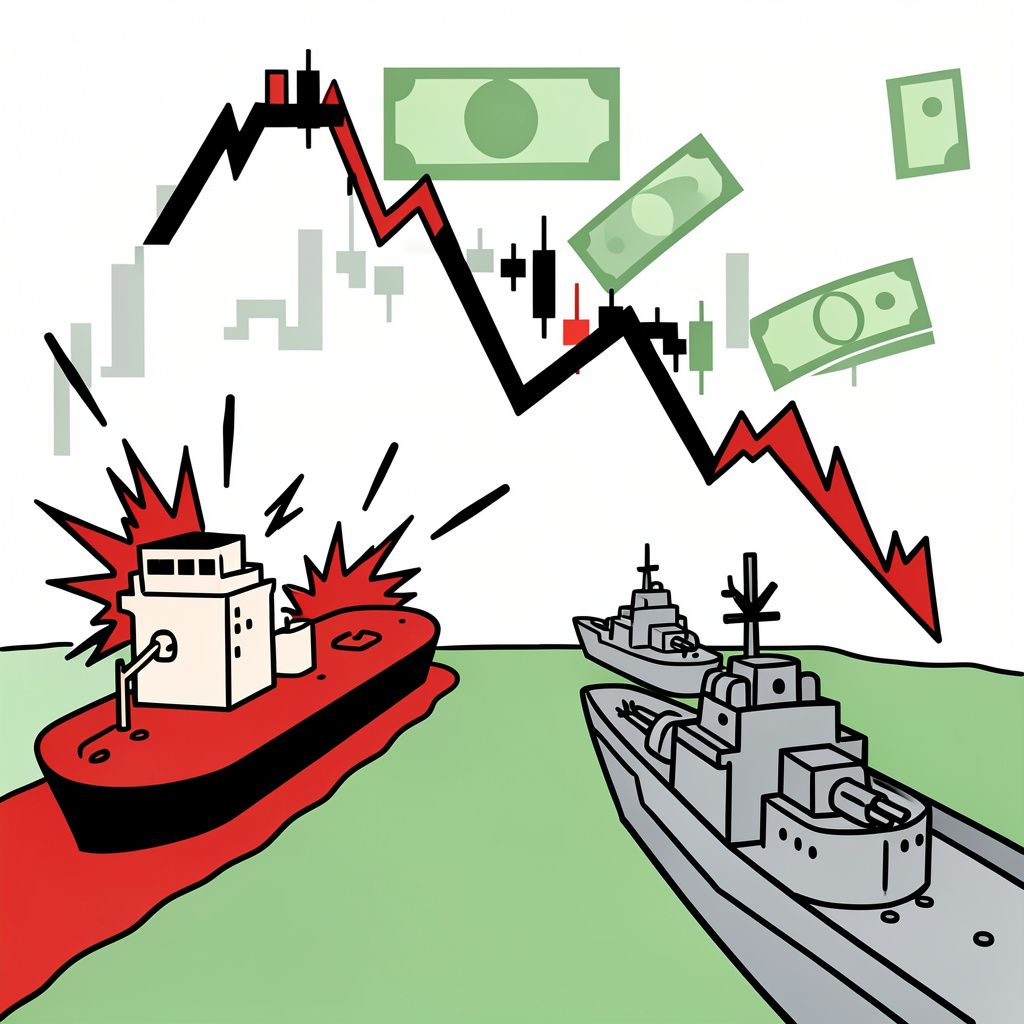
For global financial markets, the most alarming aspect of Wednesday’s escalation is the geographic locus of the conflict. As a vital artery for international energy markets, the Strait of Hormuz accommodates approximately 20 percent of global petroleum liquids consumption [GPT]. The closure of this maritime chokepoint, as highlighted by concerns raised in the U.S. Senate [4], presents a catastrophic risk to global supply chains. When critical infrastructure and shipping lanes are threatened by ballistic missiles and one-way attack drones [1], maritime insurance premiums skyrocket, and shipping conglomerates are forced to reroute vessels around the Cape of Good Hope, adding weeks to transit times and significantly inflating freight costs [GPT]. As long as the Strait of Hormuz remains contested [4], energy markets will likely price in a substantial geopolitical risk premium, threatening to drive up crude oil prices globally and exacerbate inflationary pressures across Western economies [GPT].