Trump Forces U.S. Factories to Ramp Up Weapons Production as Iran War Drains Stockpiles
Washington DC, Wednesday, 17 June 2026.
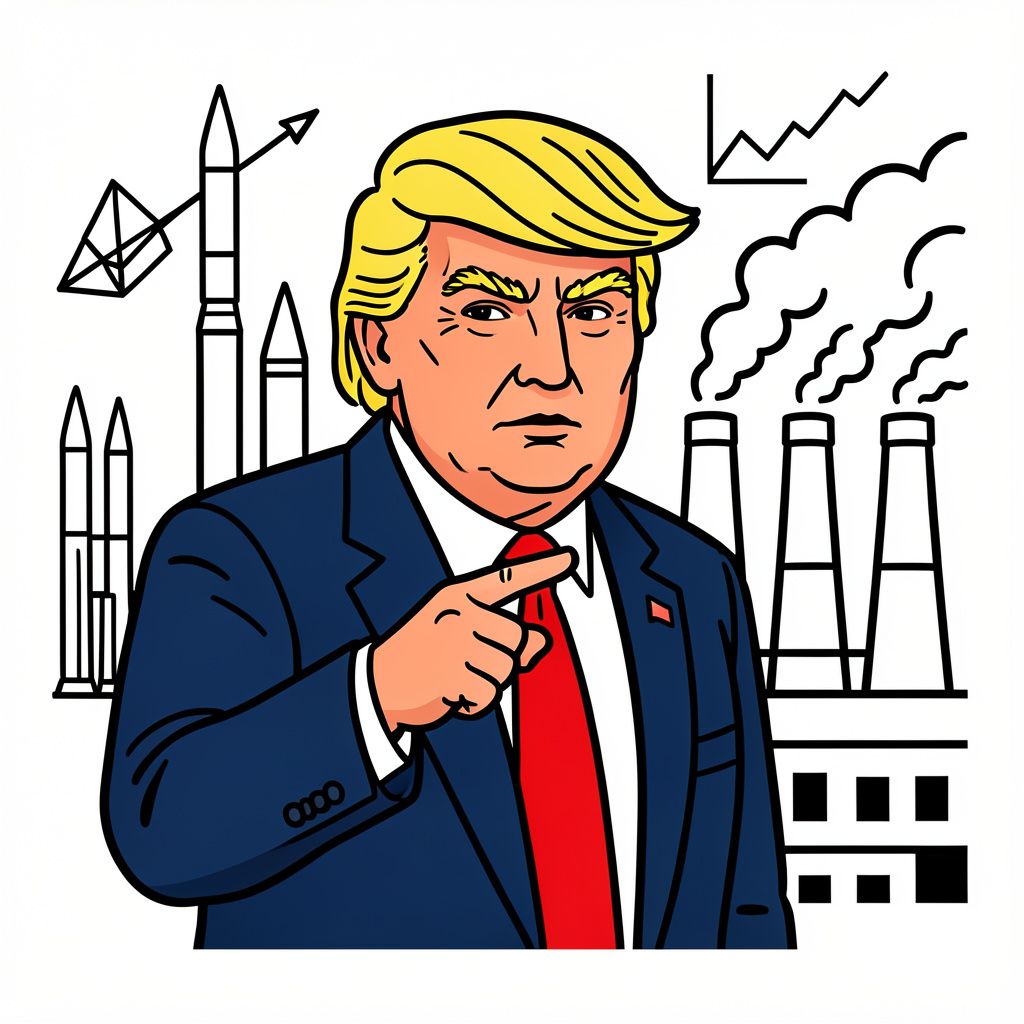
President Trump has bypassed normal procurement rules to order private companies to prioritize weapons manufacturing, citing critical shortages after months of war with Iran. Over half of the U.S. inventory of key munitions, including Tomahawk missiles, has been expended since February 2026, straining domestic stockpiles. This unprecedented move could reshape defense supply chains and limit arms shipments to allies like Ukraine.
The Defense Production Act Invocation: A Strategic Shift in U.S. Defense Policy
On 14 June 2026, President Donald Trump invoked the Defense Production Act (DPA) of 1950, a Cold War-era law, to accelerate domestic weapons manufacturing amid escalating tensions with Iran [1][2]. The DPA grants the president authority to direct private companies to prioritize government contracts for critical defense materials, effectively bypassing standard procurement processes to ensure rapid production [1]. This move follows months of military engagement in the Persian Gulf, which began on 28 February 2026, and growing concerns over Iran’s nuclear ambitions [3]. The invocation was formalized through a presidential memorandum released on 14 June 2026, delegating authority to Defense Secretary Pete Hegseth to expedite the production of munitions, missiles, and other critical defense equipment [1][4].
Stockpile Strains and Industrial Base Constraints
The decision to invoke the DPA comes as the U.S. faces significant strains on its munitions stockpiles. According to a Center for Strategic and International Studies (CSIS) analysis from April 2026, the U.S. has expended over 50% of its inventory of four critical munitions, including Tomahawk missiles, since the onset of hostilities with Iran [1][3]. These shortages have raised alarms about the U.S. industrial base’s capacity to sustain prolonged military engagements. Michael Cadenazzi, Assistant Secretary of Defense for Industrial Base Policy, acknowledged the constraints, stating, “Sometimes we need the collective wisdom of all the assembled companies to collaborate and solve our problems for us, and we want them to provide their best advice from the industrial side” [1]. The DPA invocation aims to address these bottlenecks by facilitating voluntary agreements between the government and private sector, allowing defense contractors to collaborate without violating antitrust regulations [3].
Domestic Priorities and Global Implications
The Trump administration’s decision underscores a strategic shift toward prioritizing domestic defense capabilities. By invoking the DPA, the U.S. signals its intent to rebuild and expand its industrial base, potentially at the expense of arms shipments to allies such as Ukraine [3]. This shift reflects broader concerns about supply chain vulnerabilities, which were first highlighted after Russia’s invasion of Ukraine in 2022 [1]. Defense Secretary Pete Hegseth has dismissed concerns about stockpile shortages, asserting in late May 2026 that “the munitions issue has been foolishly and unhelpfully overstated” and that “we have plenty of what we need” [5]. However, the invocation of the DPA suggests a more urgent response to the realities of prolonged conflict. The move could reshape global arms markets, particularly for major defense contractors like Lockheed Martin (LMT) and Raytheon Technologies (RTX), which may see increased demand for their products [1][3].
Financial and Legislative Responses to the Crisis
In tandem with the DPA invocation, the Trump administration has sought substantial financial backing to replenish U.S. stockpiles. On 16 June 2026, Defense Secretary Hegseth met with Senate Republicans to advocate for a $350 billion reconciliation package aimed at bolstering Defense Department funding [6]. Senator John Cornyn (R-Texas) confirmed the urgency of the funding request, stating, “the Pentagon is running short of funding they need in order to acquire the weapons and missiles and things like that that they need to protect the nation” [6]. This legislative push follows earlier discussions in March 2026, when Trump administration officials first considered invoking the DPA to address munitions shortages [6]. The administration’s focus on domestic production capacity has raised questions about the future of U.S. military aid to allies, particularly as the conflict with Iran shows no signs of abating [3].
Broader Geopolitical and Economic Ramifications
The invocation of the DPA is not an isolated event but part of a nine-month effort to address systemic weaknesses in the U.S. defense industrial base [3]. The Trump administration’s memo, released on 11 June 2026, explicitly cited “limited production capacity, fragile supply chains, long-lead dependencies, and related production bottlenecks” as key factors necessitating the use of the DPA [7]. These challenges are not unique to the U.S.; European allies have also grappled with artillery production gaps since Russia’s invasion of Ukraine in 2022 [1]. The DPA’s use could set a precedent for future invocations in other strategic sectors, such as energy or cybersecurity, depending on geopolitical developments [1]. For now, the focus remains on replenishing critical munitions, with the administration leaving open the possibility of further DPA actions to secure other vital supply chains [3]. The long-term impact of this policy shift will depend on the duration of the Iran conflict and the U.S.’s ability to balance domestic priorities with its global defense commitments.
Sources
- www.cbsnews.com
- www.facebook.com
- www.thenationalnews.com
- www.nbcnews.com
- www.thenationalnews.com
- www.nbcnews.com
- www.instagram.com