Basketball Star Angel Reese Partners with Mattel to Launch Official Barbie Doll
Chicago, Sunday, 26 July 2026.
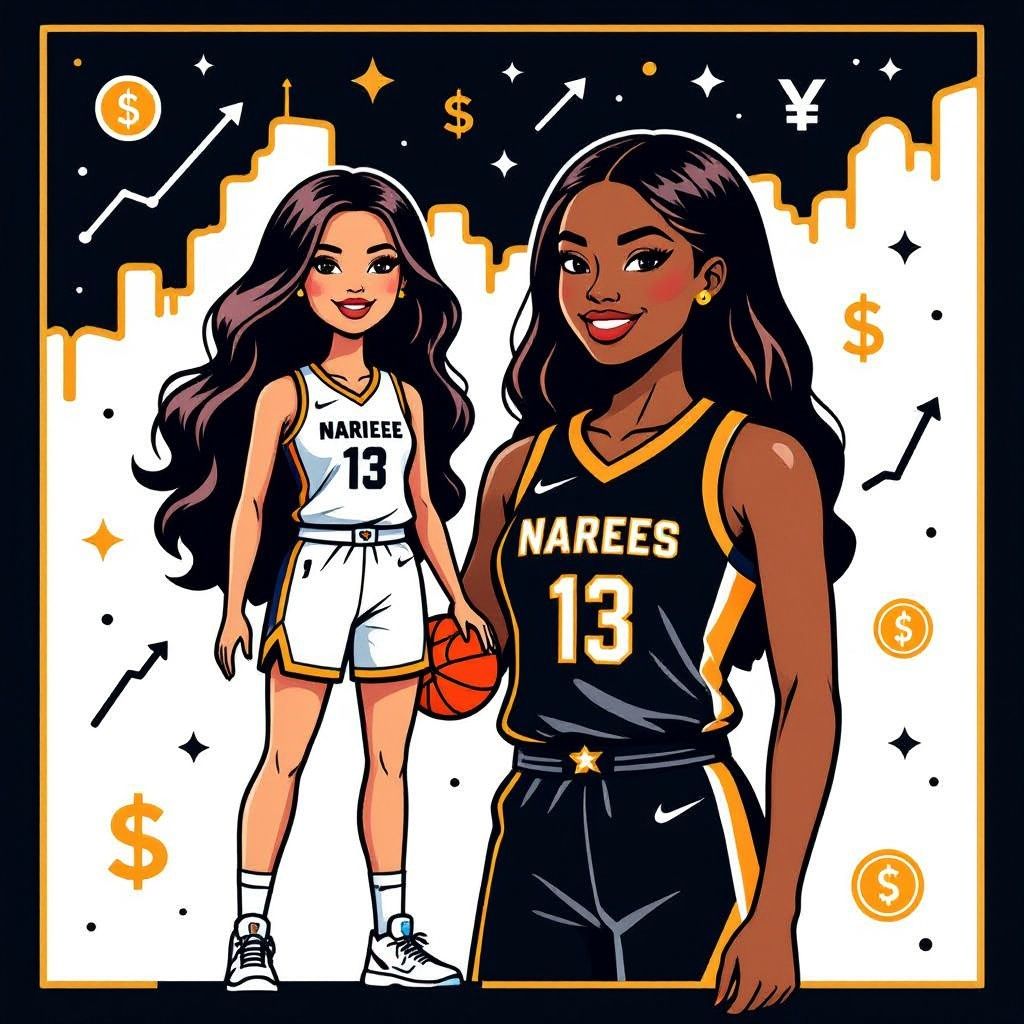
Mattel’s new Angel Reese Barbie features a unique dual-numbered jersey, highlighting the surging commercial power and mainstream monetization of women’s professional basketball.
A Strategic Licensing Ecosystem
On Friday, July 24, 2026, toy manufacturing giant Mattel, Inc. (NASDAQ: MAT) officially announced the release of the Barbie Signature Angel Reese doll, transforming the athlete’s famous collegiate nickname into a tangible commercial asset [4][GPT]. The launch was strategically timed to coincide with the 2026 WNBA All-Star Weekend, which concluded on Sunday, July 26, 2026 [4]. The doll features highly personalized details that reflect Reese’s unique basketball journey, including a pink basketball uniform with a dual-numbered jersey—wearing No. 5 for her current team, the Atlanta Dream, on the front, and No. 10 on the back to represent her time with the Chicago Sky and the LSU Tigers [1][4]. It also includes her iconic left-leg sleeve, a headband, and miniature Barbie-pink Reebok sneakers [1][4].
A Strategic Licensing Ecosystem
This partnership represents a highly sophisticated, multi-brand licensing ecosystem rather than a standard endorsement deal. Retailing for approximately $38 [1] and distributed through major retail channels such as Target [2], the doll is only the first phase of a broader consumer product rollout. On July 23, 2026, Reese took to Instagram to announce that the physical Barbie doll is being accompanied by a collaborative, human-sized sneaker release [3]. On August 3, 2026, Reebok will launch the Angel Reese 1 ‘Barbie’ basketball shoe, which will be available in both doll and human sizes, marking a cross-industry synergy between toy manufacturing, athletic apparel, and professional sports [3][4].
Capitalizing on Athlete Brand Equity
The rapid commercialization of Reese’s brand highlights the shifting economic dynamics of women’s professional sports. Reese, 24, has established herself as one of the WNBA’s premier stars since being drafted by the Chicago Sky in 2024 [1]. Over her first three professional seasons, she has maintained a dominant presence on the court, averaging 26.9 combined points and rebounds per game, consisting of 14.4 points and 12.5 rebounds [1]. Her consistent performance earned her an All-Star selection in each of her first three years as a pro, proving that her commercial appeal is backed by elite athletic output [1].
Capitalizing on Athlete Brand Equity
For corporate sponsors and toy manufacturers like Mattel [GPT], Reese represents a highly lucrative bridge between collegiate loyalty and professional marketability. She originally earned her ‘Bayou Barbie’ moniker during her final two college seasons at LSU, carrying that massive fanbase to Chicago, and subsequently to the Atlanta Dream following an offseason trade [1]. By incorporating both her former and current jersey numbers (No. 10 and No. 5) into the doll’s design [4], Mattel is effectively capturing multiple segments of her fanbase, maximizing the product’s appeal to collegiate, Chicago, and Atlanta supporters alike [GPT].
The Purpose-Driven Consumer Market
Beyond pure athletic apparel and toy sales, this partnership reflects a growing corporate emphasis on purpose-driven consumer marketing. The Barbie brand has increasingly aligned itself with female trailblazers who champion social causes [GPT]. In addition to her on-court achievements, Reese is being honored for her community advocacy through the Angel C. Reese Foundation, which focuses on expanding equity for girls and underrepresented communities by providing access to sports, education, and financial literacy [4]. This alignment allows Mattel to target socially conscious consumers who demand that brand partnerships reflect real-world impact [GPT].
The Purpose-Driven Consumer Market
Looking forward, the commercial momentum surrounding women’s basketball shows no signs of slowing down. While Reese has stated that her immediate professional focus is on bringing a WNBA championship to Atlanta [4], her off-court business empire continues to expand rapidly. The upcoming August 3, 2026, Reebok shoe release [3][4] serves as a prime indicator of how modern female athletes are redefining sports merchandising. For institutional investors, Mattel’s aggressive positioning in this space demonstrates a clear understanding of the shifting cultural landscape, where female sports icons are increasingly commanding the same marketing power as their male counterparts [GPT].