U.S. Overhauls Arms Export Strategy to Boost Domestic Defense Industry
Washington DC, Tuesday, 23 June 2026.
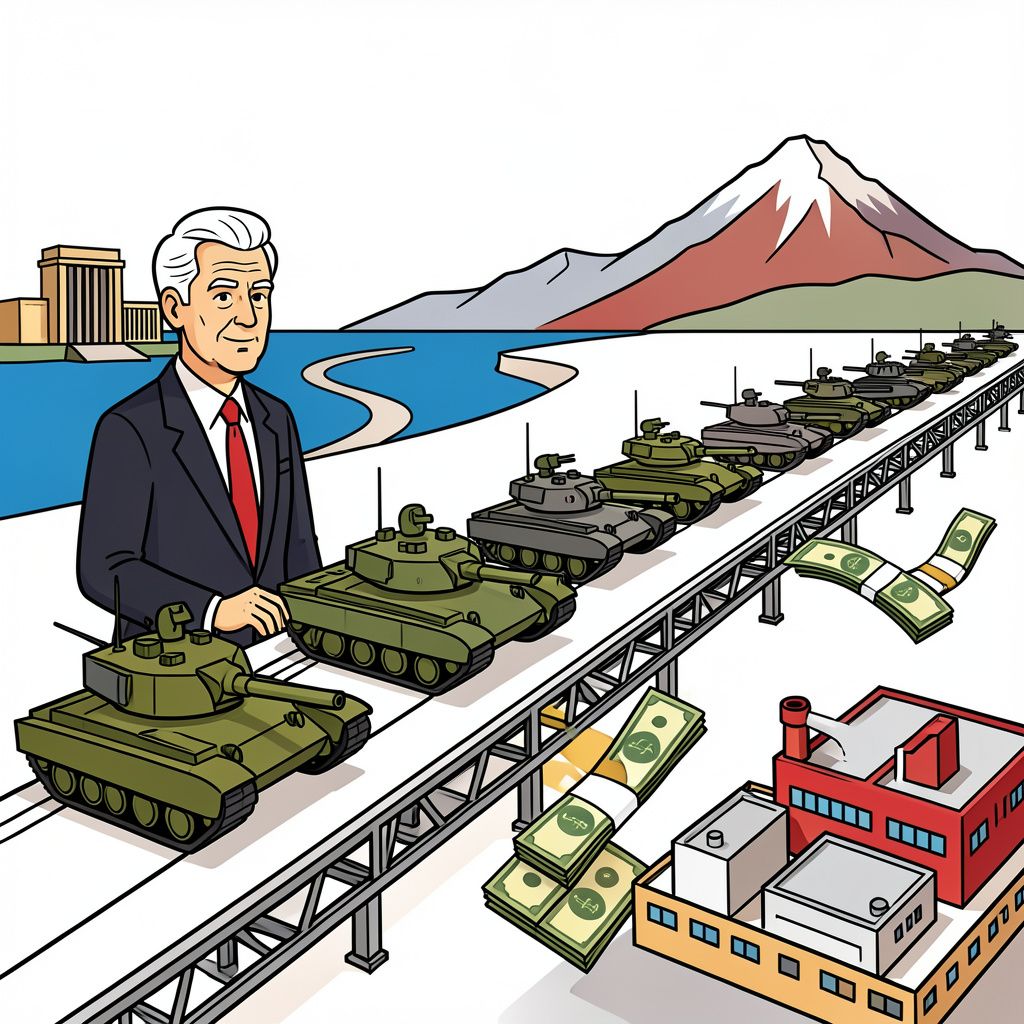
President Biden’s new ‘America First Arms Transfer Strategy’ marks a historic shift in U.S. defense exports, prioritizing domestic production and national security. The move could reshape global military supply chains, accelerate domestic manufacturing, and influence geopolitical alliances—all while tightening control over sensitive arms transfers. With deadlines set for key reports within months, the strategy aims to streamline sales, reduce foreign dependencies, and counter rival powers like China. Analysts warn it may also spark competition in emerging markets, particularly Latin America, where U.S. firms are already locking in multi-billion-dollar deals.
Executive Order Reshapes U.S. Defense Export Policy
On 22 June 2026, President Donald Trump signed Executive Order 14383, establishing the ‘America First Arms Transfer Strategy’ [1]. This directive, issued under constitutional and statutory authority, fundamentally alters how the United States approaches international arms sales. The strategy prioritizes U.S. national security interests and domestic manufacturing capabilities while aligning defense exports with broader foreign policy objectives [1]. The order reflects growing concerns about supply chain vulnerabilities and competition with foreign adversaries, particularly in the defense sector [1][2].
Tightened Controls and Accelerated Timelines
The executive order sets aggressive deadlines for key government agencies. Within 120 days (by 20 October 2026), the Secretaries of War, State, and Commerce must submit a prioritized sales catalog of defense platforms [1]. The same deadline applies for recommendations to enhance advocacy efforts for U.S.-made defense articles [1]. A more immediate 60-day deadline (21 August 2026) requires the development of an industry engagement plan [1]. Enhanced End Use Monitoring (EEUM) criteria must be established within 90 days (20 September 2026), with a new coordination group to oversee implementation [1]. These timelines suggest a rapid shift in how the U.S. manages arms transfers, with particular emphasis on post-sale controls for sensitive technologies [2].
Domestic Production and Economic Priorities
The strategy explicitly ties arms exports to domestic economic goals. The Department of Defense (DoD) has requested ‘immediate, up-to-date market intelligence’ on private-sector production capabilities and supply-chain dependencies [2]. This strategic market research effort aims to identify vulnerabilities and opportunities within the U.S. defense industrial base. The order also amends Executive Order 13637 (2013) to streamline Congressional notifications for arms sales, potentially accelerating the approval process for domestic manufacturers [1]. Analysts suggest this could create significant economic opportunities for U.S.-based defense contractors, though the long-term impact on global supply chains remains uncertain [GPT].
Geopolitical Implications and Market Competition
The strategy arrives as U.S. defense firms secure major contracts in emerging markets. On 19 June 2026, Lockheed Martin won Peru’s $3.5 billion order for 24 F-16 jets, marking the country’s largest defense deal of the year [3]. This sale exemplifies the U.S. approach to countering rival powers in Latin America, where Chinese and Emirati firms are making inroads. The UAE’s EDGE Group has invested approximately $500 million in Brazilian defense firms, establishing a local production hub to circumvent export restrictions [3]. Meanwhile, China’s Norinco continues to promote low-cost drones in the region, raising data security concerns due to their integration with the BeiDou navigation system [3].
Congressional and Industry Response
The strategy has drawn mixed reactions from lawmakers and industry stakeholders. Senator Roger Marshall (Republican-Kansas) praised the administration’s focus on national security, stating on 22 June 2026 that ‘Strength brought our adversaries to the table — now let’s secure peace, protect our interests, and keep our troops out of prolonged conflicts’ [4]. However, some analysts warn that the strategy could escalate arms races in volatile regions. The House has introduced legislation to prohibit federally funded researchers from collaborating with entities on U.S. restricted-party lists, reflecting broader concerns about technology transfer [2]. The State Department’s FY 2025 arms-export authorization figures, released on 20 June 2026, indicate a shift toward viewing foreign military sales as an industrial-base and burden-sharing tool [2].