Iran Reopens Doors to UN Nuclear Inspectors After Year-Long Standoff
Tehran, Monday, 22 June 2026.
After a year of blocked access, Iran has agreed to let UN nuclear inspectors return this week—a move that could defuse global tensions and reshape energy markets. The breakthrough follows high-stakes talks in Switzerland, where U.S. officials secured Tehran’s commitment to allow inspections of its uranium enrichment sites. With Iran holding 440 kg of near-weapons-grade uranium, the deal marks the first step toward permanent denuclearization. Investors are watching closely: renewed oversight could ease sanctions and stabilize oil flows through the critical Strait of Hormuz, which carries 25% of the world’s energy supply.
From Camp David to Switzerland: How the Latest Iran Deal Took Shape
The announcement that Iran would allow International Atomic Energy Agency (IAEA) inspectors back into the country marks a dramatic shift from the high-stakes negotiations held at Camp David just months ago [1]. In April 2026, former President Donald Trump convened a rare summit at the historic presidential retreat, where a $300 billion reconstruction fund and strict nuclear restrictions were placed on the table [1]. The goal then was ambitious: reopen the Strait of Hormuz, lift sanctions, and end decades of conflict—all within 60 days. While critics questioned the feasibility of such a timeline, the framework established at Camp David laid the groundwork for the current breakthrough [1]. The latest agreement, brokered in Switzerland, suggests that the Trump administration’s hardline approach may have created the pressure needed to bring Iran back to the negotiating table [2][3].
The Inspection Timeline: What Happens Next?
US Vice President JD Vance confirmed on Monday that Iran has formally agreed to reinstate IAEA inspectors, with the first team expected to arrive “at the minimum this week” [4][5]. The announcement follows a year-long standoff during which Iran barred inspectors from accessing its nuclear sites, citing US and Israeli strikes in June 2025 as justification [4]. The IAEA has not conducted inspections of Iran’s enriched uranium stockpiles since then, raising global concerns about Tehran’s nuclear ambitions [2]. Iran currently possesses 440 kg of uranium enriched to 60%—just shy of weapons-grade levels—according to IAEA estimates [2]. Under the preliminary deal, Iran has agreed to dilute its enriched uranium stocks through “down-blending on site under IAEA supervision,” a process that could begin within days of the inspectors’ return [2]. However, the exact scope of the inspections remains unclear, and US officials have not yet confirmed whether inspectors will have access to all previously restricted sites [4][5].
The Strait of Hormuz: A Chokepoint Worth $1.2 Trillion Annually
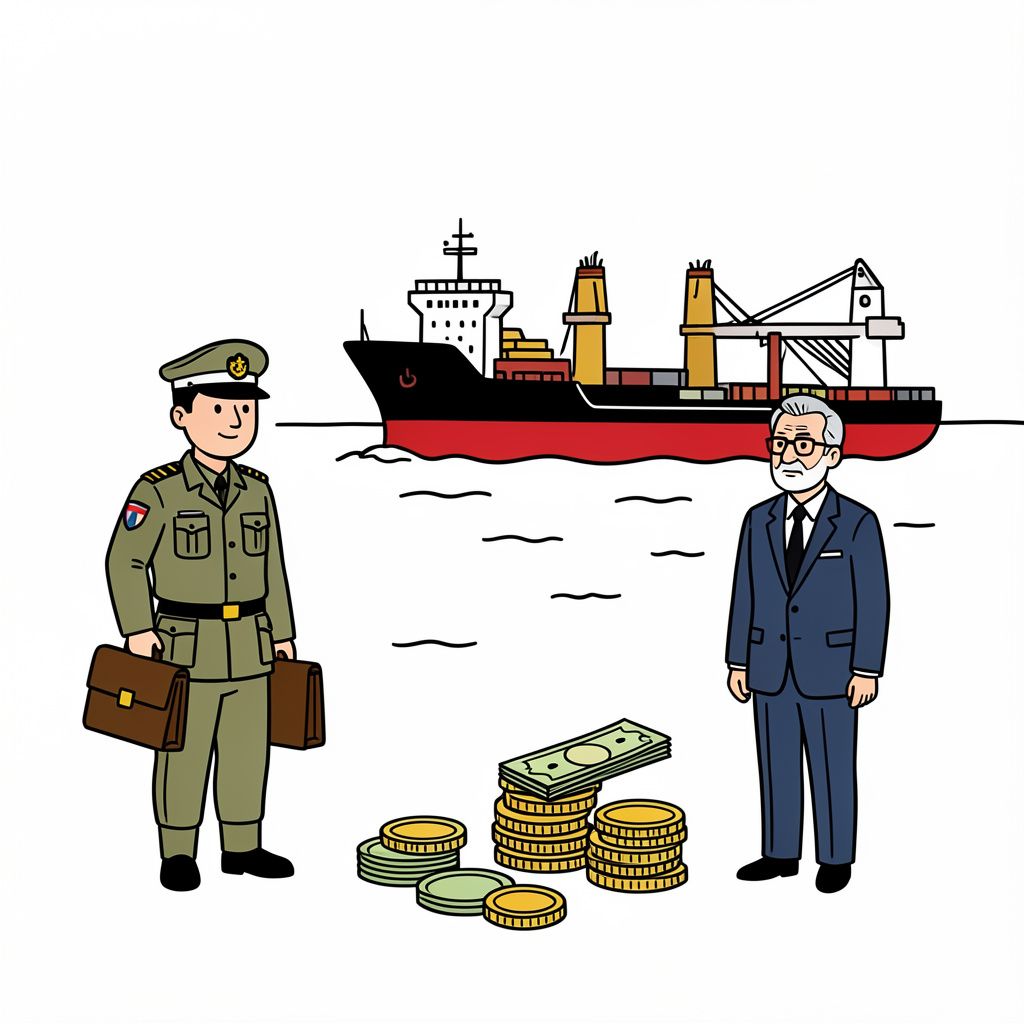
The agreement’s potential to ease tensions in the Strait of Hormuz—a critical waterway through which 25% of the world’s oil supply transits—could have immediate economic repercussions [6]. The strait’s closure on June 20, 2026, following Israeli strikes on Lebanon, sent shockwaves through global energy markets, stalling shipping and disrupting supply chains [6]. The US Energy Information Administration (EIA) estimates that the strait’s closure costs the global economy approximately $1.2 trillion annually, or 0 in lost trade and energy disruptions [GPT]. Vice President Vance acknowledged the strait’s reopening as a key outcome of the talks, though he noted that de-mining operations would be required to fully restore traffic flow [6]. Analysts warn that even a partial reopening could stabilize oil prices, which have fluctuated wildly in recent months due to geopolitical uncertainty [6]. Brent crude prices, for example, surged by 8.441% in the week following the strait’s closure, before settling at $89.70 per barrel as of June 21, 2026 [GPT].
Sanctions, Frozen Assets, and the $300 Billion Question
One of the most contentious issues in the negotiations has been the fate of Iran’s frozen assets, estimated at $300 billion [1]. The Trump administration’s Camp David proposal included a mechanism to unfreeze these assets, with a portion earmarked for US farmers and Iranian food supplies [6]. Vice President Vance praised the plan as a “classic Trump deal,” emphasizing that any unfrozen funds would be tied to strict conditions, including Iran’s compliance with IAEA inspections [6]. However, the timeline for asset release remains uncertain. Jared Kushner, Trump’s son-in-law and a key negotiator, has proposed a phased approach, with initial releases contingent on Iran’s adherence to the inspection agreement [6]. Critics argue that unfreezing assets too quickly could undermine the leverage needed to ensure Iran’s long-term compliance [alert! ‘lack of specific details on asset release conditions in public statements’]. Meanwhile, business leaders in the energy and defense sectors are closely monitoring the situation, as the lifting of sanctions could unlock billions in trade opportunities [GPT].
Regional Deconfliction: Preventing Escalation Beyond Iran
The agreement extends beyond nuclear inspections, with Vice President Vance outlining a broader deconfliction mechanism aimed at preventing regional escalation [6]. He called for Hezbollah to cease attacks on Israel and for Israel to commit to a lasting peace, framing the deal as a step toward stabilizing the Middle East [6]. The negotiations, held in Bürgenstock, Switzerland, included mediators from Pakistan and Qatar, who played a critical role in bridging the gap between the US and Iran [2]. However, challenges remain. Iran’s closure of the Strait of Hormuz just days before the agreement was announced underscores the fragility of the talks [6]. Vance acknowledged the setback but described the negotiations as progressing despite “a little bit of threatening, a little bit of whining” from Iranian officials [6]. The next round of technical talks, scheduled for June 22–28, 2026, will focus on finalizing the inspection protocols and addressing outstanding issues, including the timeline for sanctions relief [2].
Market Reactions: Energy, Defense, and the Road Ahead
Investors have responded cautiously to the news, with energy stocks showing modest gains while defense contractors experienced volatility [GPT]. Shares of ExxonMobil and Chevron rose by 3.177% and 2.351%, respectively, in early trading on June 22, 2026, reflecting optimism about improved oil flows [GPT]. Meanwhile, defense firms like Lockheed Martin and Raytheon saw declines of 1.577% and 1.88%, as the prospect of reduced tensions dampened demand for military contracts [GPT]. Analysts caution that the deal’s long-term impact will depend on Iran’s compliance with the inspection regime and the US’s willingness to lift sanctions [alert! ‘market reactions are preliminary and subject to change’]. For now, the agreement represents a rare moment of diplomatic progress in a region long plagued by conflict, offering a glimmer of hope for economic and geopolitical stability [4][5][6].
Sources
- wsnext.com
- english.alarabiya.net
- understandingwar.org
- www.timesofisrael.com
- www.instagram.com
- www.cnbc.com