Rising Import Costs Cause Deep Drop in Small Business Expectations
Washington, D.C., Monday, 28 September 2026.
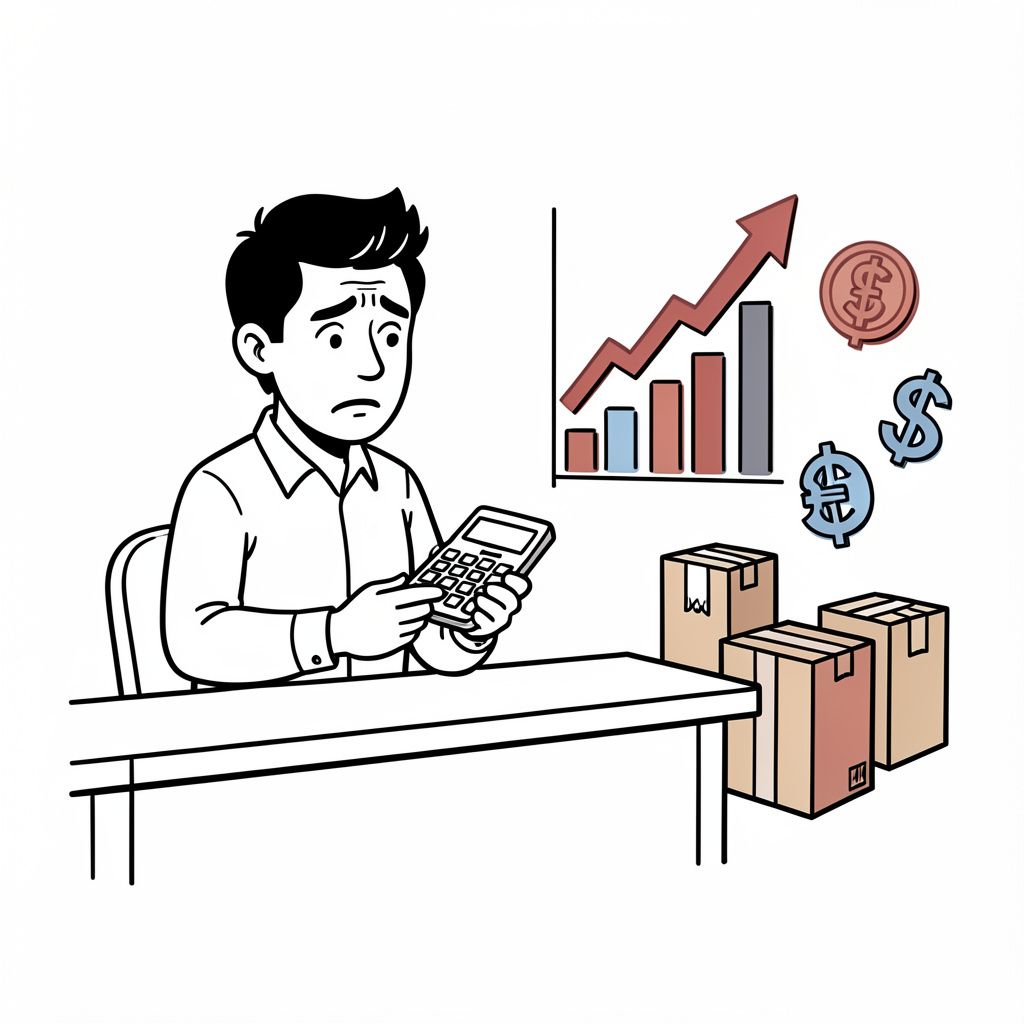
Federal Reserve survey data reveals US small business growth expectations hit four-year lows. Although 76% of importers raised customer prices, profit margins squeezed as foreign input costs climbed sharply.
Deteriorating Growth Expectations
The Federal Reserve’s 2026 Report on Employer Firms indicates that while revenue and employment growth remained stable from 2024 to 2025, future growth expectations have deteriorated significantly [1]. Expectations for future revenue growth fell from an index score of 39 to 33, representing a decline of -15.385 percent [1]. Employment growth expectations also dropped from 26 to 23 over the same period [1]. Supply chain pressures are a primary driver, with 48% of firms sourcing at least some inputs from outside the United States in 2024 [1]. Among those firms relying on international supply chains, a large majority reported increased prices on foreign inputs between 2024 and 2025 [1]. Consequently, 77% of firms identified rising costs of goods, services, wages, or tariffs as a primary financial challenge [1].
Macroeconomic Headwinds
Broader macroeconomic conditions have tightened alongside these microeconomic struggles [2]. On September 26, 2026, the Federal Reserve approved an interest rate hike to a target range of 3.75% to 4%, marking the first increase since 2023 [2]. This decision cites persistent inflation and strong labor market conditions as key drivers for increased borrowing costs for small and mid-sized businesses [2]. Capital markets reflect this tightening, with Treasury yields reaching their highest levels in over 20 years [2]. The 10-year yield hit 5.163%, the highest since 2007, while the 30-year yield reached 5.488%, the highest since 2004 [2]. Inflation is rising and the central bank is losing patience waiting for price pressures to fade [3].
Operational Responses and Technology
Specific sectors face disproportionate pressure from these dynamics, with tariff-related cost issues highest in retail at 69% and manufacturing at 62% [1]. To mitigate margin compression, 76% of firms with foreign inputs passed cost increases to customers, while 60% absorbed some costs [1]. Technological adoption offers a potential buffer against operational inefficiencies, as 46% of firms currently use artificial intelligence [1]. Among AI users, 71% reported increased productivity, though 54% of firms intending to adopt AI identified finding suitable tools as a top challenge [1].
Outlook for Investment and Growth
The convergence of trade tensions and borrowing costs creates a mixed backdrop for business investment and growth [2]. While trade tensions recently eased with a consensus to reduce tariffs on $30 billion of non-sensitive goods, the effective US tariff rate on Chinese goods remains at approximately 23% [2]. Economic analysts advise that businesses should prioritize operational efficiency and cost management rather than large capital expenditures for the next quarter [2].