US Shifts to Economic Blockade as Iran Demands Concessions in Strait of Hormuz
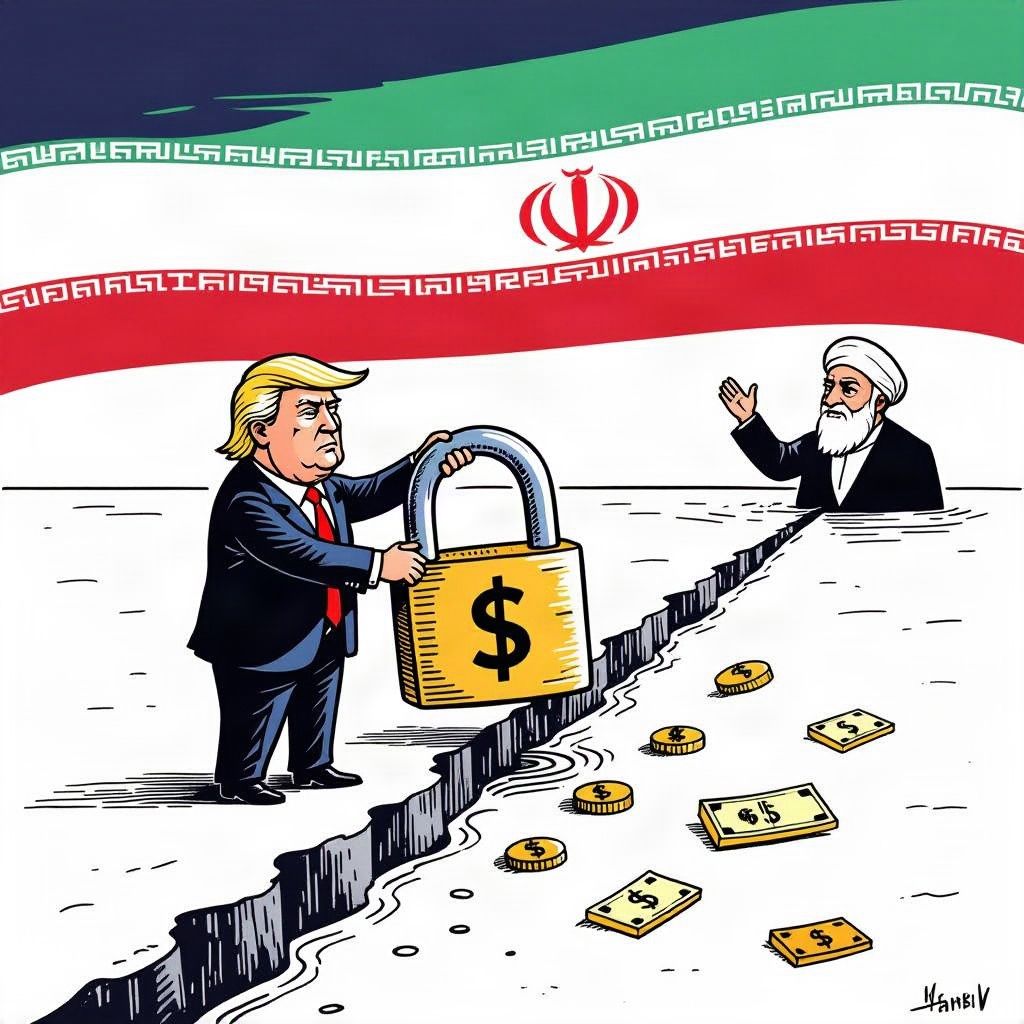
Washington, Monday, 10 August 2026.
President Trump is pivoting to economic pressure over military strikes, leveraging severe inflation and an ongoing naval blockade against Iran as Tehran demands major US concessions to reopen the vital waterway.
Strategic Pivot to Economic Pressure
On Monday, 10 August 2026, the White House confirmed a decisive shift in strategy toward Iran, prioritizing maximum economic pressure over immediate military escalation [1][2]. President Donald Trump stated the administration is “low-keying” the conflict, citing Iran’s crippling inflation and lack of funds as key leverage points [1][4]. This pivot comes after weeks of heightened rhetoric, including threats of attacks “not seen since World War II” made earlier in August 2026, which were subsequently cancelled [1]. The move signals a recalibration of U.S. goals, moving away from regime change or direct nuclear negotiations toward destabilizing the Iranian economy through sanctions and naval blockades [1][5].
This development updates previous reporting which indicated an imminent deal to reopen the Strait of Hormuz had caused oil prices to drop [GPT]. As previously reported in “Oil Prices Drop as U.S. Signals Imminent Deal to Reopen Critical Shipping Route,” crude prices fell 4% on signals of a diplomatic breakthrough [GPT]. However, those negotiations have stalled, with Tehran now demanding major concessions including reparations and the lifting of the U.S. naval blockade before reopening the waterway [2][5]. The current stalemate underscores the fragility of the situation, with energy markets and global shipping conglomerates closely monitoring potential disruptions to critical transit routes near Oman [1][2].
Naval Blockade Intensifies Shipping Disruptions
The U.S. Central Command (CENTCOM) has significantly increased its interdiction efforts in the region, redirecting commercial vessels away from Iranian ports [2]. As of 9 August 2026, U.S. forces have redirected a total of 55 commercial vessels, an increase from 35 vessels recorded on 2 August 2026 [2]. This represents a substantial escalation in enforcement activity over the course of one week. The percentage increase in redirected vessels is calculated as 57.143 [2]. Additionally, U.S. forces have disabled two ships and boarded two others to ensure compliance with the blockade protocols [1][2].
Despite the heightened tensions, Pentagon officials maintain that the department possesses sufficient munitions to execute the war effort [1]. Jarred Conley, Principal Deputy Director at the Defense Innovation Unit, dismissed reports of critical shortages during an interview on 8 August 2026 [1]. Oil prices were trading at approximately $78 USD per barrel on 10 August 2026, down from a peak of over $100 per barrel caused by earlier disruptions to the Strait of Hormuz [1][2]. The price decline from the peak represents a -22 change, indicating market relief despite the ongoing logistical bottlenecks [1].
Diplomatic Impasse Over Strait Conditions
Diplomatic efforts remain complicated by Iran’s stringent conditions for reopening the Strait of Hormuz to maritime traffic [2][5]. Iranian officials have issued demands including reparation payments, an end to fighting in Lebanon, the lifting of the U.S. naval blockade, withdrawal of American troops, and the release of frozen Iranian assets [2][5]. These conditions were reportedly based on a memorandum of understanding signed in June 2026, which has since unravelled [1][5]. Iranian Foreign Minister Abbas Araghchi stated that while negotiations with Oman regarding transit routes have reached a final stage, the agreement will not result in reopening the waterway without these concessions [2].
Regional dynamics further complicate the landscape, as Iran targets Gulf nations with missiles and drones to pressure them into influencing U.S. negotiations [1]. Mehran Kamrava, a professor at Georgetown University in Qatar, noted that Tehran is under tremendous economic pressure but remains unwilling to take the first step toward negotiation [1]. Meanwhile, the U.S. maintains its economic pressure via sanctions, creating a deadlock where neither side is willing to extend an arm for dialogue [1]. Vice President JD Vance confirmed the administration is applying a whole host of tools—diplomatic, economic, and military—to ensure the best outcome for the American people [1][4].
Market Stability Amid Political Uncertainty
Public opinion regarding the conflict shows signs of shifting, with a recent Reuters/Ipsos poll indicating only 35% of Americans approve of the war [1]. For the first time since polling began in December 2024, Democrats are leading Republicans on handling war and terrorism issues, 37% to 36% [1]. This political landscape adds pressure to the administration to resolve the crisis without further escalation. Concurrently, the United States government is actively considering the deployment of a “Golden Dome” missile defense system in response to escalating missile threats originating from Iran [3].
Looking ahead, the 60-day negotiation period initiated on 17 June 2026 is set to expire on approximately 16 August 2026, leaving a narrow window for resolution [1]. President Trump has characterized the Iranian economy as suffering from “huge inflation” and possessing “no money,” suggesting a strategy of waiting out Tehran [1][4]. Corporate leaders and policy analysts continue to monitor the potential impact on global oil supply chains and commercial shipping insurance rates as the deadline approaches [1][2]. The situation remains fluid, with the potential for both diplomatic breakthroughs or further economic strain on global trade routes [1][5].