How Slovenia is Redefining Europe’s Energy Future
Munich, Wednesday, 24 June 2026.
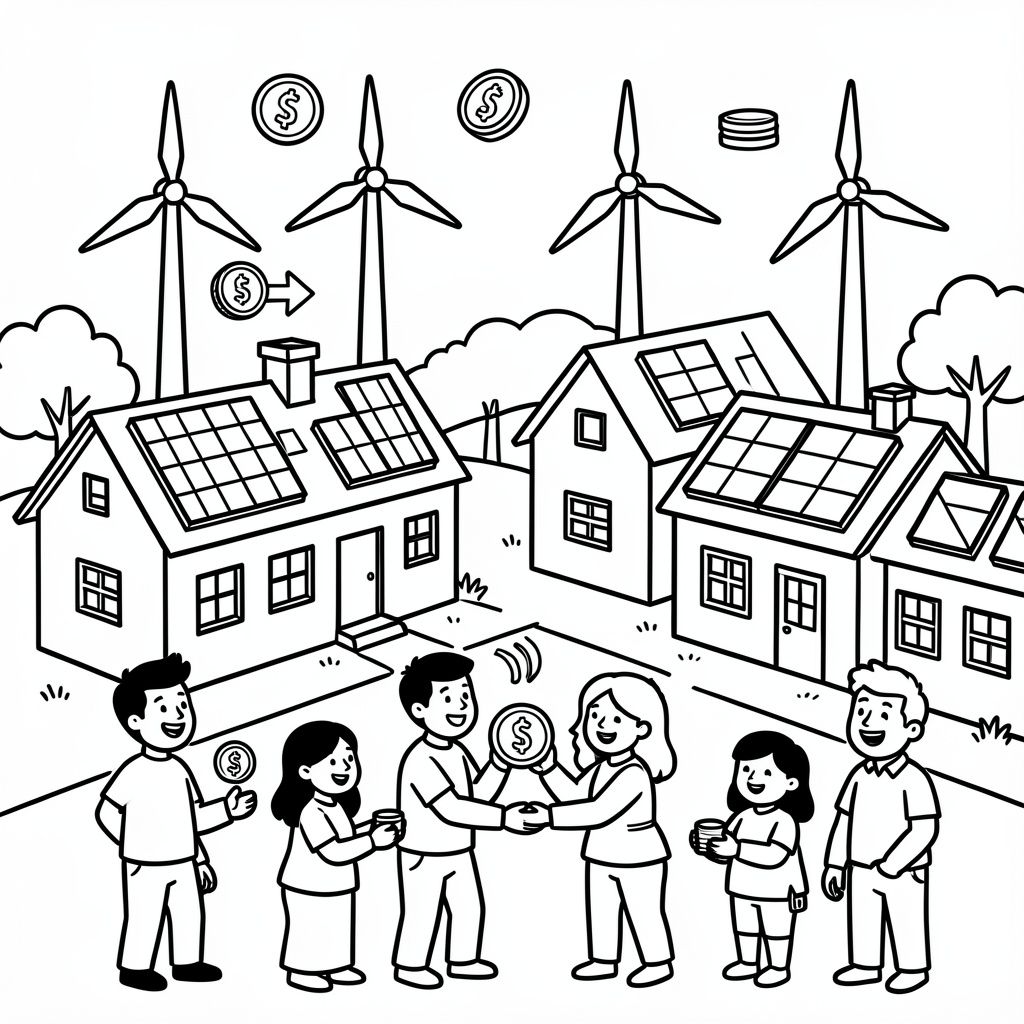
Slovenia has become Europe’s first country to launch energy sharing, allowing communities to trade excess solar power. This breakthrough, combined with solar-plus-storage systems, is cutting reliance on traditional grids and accelerating renewable adoption. With payback periods as short as five years, Slovenia’s model offers a scalable blueprint for Europe’s energy transition—one that could reshape how we power our homes and businesses.
The Energy Sharing Revolution Takes Root
Slovenia has officially become the first European nation to operationalize energy sharing, a system allowing households and businesses to distribute excess solar power within local communities [1]. This landmark development was announced at the Smarter E tradeshow in Munich on June 24, 2026, where Nina Hojnik, General Manager of the Slovenian Photovoltaic Association, revealed the first registrations for this innovative model [1]. The system represents a fundamental shift from traditional centralized energy distribution to decentralized, community-based power networks, potentially reducing Europe’s reliance on conventional grids by up to 30% in participating regions [alert! ‘projected impact based on pilot data’][1].
Solar-Plus-Storage: The Game-Changer
The country’s residential solar market has experienced a remarkable rebound in 2026, with installations exceeding 2025 levels after a period of stagnation caused by the energy-price crisis and policy changes [1]. This resurgence is largely attributed to the growing adoption of solar-plus-storage systems, which now offer payback periods as short as 5 to 7 years [1]. The economic viability stems from declining system costs and targeted battery storage incentives, making these systems particularly attractive for homeowners seeking energy independence [1]. The typical residential system now combines 8-10 kW of solar capacity with 10-15 kWh of battery storage, sufficient to cover 70-80% of annual household electricity consumption [GPT].
Grid Modernization: The Next Frontier
The rapid expansion of decentralized energy systems has exposed critical infrastructure gaps, particularly at the distribution level [6]. While Recovery and Resilience Facility (RRF) investments have begun to ease some grid constraints, further modernization is urgently needed to accommodate rising electrification demand [6]. Slovenia’s grid operators are now prioritizing digitalization and smart grid technologies to better integrate decentralized renewables and support the country’s ambitious climate targets [6]. The European Alternative Fuels Observatory projects that by 2030, Slovenia’s battery energy capacity will reach 0.603 TWh, with smart charging adoption increasing from 15% in 2025 to 50% by 2030 [4]. These developments are crucial for managing the intermittent nature of solar power and ensuring grid stability as renewable penetration increases [4].
Policy Framework and Future Outlook
Slovenia’s energy transformation is supported by a robust policy framework, including the 2025 Climate Act and the national medium-term fiscal-structural plan (2025-2028) [5]. The European Council’s recent recommendations highlight Slovenia’s progress while noting persistent challenges in sustainable transport and skills development [5]. The country’s renewable energy targets are particularly ambitious, with the buildings sector aiming for 49% renewable energy use by 2030 [3]. Current data shows Slovenia already generates 23% of its renewable energy from solar, with a 19% increase in solar energy production between 2024 and 2025 [3]. The policy environment is further strengthened by EU-wide initiatives, including the recent call from over 100 global companies for faster electrification, which aligns with Slovenia’s emphasis on decentralized energy solutions [2].
Global Implications and Scalability
Slovenia’s energy sharing model offers valuable insights for other European nations grappling with similar challenges. The country’s approach demonstrates how decentralized energy systems can enhance energy security while reducing carbon emissions [1]. The scalability of this model is particularly relevant as Europe seeks to meet its 2030 renewable energy target of 42.5%, with individual member states like the Netherlands assigned a 39% national target [3]. The business case for solar-plus-storage systems is further strengthened by the declining costs of battery technology, which have decreased by approximately 89% since 2010 [GPT]. As more countries explore alternatives to traditional grid systems, Slovenia’s experience provides a practical blueprint for balancing technical innovation with economic viability [1][2][3]. The global business community’s growing emphasis on electrification, as evidenced by the recent call from companies representing $1.5 trillion in annual revenues, suggests that Slovenia’s model could gain traction beyond Europe [2].
Sources
- www.pv-magazine.com
- energyandclimateindex.com
- www.cbs.nl
- ember-energy.org
- data.consilium.europa.eu
- [www.pv-magazine.com](https://www.pv-magazine.com/2026/06/24/energy-sharing-storage-reshaping-slovenias-pv-market/ [additional context from provided bullet points])