How Artificial Intelligence Cuts Supply Chain Crisis Response Times From Days to Minutes
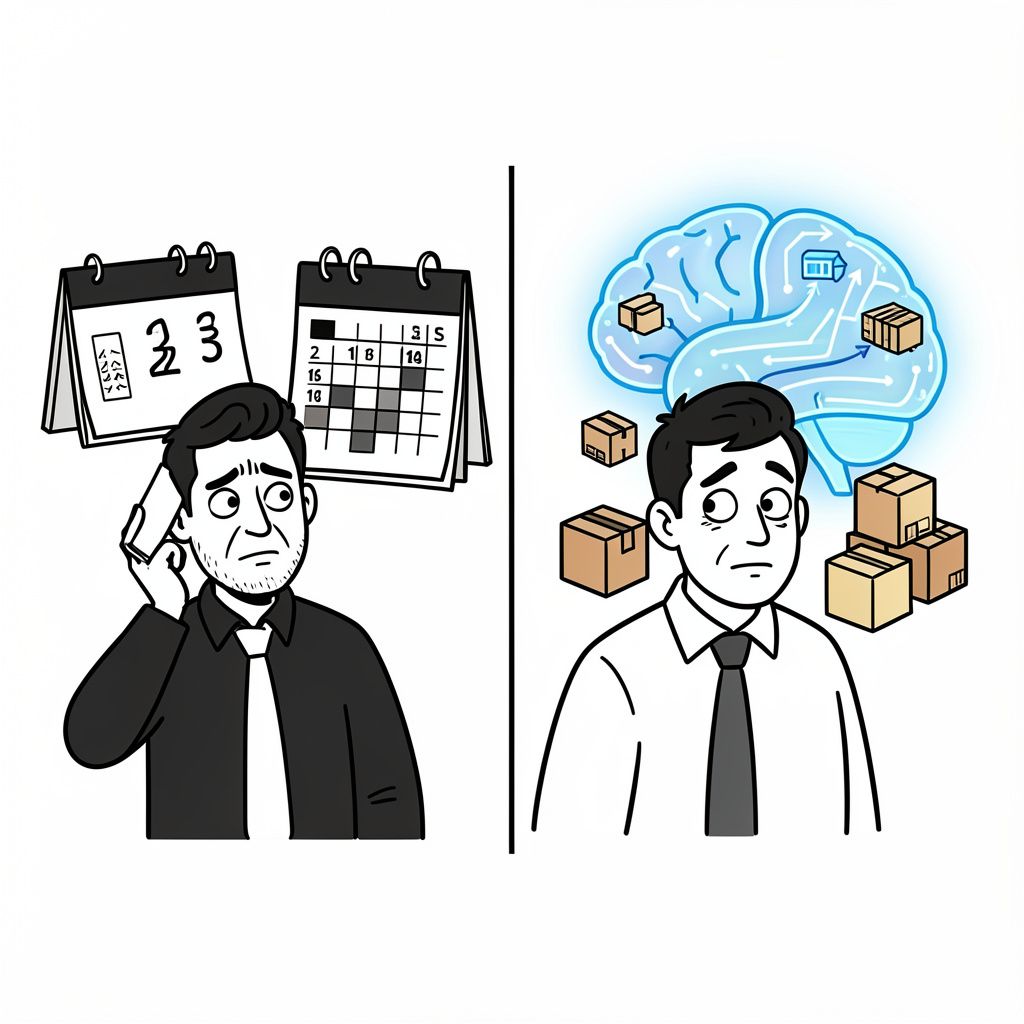
Chicago, Wednesday, 28 October 2026.
Sphera launched predictive AI tools yesterday, addressing research showing 100% of surveyed operating chiefs support automating risk analysis after discovering external vendor shocks take over 40 hours to evaluate manually.
Sphera’s AI-Powered Solution Addresses Chronic Supply Chain Vulnerabilities
Enterprise software provider Sphera officially launched its new generative and predictive AI capabilities on Tuesday, 27 October 2026, designed to transform how organizations respond to supply chain disruptions. The announcement comes amid persistent vulnerabilities in global supply networks, where external tier-two and tier-three suppliers continue to represent the most common origin of operational shocks. According to company research conducted across five major markets, 58% of Chief Operating Officers (COOs) report that their most severe operational disruptions now originate at least as much outside their organization as within it—a figure that rises to 71% among respondents in the UAE [1].
The Human Cost of Delayed Risk Assessment
Despite decades of investment in supply chain visibility tools, the gap between detection and decision remains dangerously wide. A 2026 study of 200 CFOs and COOs revealed that companies identify upstream disruptions in an average of 8.7 hours, yet require over 40 additional hours—48.7—to assess their operational and financial impact before making mitigation decisions [3]. This delay is particularly acute among small importers, who report spending 40+ additional hours analyzing disruptions due to fragmented tools across suppliers, customs brokers, and freight forwarders [3]. The resulting paralysis often forces reactive measures such as overstocking inventory, a strategy adopted by 58.8% of small and mid-sized businesses in response to supply chain disruptions [alert! ‘This statistic appears in two sources with identical figures: [3] and the duplicate entry in [2].’].
From Visibility to Velocity: How AI Reshapes Risk Intelligence
Sphera’s new AI risk engine integrates conversational AI, a Model Context Protocol (MCP) for interoperability with third-party AI tools, and an AI-driven Risk Response & Resolution Center to evaluate risk severity and supplier impact in real time. The system synthesizes external risk signals—geopolitical events, climate incidents, supplier health indicators—into structured operational risks linked directly to products, facilities, and financial exposures. According to Sphera CEO Paul Marushka, ‘The boundary of the enterprise is no longer the boundary of operational risk. A disruption can begin with a supplier, a critical material, or an event on the other side of the world, but its consequences are felt inside the business.’ He emphasizes that the challenge lies not in data acquisition, but in connecting external signals to internal decision contexts within minutes rather than days [1].
Executive Consensus: AI Automation in Risk Management is Non-Negotiable
The demand for AI-enabled risk automation is not aspirational—it is near-universal. Sphera’s research involving 750 COOs found that 100% of surveyed executives would allow AI to automate at least one risk-management activity under proper governance and controls [1]. This reflects a broader shift toward predictive operational resilience, especially as global trade networks grow more volatile due to geopolitical tensions, regulatory fragmentation, and climate-related disruptions. Small businesses, once constrained by cost barriers to advanced analytics, now have access to cloud-based risk dashboards and rate engines that were previously available only to large enterprises—though their effectiveness is still measured by decision speed rather than data volume [3][GPT].
Industry Context: ESG and Operational Risk Converge
The integration of AI into supply chain risk management is occurring alongside a broader evolution in Environmental, Social, and Governance (ESG) reporting infrastructure. In 2026, ESG reporting software has become core operational infrastructure, driven by regulations such as the EU’s Corporate Sustainability Reporting Directive (CSRD), European Sustainability Reporting Standards (ESRS), and the International Sustainability Standards Board (ISSB) [4]. Leading platforms like Sphera, Workiva, IBM Envizi, and Persefoni now combine emissions accounting, ESG KPI management, and automated disclosures with advanced risk modeling. For asset-heavy industrial companies, Sphera’s Operational Intelligence Platform—serving 8,500 customers and over one million users across 100 countries—exemplifies how ESG and operational risk analytics are converging into unified decision engines [4][1].