Biotech Startup Treats Human Patient With an Artificial Intelligence-Designed Virus
San Francisco, Friday, 23 October 2026.
Radical Numerics has administered a custom virus engineered by artificial intelligence to treat an antibiotic-resistant infection, following laboratory tests where the treatment successfully destroyed the patient’s bacterial strain.
A Groundbreaking Milestone in Synthetic Biology
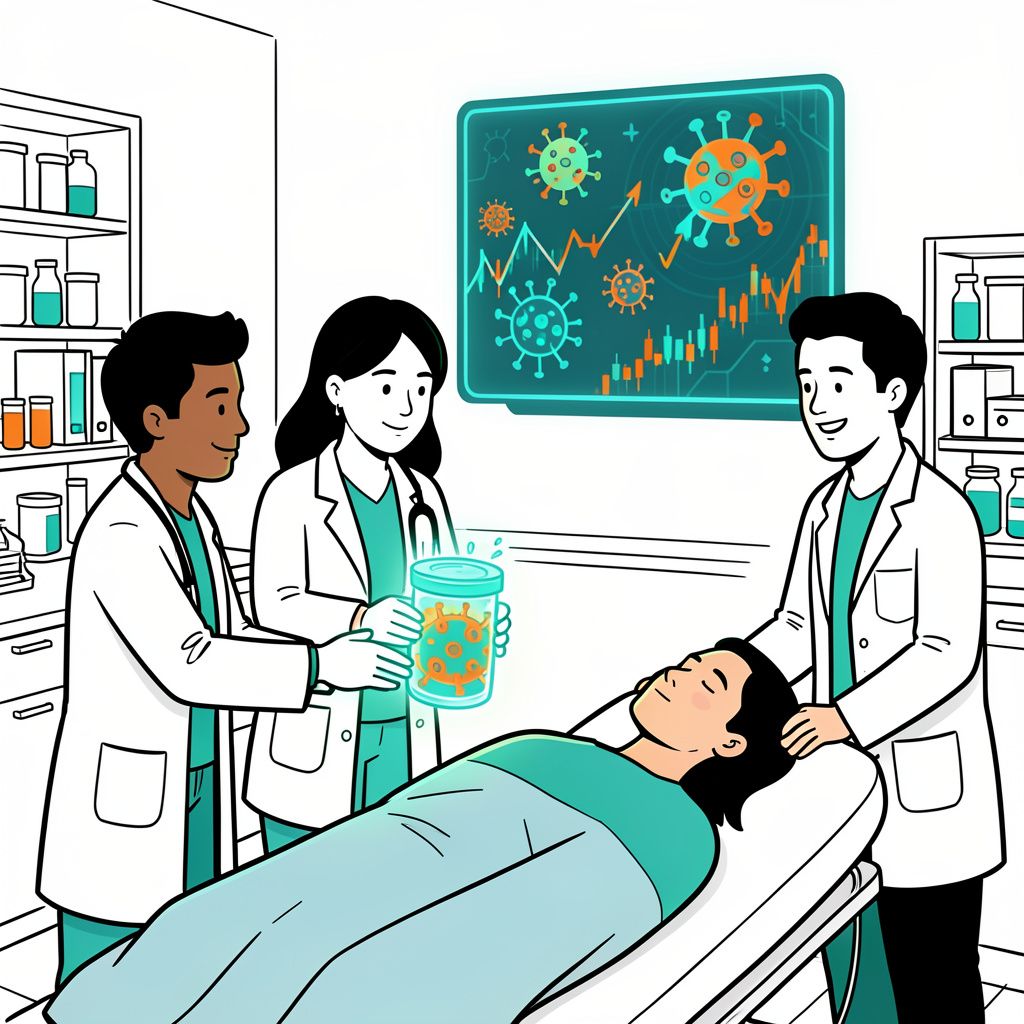
On 20 October 2026, California-based biotechnology startup Radical Numerics announced the first-ever administration of an artificial intelligence-designed virus to a human patient, marking a pivotal moment in the convergence of AI and synthetic biology [1][3][4]. The treatment, designated Omnii-1, utilized a custom-engineered bacteriophage to target an antibiotic-resistant bacterial infection under a compassionate-use protocol, following laboratory validation of its efficacy against the patient’s specific bacterial strain [1][3]. This milestone represents the culmination of years of research into AI-driven drug discovery, with Radical Numerics’ Omnii-1 model trained on a vast dataset of genomic sequences, phage genomes, and phage-host interaction data to rapidly generate therapeutic candidates tailored to individual patient needs [1][3][4].
The Science Behind Omnii-1: From Algorithm to Therapy
The Omnii-1 AI model, launched by Radical Numerics on 20 October 2026, is a multimodal genome language model capable of integrating 28 types of biological data, including DNA, RNA, proteins, and epigenetic signals [3]. Unlike traditional phage therapy, which relies on trial-and-error screening of natural bacteriophages, Omnii-1 designs novel phages de novo by optimizing for specificity, efficacy, and safety [3][5]. The company’s founders, including the team behind the Evo and Evo 2 large language models, previously demonstrated the feasibility of AI-designed phages in Science (August 2026), setting the stage for clinical translation [3]. The AI-generated cocktail administered to the patient was tested in vitro, where it demonstrated complete eradication of the antibiotic-resistant bacterial isolate, though the company has not disclosed specific clinical outcomes due to patient privacy [1][2][5].
Clinical and Regulatory Context: Compassionate Use and Unanswered Questions
The administration of Omnii-1 followed a compassionate-use pathway, a regulatory mechanism reserved for patients with life-threatening conditions and no viable alternatives, as confirmed by Radical Numerics’ CEO Eric Nguyen [3][5]. While the treatment’s success in laboratory tests is a promising sign, the lack of peer-reviewed data and undisclosed clinical outcomes introduce significant uncertainty [6][alert! ‘peer review pending’]. The New York Times notes that Radical Numerics’ self-published technical paper lacks rigorous external validation, a concern echoed by Harvard microbiologist Michael Baym, who emphasized that “extraordinary claims require extraordinary evidence” [6]. The company has stated its intention to publish findings in peer-reviewed journals pending patient consent, but no timeline has been provided [3][6].
Broader Implications and Industry Reactions
Radical Numerics’ achievement has sparked debate within the scientific and biotech communities. Dr. Marisa Azad, an infectious diseases physician-scientist at The Ottawa Hospital, highlighted the paradigm shift: “The hardest part of phage therapy is the blind search… Omnii changes what we’re searching with: instead of guessing and testing, we can point it at a resistant strain and get back designs built to match it” [3]. The startup is also exploring Omnii-1’s applications in personalized cancer vaccines, rare disease genomics, and biodefense, collaborating with institutions like Lawrence Livermore National Laboratory [3]. However, critics such as DrPH Alex Sundermann caution against overhyping AI’s role in fields with long-standing research histories, warning that commercial pressures may outpace scientific rigor [7]. The broader biotech sector, meanwhile, is closely monitoring Radical Numerics’ next steps, as the company’s success could accelerate investment in AI-driven synthetic biology [1][5].
Sources
- www.msn.com
- www.reddit.com
- www.tmcnet.com
- www.linkedin.com
- www.instagram.com
- futurism.com
- www.instagram.com