Converting Unsorted Plastic Waste into Clean Hydrogen Fuel
Washington, Wednesday, 5 August 2026.
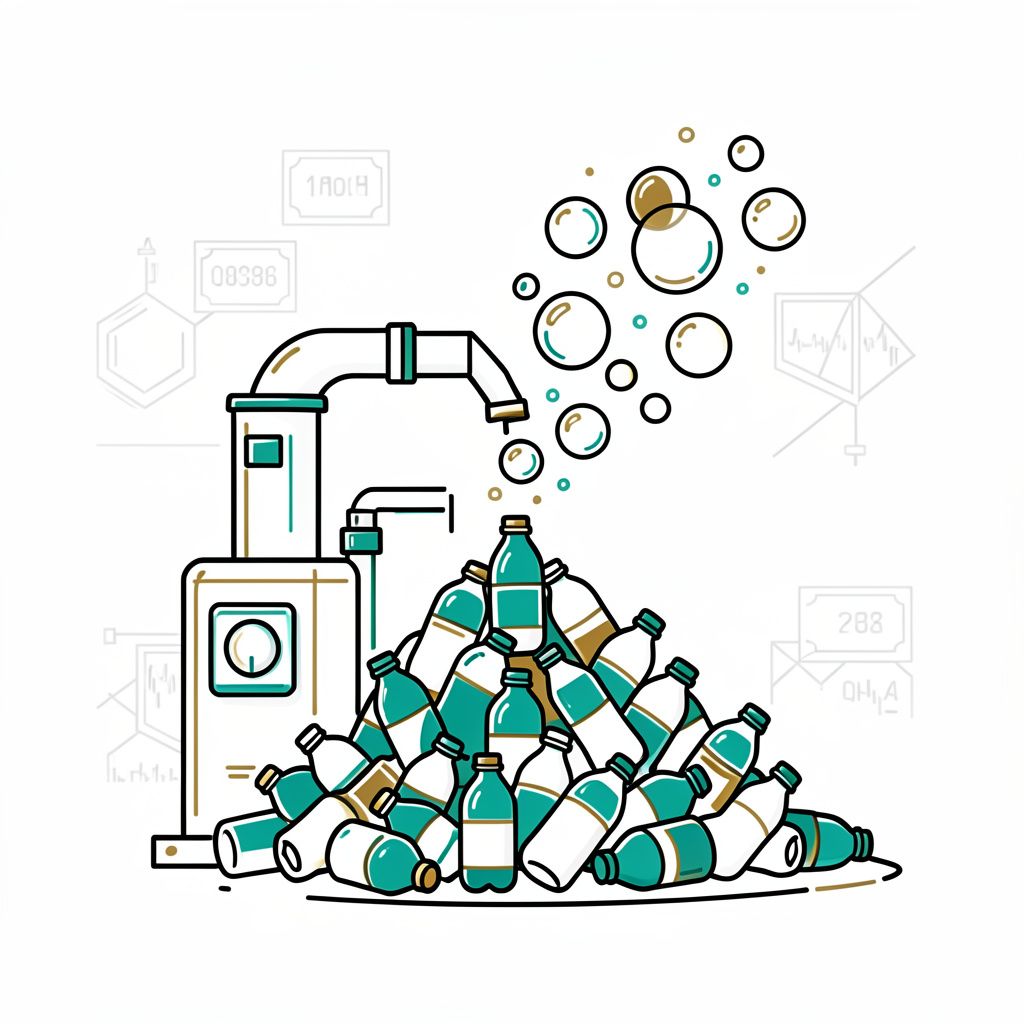
Engineers developed a low-temperature chemical process converting mixed plastics directly into over 90% pure hydrogen fuel while trapping up to 75% of carbon in stable mineral form.
Overcoming the Economic Barriers of Plastic Sorting
The global plastic crisis remains one of the most stubborn environmental and economic challenges of the modern industrial era. Globally, only 9% of discarded plastic is successfully recycled, while a staggering 79% ends up in landfills and 12% is incinerated, releasing carbon dioxide into the atmosphere [1]. This means that a combined total of 91% of all plastic waste is either buried or burned [1]. A primary obstacle to improving these figures has long been the prohibitive cost and complexity of sorting different polymer types before they can be processed. However, a groundbreaking chemical process announced on July 29, 2026, by researchers from the UCLA Samueli School of Engineering and Ewha Womans University, offers a way to bypass this sorting bottleneck entirely [1].
The Chemistry of Low-Temperature Decarbonization
The newly demonstrated method utilizes an alkaline thermal treatment (ATT) to convert mixed plastic waste—specifically polyethylene terephthalate (PET), polyethylene (PE), and polypropylene (PP)—directly into hydrogen fuel with a purity of greater than 90% without prior separation [1][2]. To process chemically resistant plastics like PE and PP, the researchers implemented a thermal oxidation pretreatment to add oxygen-containing functional groups to the polymers [1]. The ATT process itself utilizes sodium hydroxide to react with the organic material, operating at temperatures 300 °C to 400 °C lower than traditional steam gasification [1]. This significantly lowers the energy input required, presenting a highly attractive thermodynamic profile for industrial scaling [1][GPT].
Environmental and Commercial Viability
Beyond producing high-purity hydrogen, the ATT process represents a major step forward for carbon capture and storage. Rather than releasing carbon dioxide into the atmosphere, the reaction captures carbon by converting it into solid sodium carbonate [1]. Systematic analysis of the process indicates that over 75% of the initial carbon is successfully trapped in stable carbonate compounds or liquid organic residues, while less than 13% enters the gas phase [1]. According to researcher Woo-Jae Kim, reducing sorting costs and process complexity has the potential to turn this into a next-generation core technology supporting both the hydrogen economy and the circular economy [1]. While additional studies are required to optimize the process and evaluate its commercial economic viability before widespread deployment, the dual-benefit of mitigating plastic pollution while generating clean energy marks a major milestone in global decarbonization efforts [1].