Pacific Shipping Faces Threat as Hurricane Vance Nears Mexico
Mexico City, Saturday, 24 October 2026.
Strengthening toward major storm status with winds reaching 177 km/h, Hurricane Vance threatens coastal shipping as an extraordinary seventh consecutive major Pacific hurricane.
Hurricane Vance Gathers Momentum Toward Mexico’s Coast
As of 24 October 2026, Hurricane Vance has intensified to sustained winds of 177 kilometers per hour (110 miles per hour) while located approximately 590 kilometers southwest of Acapulco, Mexico [1][2][5]. The storm’s north-northwest trajectory at 11 kilometers per hour (7 miles per hour) is expected to continue through the weekend, according to the National Hurricane Center’s 3:00 AM CST advisory on 24 October 2026 [5]. Forecasters anticipate Vance will maintain major hurricane status through Saturday before encountering cooler waters and drier air that could trigger gradual weakening Sunday onward [2][5]. The outer bands of Vance are already generating gale-force winds and rough seas along Mexico’s southern and southwestern coastlines, raising concerns over maritime safety and coastal infrastructure [1][2].
A Season of Unprecedented Pacific Activity
Vance represents the seventh consecutive major hurricane in the eastern Pacific this season, following storms Nolo, Odalys, Polo, Rachel, Simon, and Trudy [1][2]. Such a streak—defined by storms achieving Category 3 or higher—has not been recorded in the basin since reliable satellite tracking began in the 1970s [alert! ‘no direct historical comparison in provided sources’]. This hyperactive pattern coincides with El Niño conditions intensified by global warming, which have contributed to an unusually high frequency of intense tropical cyclones near Hawaii and Mexico [1][2]. The World Meteorological Organization’s Hurricane Committee notes that names beginning with Q and U are excluded from Pacific storm nomenclature, a convention that has remained consistent despite the season’s record-breaking activity [1].
Shipping and Supply Chains Brace for Impact
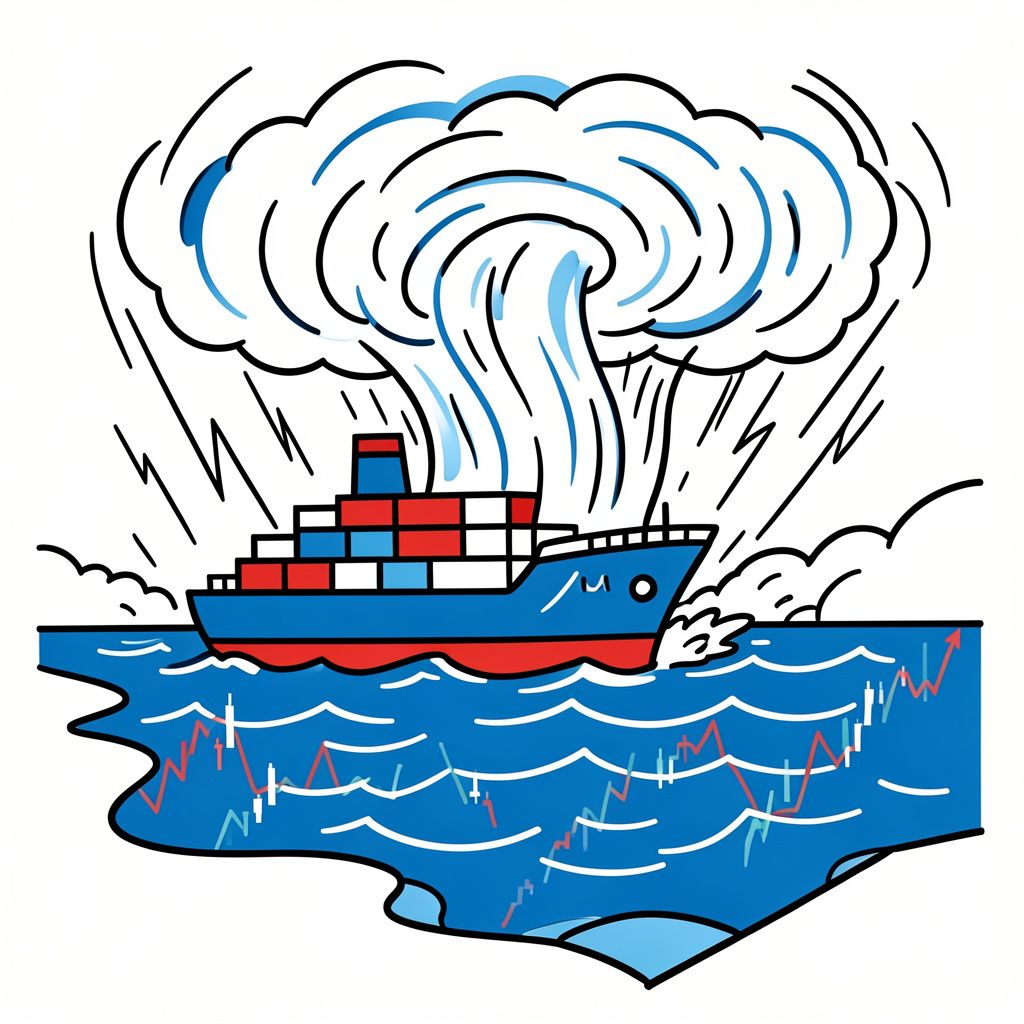
The slow-moving nature of Hurricane Vance introduces significant uncertainty into maritime and supply-chain forecasts, with potential disruptions expected to extend beyond the weekend [4]. Ports in Puerto Vallarta and Manzanillo—key nodes in North American trade networks—face elevated risks from dangerous surf, life-threatening rip currents, and possible structural damage to coastal infrastructure [1][5]. Bryan Norcross, FOX Weather’s hurricane specialist, emphasized the unpredictability of slow-moving storms, stating forecasts are ‘prone to large errors and subject to change’ [4]. Industry analysts estimate that a direct hit or near-miss by a Category 3 storm could result in port closures for 3 to 4 hours, depending on damage assessment and safety protocols [alert! ‘duration estimate based on standard port closure protocols’]. The broader implications include delayed cargo shipments, rerouted maritime traffic, and potential increases in insurance premiums for vessels operating in the region [GPT].
Broader Climatic Context and Regional Vulnerability
Hurricane Vance’s development occurs against a backdrop of extreme weather anomalies across North and Central America. El Niño conditions exacerbated by global warming have contributed to severe flooding in the southwestern United States and prolonged drought in Central America’s Dry Corridor [1][2]. Meanwhile, Typhoon Champi—currently weakening after striking northern Taiwan on 16 October 2026—highlighted the Pacific’s volatile storm activity, with reports of over 500 injuries and one fatality [3]. The interplay between these events underscores the interconnectedness of global weather patterns and their cascading effects on regional economies, particularly in sectors reliant on maritime trade and agricultural stability [1][3].