FAA Grounds All El Paso Flights for 10 Days Citing National Defense Risks
El Paso, Wednesday, 11 February 2026.
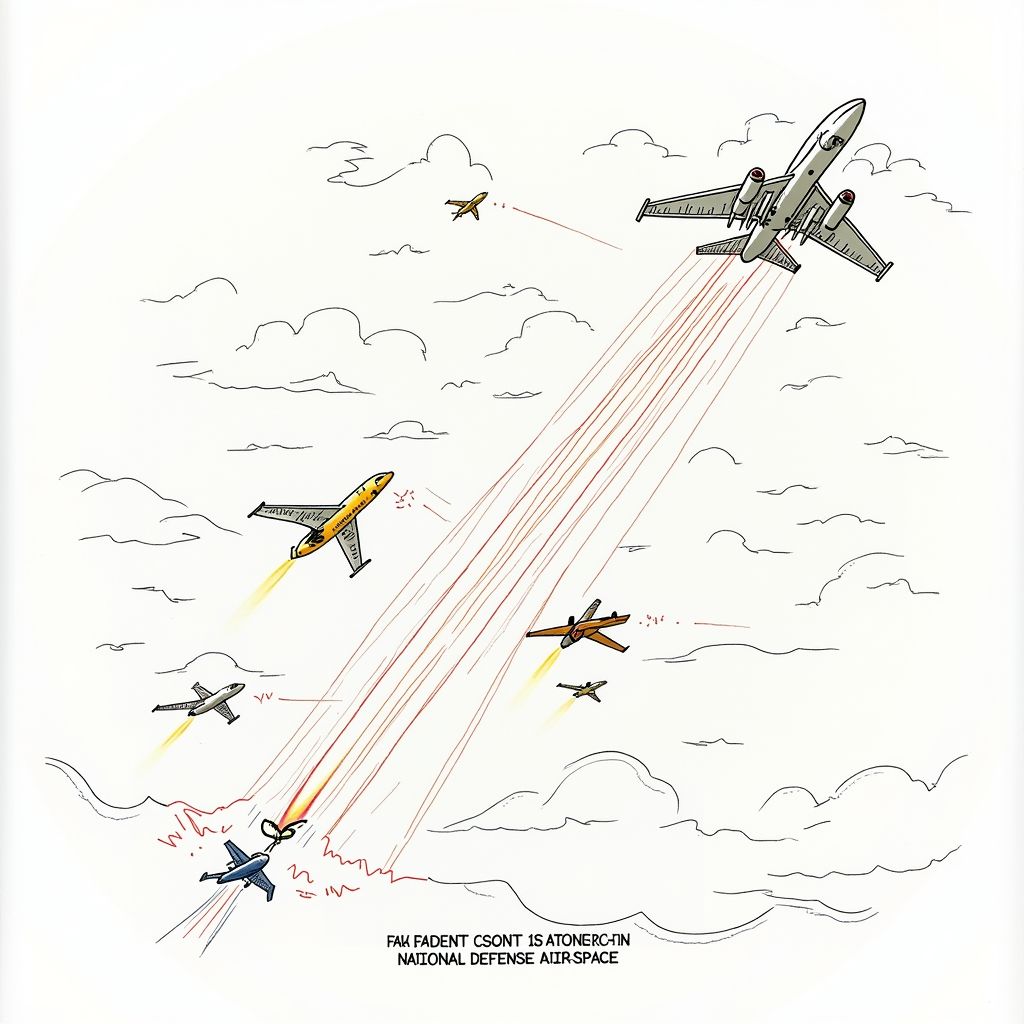
In a move unseen since 9/11, the FAA designated El Paso ‘National Defense Airspace,’ grounding all flights for ten days and authorizing deadly force against imminent threats.
Unprecedented Airspace Closure
In a directive that has effectively isolated a major American logistics hub, the Federal Aviation Administration (FAA) has grounded all flights at El Paso International Airport (ELP) for a ten-day period starting late Tuesday, February 10, 2026 [1][2]. The flight ban, issued via a Notice to Air Missions (NOTAM), took effect at 11:30 p.m. Mountain Standard Time and is scheduled to remain in force until February 20, 2026 [4][7]. This order encompasses all commercial, cargo, and general aviation operations, creating a total standstill in regional air traffic [1][4]. The restriction extends beyond the immediate airport vicinity, covering a 10-nautical-mile radius (approximately 18.5 kilometers) that includes Biggs Army Airfield and parts of southern New Mexico, specifically the area west of Santa Teresa [2][5]. While the order covers U.S. territory extensively, it explicitly excludes Mexican airspace, despite the airport’s proximity—approximately 6.4 kilometers—to the border [5][4].
National Defense Designation and Authorization of Force
The severity of this measure is underscored by the FAA’s specific classification of the area as “National Defense Airspace,” a designation that carries profound security implications [2][4]. The language used in the directive is stark, warning that pilots who fail to comply with the restrictions may be intercepted, detained, and interviewed by law enforcement or security personnel [1][5]. More critically, the FAA has stated that the United States government may utilize deadly force against any airborne aircraft if it is determined to pose an “imminent security threat” [2][7]. This level of aggressive posture regarding domestic airspace over a major city is historically rare; sources familiar with aviation protocols note that a similar extended closure for security reasons has not occurred over a major U.S. city since the terrorist attacks of September 11, 2001 [2][5].
Logistical Disruption and Economic Impact
The grounding creates an immediate bottleneck for regional travel and commerce. El Paso International Airport is a significant operational node, having handled 3.49 million passengers in the first 11 months of 2025 alone [1]. The closure forces a complete cessation of activity for major carriers including United, Delta, and American Airlines [1][7]. Southwest Airlines, the dominant carrier at ELP, faces the most significant operational disruption. Southwest accounts for approximately 45.053 percent of the 1,314 flights scheduled to depart from El Paso in February 2026 [7]. The operational freeze began almost immediately after the last arrival—an American Airlines flight from Chicago which landed at 10:57 p.m. local time on Tuesday—forcing subsequent inbound traffic, such as a private charter from Washington, to divert to Las Cruces, New Mexico [1].
A Vacuum of Information
Despite the drastic nature of the shutdown, federal authorities have provided scant detail regarding the specific threat that necessitated such a response. The FAA has officially cited “special security reasons” but has not elaborated on the nature of the national defense risk [1][5]. The opacity of the situation extends to local officials and even within the FAA’s own support centers. When contacted for clarification, an operator at the FAA’s Special Operations Support Center stated he was unable to explain the reason, noting, “we’re handed the sheets and they say go with it” [2][4]. Vincent Perez, a member of the Texas House of Representatives, expressed shock at the lack of communication, remarking that he had “never heard of an American airspace being shut down for 10 days, absent a major emergency” [5]. As of Wednesday morning, city officials confirmed that while airlines are being informed the issue appears security-related, they are pending additional guidance from federal authorities [4].
Sources
- www.nbcnews.com
- elpasomatters.org
- www.reddit.com
- www.borderreport.com
- news.sky.com
- www.facebook.com
- simpleflying.com
- www.facebook.com