Japan Core Inflation Holds at Three Percent, Reinforcing Central Bank's Shift Toward Higher Rates
Tokyo, Friday, 19 December 2025.
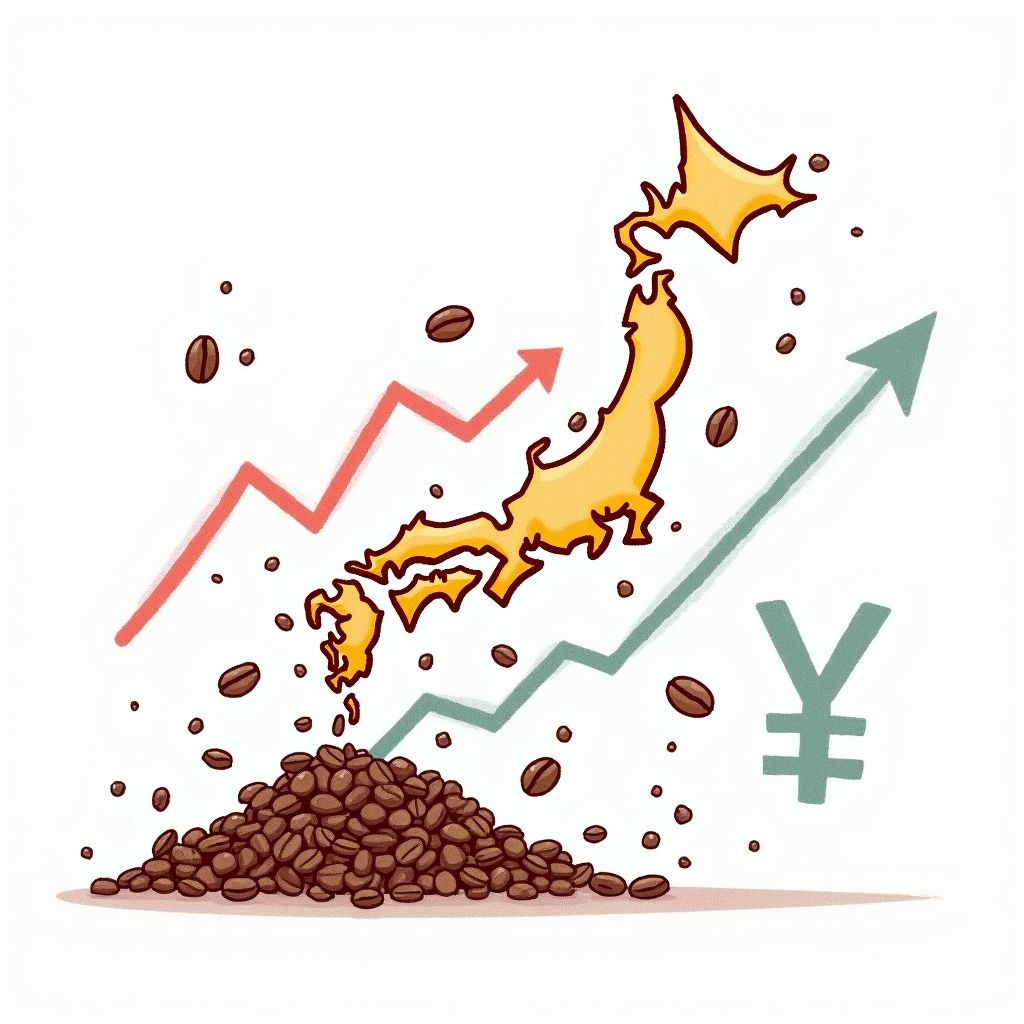
Japan’s core consumer prices rose 3.0% in November 2025, matching October’s pace and aligning perfectly with market forecasts. This marks the 44th consecutive month that inflation has exceeded the Bank of Japan’s 2% target, driven significantly by a 4.9% jump in electricity costs following the end of government subsidies. While the broader rise in food prices is showing signs of deceleration, specific commodities remain volatile, with coffee bean prices surging 51.6% due to weather conditions in Brazil. This sustained inflationary pressure validates the Bank of Japan’s decision today, December 19, to raise the policy interest rate to 0.75%, signaling a decisive move away from decades of ultra-loose monetary policy as the economy adjusts to a new environment of persistent rising costs.
Market Volatility Validated by Policy Shift
The release of today’s inflation data serves as the final piece of the puzzle regarding the market turbulence observed earlier this week. As reported in our previous coverage, “Nikkei 225 Breaches 49,700 Level as Tech Selloff and Rate Hike Fears Grip Tokyo,” investors had already begun pricing in the likelihood of monetary tightening, driving the benchmark index down by 1.35% on Tuesday. The confirmation that core consumer prices have remained at 3.0% for the second consecutive month [3][5] provided the Bank of Japan with the necessary empirical support to execute its widely anticipated rate hike. While the broader market had been bracing for this shift, the persistent nature of inflation—now tracking above the central bank’s target for 44 straight months [1][8]—underscores the complexity of the economic landscape facing asset managers in Tokyo.
Energy and Import Costs Drive Sticky Inflation
A granular analysis of the November Consumer Price Index (CPI) reveals that inflationary pressures are shifting from broad-based food increases to specific sectors influenced by policy changes and global supply shocks. Energy prices accelerated to a 2.5% year-on-year increase in November, up from 2.1% the previous month [5]. This surge was primarily propelled by electricity costs, which jumped 4.9% following the termination of government subsidies that had previously suppressed household utility bills [5][8]. Conversely, gasoline prices provided a slight offset, turning negative with a 0.9% decline as government subsidies for fuel were phased in [5].
End of an Era: BOJ Rates Hit 30-Year High
Responding to these entrenched price signals, the Bank of Japan concluded its Monetary Policy Meeting today, December 19, with a decision to raise the policy interest rate to 0.75% [6][8]. This move marks the highest policy rate Japan has seen in 30 years [6] and signifies a historic departure from the ultra-loose monetary framework that has defined the nation’s economy for decades. Governor Kazuo Ueda’s administration had previously indicated that the neutral rate is difficult to estimate, pegging it broadly between 1% and 2.5% [1], yet today’s decision suggests a commitment to normalizing policy as real interest rates remain deeply negative.
Future Outlook: Subsidy Effects to Return
Looking ahead, economists project a complex trajectory for Japan’s inflation metrics as fiscal policy re-enters the equation. Analysts at NLI Research Institute forecast that the core CPI will remain in the mid-2% range through December 2025 before potentially dipping below the 2% threshold in February 2026 [4]. This anticipated decline is attributed to the scheduled resumption of government support measures for electricity and city gas charges, which are expected to mechanically suppress the headline inflation figures early next year [4]. However, with the BOJ now firmly on a hiking path, the focus for investors will likely shift from monthly CPI fluctuations to the central bank’s assessment of the underlying trend inflation and the potential for further rate adjustments in 2026.
Sources
- www.cnbc.com
- www.stat.go.jp
- www.nikkei.com
- www.nli-research.co.jp
- jp.reuters.com
- news.web.nhk
- jp.tradingeconomics.com
- news.yahoo.co.jp