US F-15 Crashes in Kuwait Amid Emerging Reports of Iranian Strike
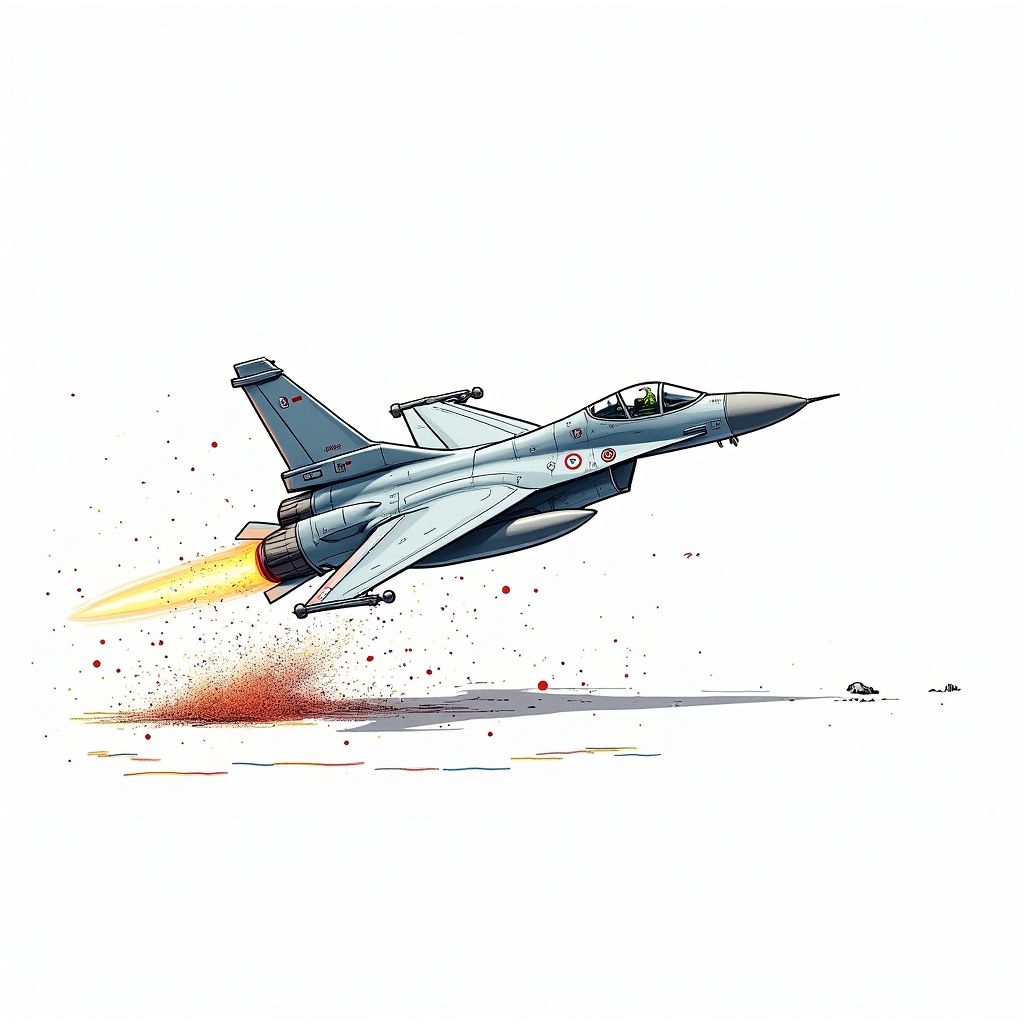
Kuwait City, Monday, 2 March 2026.
A US Air Force F-15 crashed in Kuwait today, with the pilot reportedly ejecting safely. While the cause remains under investigation, unverified claims of an Iranian strike following the reported death of Supreme Leader Khamenei threaten to drastically escalate the conflict.
Emergency in Kuwait: Pilot Ejects Amidst Regional Volatility
A United States Air Force F-15 Strike Eagle crashed in Kuwait today, Monday, March 2, 2026, marking a precarious development in a rapidly widening conflict. According to initial reports, the pilot successfully ejected from the aircraft prior to impact and was subsequently spotted on the ground, indicating the emergency escape systems functioned as intended [1]. This incident follows a weekend of intense hostilities described in our previous coverage, “Iran Targets U.S. Bases Across Five Gulf Nations in Retaliation for Joint Military Operation,” where Iranian forces launched a coordinated barrage against U.S. and allied positions. While the pilot appears to have avoided fatal injury, the loss of the advanced strike aircraft has triggered an immediate investigation by U.S. and Kuwaiti defense authorities to determine if the crash resulted from technical malfunction or the hostile fire claimed by emerging reports [1][2].
Casualties Mount as Operation Epic Fury Intensifies
The crash in Kuwait is not an isolated event but part of a violent continuum following the commencement of “Operation Epic Fury.” As of yesterday, March 1, U.S. Central Command (CENTCOM) confirmed that three U.S. service members were killed in action and five were seriously wounded in Kuwait due to ongoing hostilities [8]. This spike in American casualties underscores the severity of the Iranian retaliation, which has utilized a massive array of projectiles. The UAE Defense Ministry reported that since February 28, Iran has launched 165 ballistic missiles, 2 cruise missiles, and 541 drones solely at targets within the Emirates [8]. While interception rates were high, with 152 ballistic missiles and 506 drones neutralized, the volume of fire demonstrates Iran’s substantial offensive capabilities despite the joint U.S.-Israeli campaign intended to neutralize them [8].
Tehran’s Leadership Decapitated: Khamenei Confirmed Dead
The ferocity of the current exchange is directly linked to a seismic shift in Iran’s political hierarchy. On March 1, Iranian state television officially confirmed that Supreme Leader Ayatollah Ali Khamenei was killed in Tehran on February 28, 2026, during the initial wave of joint U.S.-Israeli attacks [8]. Israeli Prime Minister Benjamin Netanyahu corroborated the strike, stating that the operation had “eliminated dozens of senior officials of the oppressive regime” alongside Khamenei, describing the campaign as striking the “heart of Tehran” [8]. In the wake of this power vacuum, Iranian state media announced the formation of an interim leadership council comprising the president, the head of the judiciary, and a clerical member to manage the crisis [8].