Senate Advances Tentative Funding Deal to End 39-Day Homeland Security Shutdown
Washington, Wednesday, 25 March 2026.
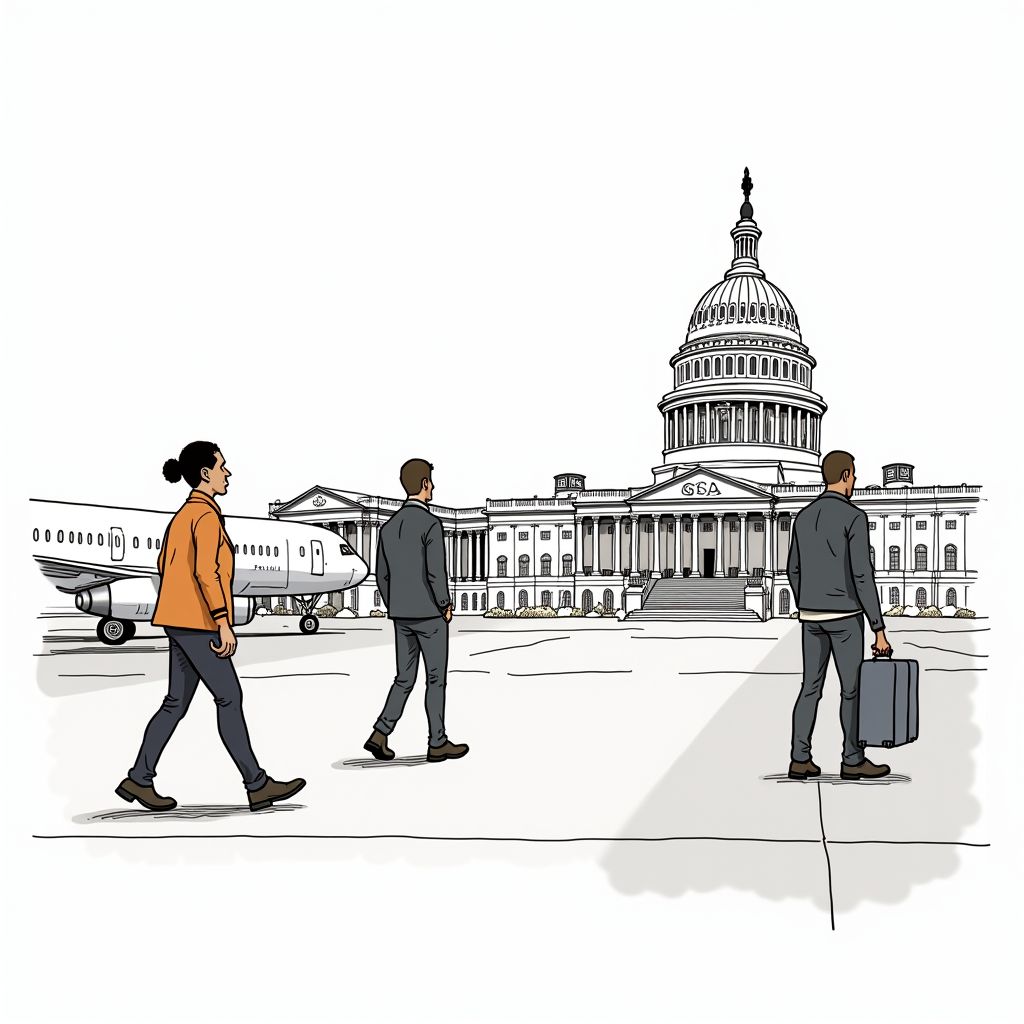
A tentative Senate deal aims to end the 39-day Homeland Security shutdown, which has caused severe airport delays as unpaid TSA agents are supplemented by paid immigration officers.
Fractured Support and Procedural Hurdles
Despite the movement, the proposed compromise faces intense skepticism. President Donald Trump expressed dissatisfaction with the emerging framework, stating, “I think any deal they make, I’m pretty much not happy with it” [2]. On the Democratic side, Senate Minority Leader Chuck Schumer (D-N.Y.) confirmed that his party is preparing a counteroffer containing “significant reform,” as Democrats continue to demand policy changes—such as mandatory body cameras and warrant restrictions—following the fatal shootings of two U.S. citizens by federal agents in Minneapolis earlier this year [1][2][5]. Meanwhile, Republicans are projecting a firm stance; Senator Steve Daines (R-Mont.) asserted that his party has “drew the line” and warned that if Democrats reject the offer, lawmakers will remain deadlocked through the Easter holiday [2].
Airport Chaos and Unprecedented Deployments
The political maneuvering in Washington contrasts sharply with the operational reality at airports across the country, where travelers are enduring wait times of up to four hours [4]. To mitigate the crisis caused by thousands of unpaid TSA agents calling out or quitting, President Trump deployed paid ICE officers to airport security checkpoints on March 23 [5]. The disparity in pay status stems from previous legislative actions; while TSA workers are victims of the current funding lapse, ICE agents continue to receive paychecks funded by the “One Big Beautiful Bill Act” and a 2025 tax law that allocated $75 billion for the agency over four years—an average of $18.75 billion annually [5].
Supreme Court Weighs Asylum Protocols
As Congress wrestles with the DHS budget, the judicial branch is simultaneously evaluating the department’s operational authority. On March 24, the Supreme Court heard oral arguments regarding the Trump administration’s policy of turning away asylum seekers at the U.S.-Mexico border before they can physically enter the country [6]. The legal debate centers on whether noncitizens must fully cross the border to claim asylum under federal law, which protects those “physically present” or who “arrives in” the United States [6]. During the proceedings, Justice Amy Coney Barrett questioned the semantic distinction of arrival, while Justice Sonia Sotomayor argued that agents have an obligation to process applications at ports of entry [6]. A ruling on this pivotal immigration policy is expected by early July 2026 [alert! ‘Exact date of ruling is pending the Supreme Court’s summer schedule’] [6].