Deere's Profit Forecast Raises Concerns for Farm Economy
Moline, Wednesday, 3 December 2025.
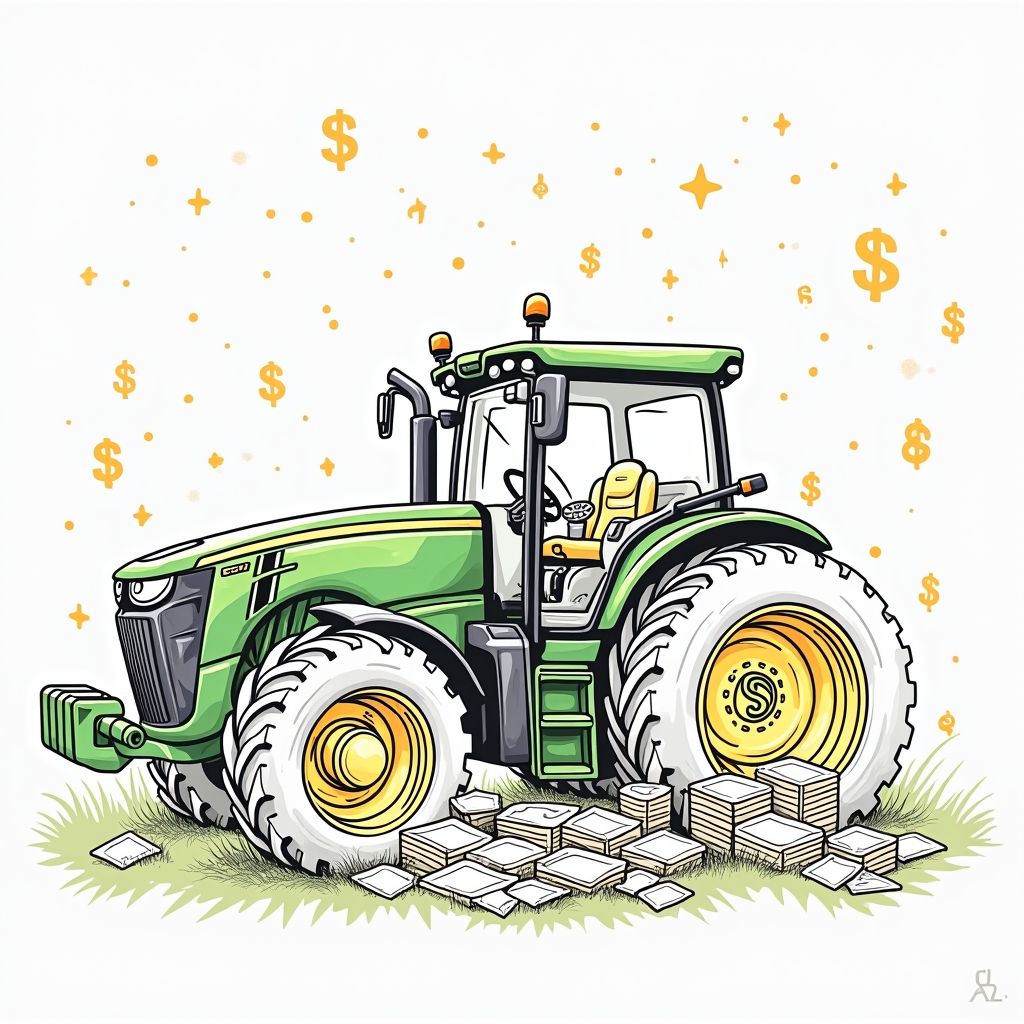
Deere & Co.’s 2026 profit forecast fell short, raising concerns about the agricultural sector’s health, especially amidst fluctuating soybean demand from China and potential impacts on farmers and investors.
Deere’s 2026 Profit Forecast and Market Reactions
Deere & Co. (NYSE: DE) announced its 2026 profit forecast, projecting net income between $4 billion and $4.75 billion. This estimate falls significantly short of Wall Street’s average expectation of $5.31 billion, leading to a steep 5.7% decline in the company’s share price in New York [1][2]. Such a forecast marks a decrease from the $5.027 billion reported for the previous fiscal year, indicating ongoing challenges within the agricultural sector [2]. Deere’s CEO, John May, emphasized that 2026 might represent the lowest point of the current agricultural cycle, reflecting broader economic uncertainties [2].
Implications for the Agricultural Sector
The disappointing forecast from Deere, the world’s largest farm machinery manufacturer, underscores the fragile state of the U.S. farm economy. With ongoing uncertainties surrounding tariffs and trade agreements, particularly with China, the agricultural sector remains vulnerable [1][3]. The forecast has sparked concerns about diminished demand for agricultural equipment, potentially impacting the financial stability of farmers already grappling with low crop prices and elevated production costs [2][3].
Soybean Market Dynamics
While Deere’s forecast has cast a shadow over the agricultural economy, the soybean market offers a glimmer of optimism. Overnight, soybean prices showed signs of recovery, with January soybean futures rising by 5.75 cents to $11.3375 per bushel. Despite this uptick, the cash soybean price dropped by 7 cents, reflecting ongoing volatility [1]. Analysts remain watchful of China’s buying patterns, as increased demand from the Asian giant could bolster U.S. soybean shipments, which have seen a significant decline compared to the previous marketing year [1][2].
Broader Economic Context
The challenges faced by Deere & Co. are not isolated but are indicative of broader economic pressures affecting the agricultural sector. As John May pointed out, the current environment is marked by heightened uncertainty and cyclicality, exacerbated by recent expansions in U.S. tariffs on steel and aluminum, which have increased operational costs for manufacturers like Deere [2][3]. The agricultural machinery market is witnessing a slowdown in demand, prompting companies like CNH Industrial to adjust their profit forecasts downward, further signaling a prolonged downturn [2].