Trump Warns of Military Intervention as Economic Collapse Fuels Iranian Unrest
Tehran, Friday, 2 January 2026.
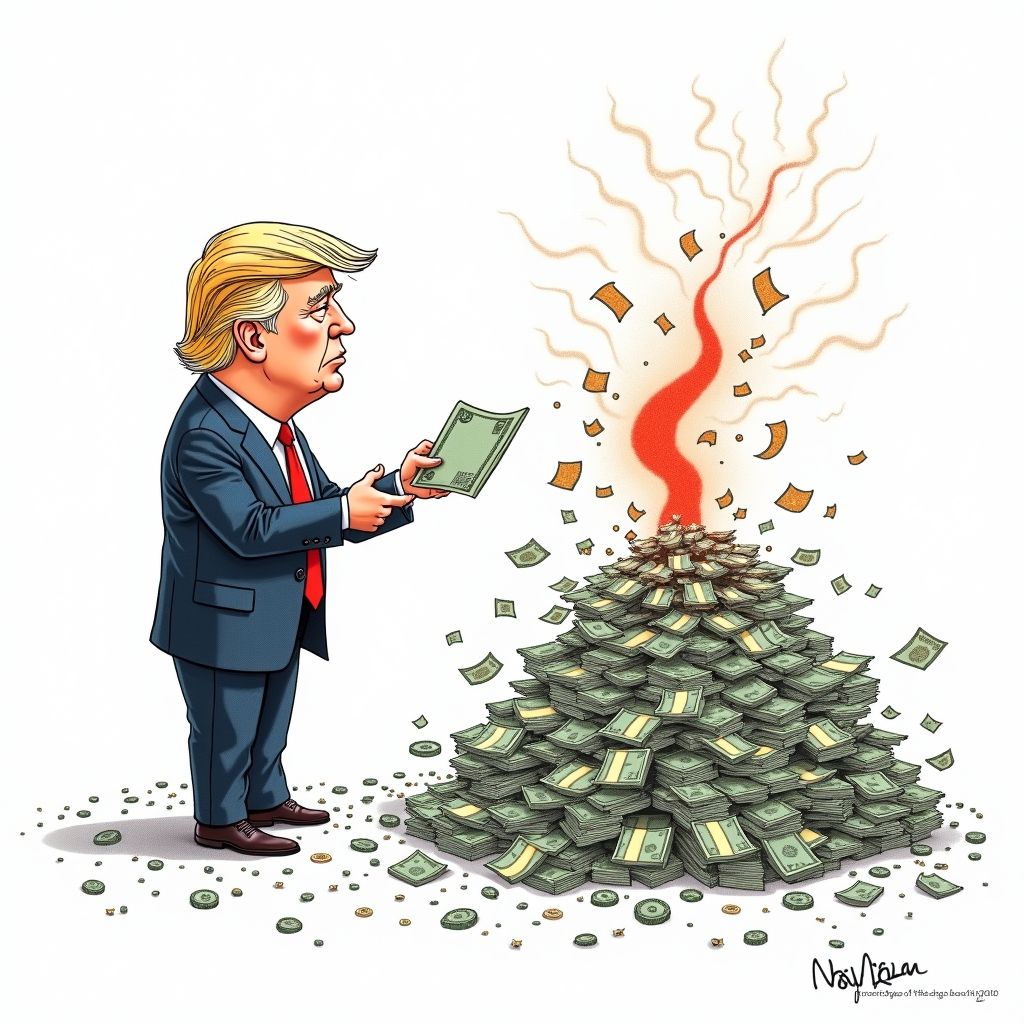
With Iran’s currency plummeting to 1.4 million rials per dollar, Trump warns the U.S. is “locked and loaded” to intervene if Tehran uses lethal force against protesters.
Escalation from Economic Stagnation to Military Threat
Following our previous report on Iran’s mass shutdowns across 21 provinces, the crisis in Tehran has shifted from a purely internal economic collapse to a potential international conflict. On Thursday, January 1, 2026, President Donald Trump escalated U.S. involvement by warning that the American military is “locked and loaded” to intervene should the Iranian regime use lethal force against demonstrators [1][5]. Writing on Truth Social, the President stated explicitly that if Iran “violently kills peaceful protesters… the United States of America will come to their rescue” [2]. This marks a sharp pivot from economic pressure to direct military posturing, just days after the Iranian Rial depreciated further to 1,400,000 per U.S. dollar [1].
Casualties Mount as Protests Spread
The President’s ultimatum was precipitated by confirmed reports of fatalities as protests entered their sixth day on Thursday [5]. As of today, Friday, January 2, reports indicate that at least seven to eight individuals have been killed in clashes between demonstrators and security forces [1][2]. The violence has been particularly acute outside Tehran; on Wednesday, December 31, six people were reported killed, including two in Lordegan and three in Azna [2]. Victims in Lordegan were identified as Ahmad Jalil and Sajjad Valamanesh, while another fatality, Amirhessam Khodayari, was recorded in Kouhdasht [2][5]. The unrest has since spread to Zahedan in the Sistan and Baluchestan province, historically a flashpoint for dissent [5].
Tehran Issues Counter-Threats
The Iranian leadership has responded to President Trump’s statements with immediate hostility, framing the unrest as foreign interference. Ali Larijani, Secretary of Iran’s Supreme National Security Council, warned today that U.S. intervention would destabilize the entire region and destroy American interests [1][2]. Larijani issued a veiled threat regarding U.S. military personnel, stating that Americans “should be mindful of their soldiers’ safety” [1]. This rhetoric was echoed by Ali Shamkhani, an adviser to Supreme Leader Ayatollah Ali Khamenei, who declared that “any interventionist hand that gets too close to the security of Iran will be cut” [5]. Meanwhile, Iranian President Masoud Pezeshkian stated on social media that any aggressive action by the U.S. would be met with a “harsh and regrettable” response [3].
A Volatile Regional Backdrop
This exchange of threats occurs against a backdrop of extreme fragility in the Middle East. The region is still reeling from the events of June 2025, when the U.S. struck three Iranian nuclear sites following a 12-day conflict between Israel and Iran [1][3]. In retaliation for those strikes, Iran launched an attack on the Al-Udeid Air Base in Qatar, which houses approximately 10,000 American troops [1][5]. Furthermore, President Trump met with Israeli Prime Minister Benjamin Netanyahu in Florida just this past Monday, December 29, to discuss the fragile Gaza ceasefire [3]. During that meeting, Trump noted that Iran might be “behaving badly” regarding ballistic missile production and warned of “consequences” that could be “more powerful than last time” [3]. With the Rial suffering a further decline of approximately 1.449% from the previously reported 1.38 million, the economic desperation fueling the protests shows no sign of abating, increasing the likelihood of further confrontation [1].