European Allies Reject U.S. Pressure in Iran Conflict as Global Oil Markets Face Historic Disruption
Brussels, Thursday, 26 March 2026.
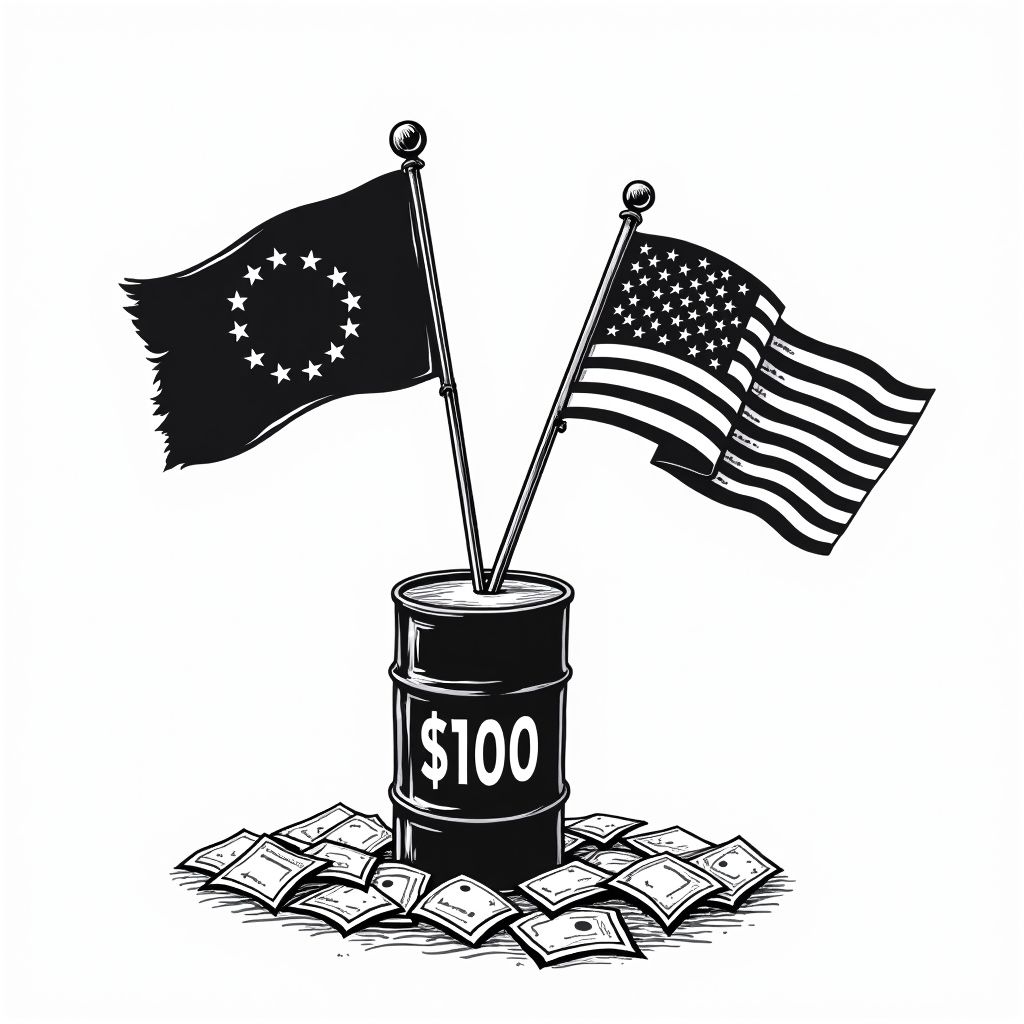
Europe’s refusal to join the U.S.-Iran conflict deepens a transatlantic rift. This standoff has triggered the largest oil disruption in history, sending crude prices soaring past $100 per barrel.
A Deepening Transatlantic Divide
On March 26, 2026, President Donald Trump publicly lambasted NATO allies, claiming the alliance has done “absolutely nothing” to assist the United States in its ongoing war with Iran [3][6][8]. This rhetoric has exposed a severe fracture within the transatlantic alliance. While NATO Secretary-General Mark Rutte has attempted to project unity—stating that NATO stands firmly with its allies and even suggesting European participation in a naval armada—his stance has deeply irritated several European capitals [5][8]. Leaders from Norway, Germany, Sweden, and Spain have pushed back aggressively, with Norwegian and German officials expressing concern that the near four-week-old war is both misjudged and illegal under international law [1]. German Defense Minister Boris Pistorius explicitly labeled the Trump administration’s handling of the crisis a “catastrophe,” affirming that German forces will not enter the Strait of Hormuz without a formalized U.S.-Iran peace settlement [6].
The Strait of Hormuz and Historic Energy Shocks
The focal point of this global anxiety remains the Strait of Hormuz, a narrow and highly strategic waterway connecting the Persian Gulf to the Gulf of Oman [GPT]. Tensions reached a boiling point following an Israeli airstrike on March 25, 2026, which killed Alireza Tangsiri, the naval commander of Iran’s Islamic Revolutionary Guard Corps (IRGC) [3][6]. According to Israeli Defense Minister Israel Katz, Tangsiri was directly responsible for the mining operations and the blockade of the strait [3][6]. The effective closure of this waterway has precipitated what former NATO Ambassador Ivo Daalder describes as the “largest oil and gas disruption in history” [7]. With shipments halted, Asian and European nations heavily reliant on Middle Eastern energy imports—such as Japan, which depends on the region for 90 percent of its oil—are facing severe supply chain vulnerabilities [4][7].
Geopolitical Realignments and Stalled Diplomacy
As Western economies grapple with inflation and supply shortages, rival powers are capitalizing on the chaos. Daalder notes that Russia is currently generating more than $150 million per day in additional revenue due to the spike in global oil prices, directly funding its own military endeavors [7]. Simultaneously, the conflict is forcing a massive strategic realignment for the United States. To sustain operations in the Middle East, the Pentagon is diverting critical military assets—including a carrier strike group and a Terminal High Altitude Area Defense (THAAD) system—away from the Indo-Pacific region [7]. There are even active deliberations within the Pentagon regarding the redirection of air defense interceptor missiles, originally slated for Ukraine, to support Middle Eastern operations, though a final decision remains pending [alert! ‘A final decision has not been made according to Pentagon sources’] [6][8]. This pivot leaves a strategic vacuum in Asia, positioning China as a primary political and economic beneficiary of the crisis [4][7].
Sources
- www.youtube.com
- www.nbcnews.com
- www.theguardian.com
- sfs.georgetown.edu
- www.ft.com
- www.thetimes.com
- thehill.com
- www.independent.co.uk