Porsche Challenges Tesla Over Theatrical Electric Vehicle Showcases
Stuttgart, Wednesday, 11 November 2026.
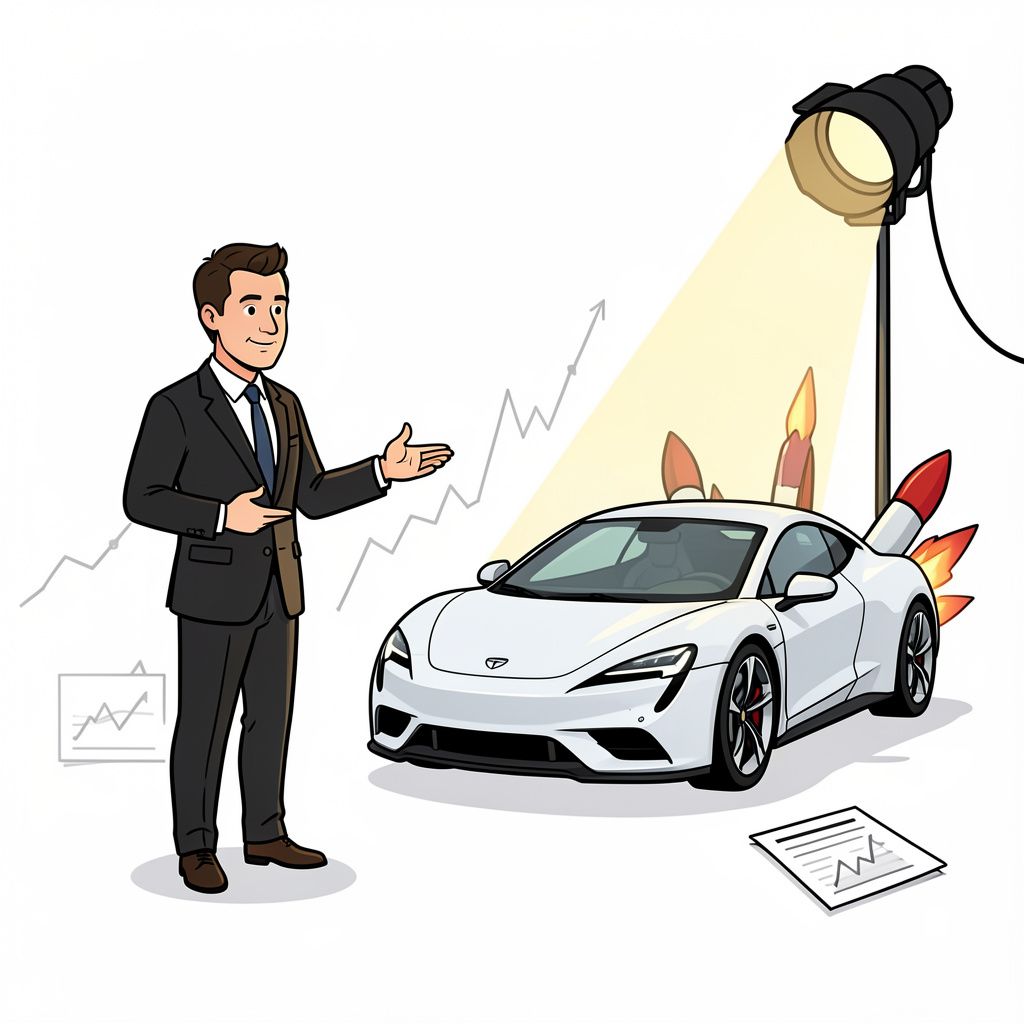
Porsche CEO Michael Leiters dismissed Tesla’s rocket-thruster Roadster demonstration as mere spectacle, asserting Porsche prioritizes engineering substance over gimmicks to win discerning sports car buyers.
Porsche’s Strategic Dismissal of Tesla’s Flying Roadster Spectacle
Porsche AG CEO Michael Leiters delivered a pointed critique on 11 November 2026, characterizing Tesla’s recent flying Roadster demonstration as little more than staged theatrics designed to captivate audiences rather than deliver engineering substance. ‘We want to completely steer clear from any kind of effects and shows,’ Leiters stated during a press conference in Berlin, directly challenging the validity of Tesla’s rocket-thruster vehicle showcase that debuted alongside Porsche’s own Mission S concept on 15 October 2026 [3][4][5]. The contrast between the two presentations underscores a fundamental divergence in product philosophy: Porsche emphasizes track-proven electric vehicle performance and measurable technological innovation, while Tesla’s marketing strategy has increasingly relied on high-profile stunts to generate buzz for products still years from mass production [1][2][3].
The Timing and Context of the Rival Unveilings
The simultaneous concept car reveals on 15 October 2026—held in Los Angeles for Tesla and in Munich for Porsche—represented more than coincidental timing; they marked a deliberate positioning clash within the premium electric vehicle market. Tesla’s Roadster demonstration featured cold-gas thrusters that enabled a brief hover, a spectacle Elon Musk had teased for years and finally showcased to global audiences [2][3]. In contrast, Porsche’s Mission S, priced at $135,500 [2], signals the Stuttgart-based automaker’s strategic return to the sports car segment after a decade-long hiatus following the discontinuation of the 918 Spyder in 2015 [2]. While Tesla’s presentation leaned heavily into futuristic imagery and speculative performance claims, Porsche framed the Mission S as a culmination of decades of motorsport engineering and real-world validation [1][2].
Market Signals and Strategic Realignment
The public exchange between the two automakers arrives amid broader strategic shifts in the global electric vehicle landscape. Tesla, despite its pioneering role in EV adoption, has faced declining sales momentum and growing investor skepticism, with shares trading at $392.17 on 11 November 2026—up 3.26% on the day, yet down significantly from earlier highs [8]. Reports indicate Tesla is winding down Cybertruck production to pivot toward autonomous vehicle platforms and robotaxis, with plans to halt Cybertruck output within approximately eight months to focus on Cybercab development [8]. Meanwhile, Porsche’s Mission S—expected to surpass the 911 in price and performance—represents a calculated effort to reassert dominance in the high-performance sports car segment, a market Porsche views as immune to the volatility of speculative technology demonstrations [2][8].
Broader Industry Implications and Leadership Perspectives
Industry observers note that the exchange reflects deeper philosophical divides within the automotive sector. Ferrari CEO Benedetto Vigna publicly rated Tesla’s Roadster launch as ‘10 out of 10’ in terms of spectacle, highlighting the entertainment value Tesla prioritizes in product launches [2]. However, Porsche’s leadership insists that substance—not style—will dictate future success in the premium segment. ‘Any kind of effects and shows’ are insufficient to build long-term brand loyalty, Leiters remarked, positioning Porsche’s approach as a corrective to Silicon Valley’s culture of vaporware marketing [1][3][5]. This stance aligns Porsche with a growing chorus of legacy automakers emphasizing engineering credibility over flashy demonstrations, particularly as electric vehicle adoption matures and consumer demand shifts toward reliability and utility [GPT].