How the Middle East Conflict Could Unexpectedly Cause Global Deflation
New York, Friday, 28 August 2026.
Massive overinvestment in supply chains during the Middle East war may create vast overcapacity, potentially triggering global economic deflation by 2030 despite current short-term inflation.
Strategic Warnings on Deflation
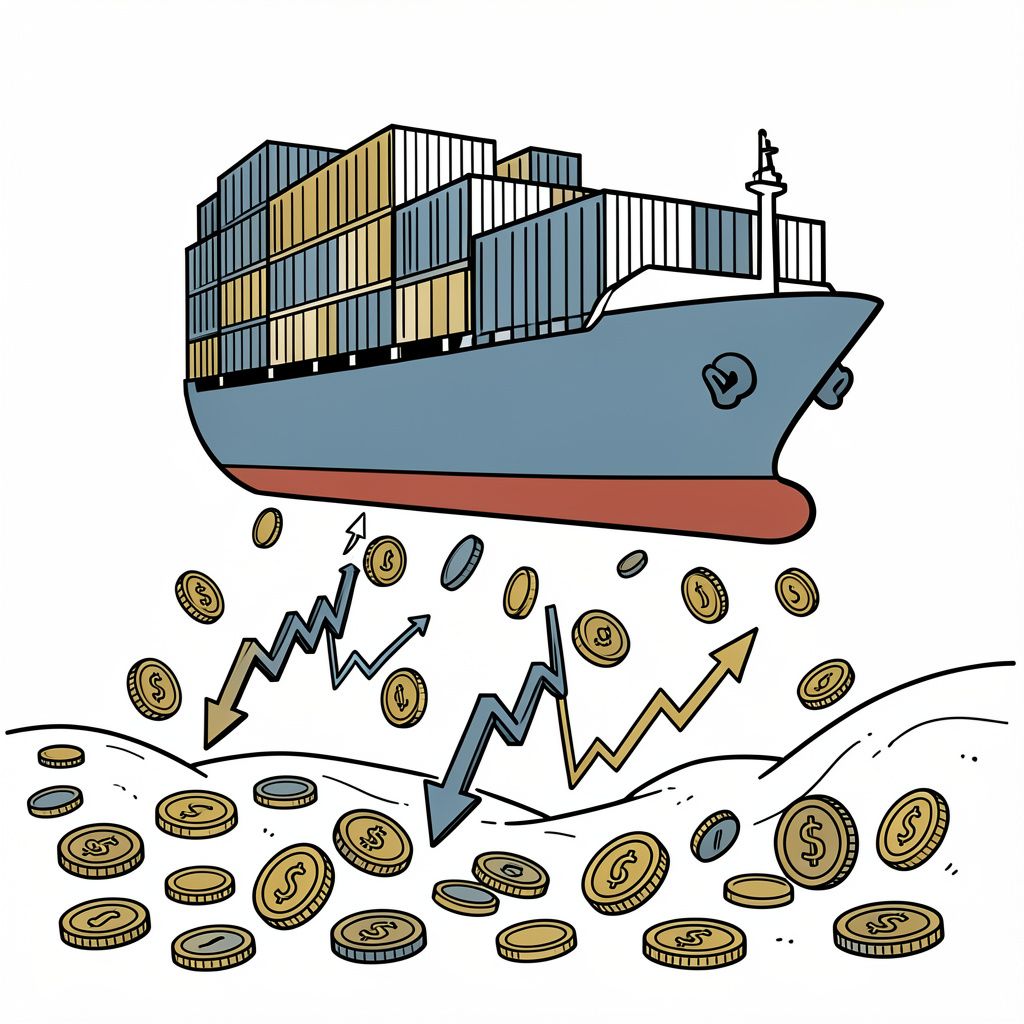
Market strategists are issuing warnings that prolonged geopolitical tensions in the Middle East could ultimately trigger an unexpected wave of deflation across the U.S. economy by 2030 [1][4]. While immediate concerns have focused on elevated inflation driven by commodity spikes, economic analysts argue that corporate overinvestment in supply chain redundancies and infrastructure resilience could lead to severe oversupply and rapid price collapse once demand cools [1]. Marko Papic, Chief Investment Strategist at BCA Research, noted in a client report on 25 August 2026 that the real consequence of the Hormuz Strait crisis is a capital expenditure surge that may not be needed [1][4]. This perspective suggests that while price pressures remain elevated for now due to supply shocks, the resulting excess capacity may cause disinflation in the 2030s [1][4].
Capital Expenditure and Overcapacity
Global macro policy has shifted toward building excess supply capacity to increase resilience, a trend that began with the pandemic and intensified following the 2022 Russia-Ukraine war [1]. Papic argues that repeated supply shocks drive government and business spending into not only defense but also energy, infrastructure, and supply-chain redundancy [1][4]. The world could by the 2030s become awash with alternative energy, new transportation corridors, and a plethora of semiconductor fabs, creating a disinflationary environment [1][4]. Despite the closure of the Strait of Hormuz, which normally transits approximately 20% of global oil supply, current global supply chains remain functional rather than brittle [1].
Infrastructure and Technology Investments
The U.S. government is committing billions to supply chain capacity, including a $17.5 billion Department of Energy loan program for the nuclear supply chain announced in the summer of 2026 [1][4]. Additionally, Meta, Microsoft, Amazon, and Alphabet are projected to spend over $5 trillion on AI-related capital expenditures through the end of the 2020s, with 2026 guidance exceeding $700 billion [1][4]. This represents a potential 4300 billion increase in spending over the coming years [1][4]. US bond yields rose on Wednesday following the release of the July personal consumption expenditures (PCE) report, which showed year-over-year inflation at 3.7%, exceeding expectations [1].
Diverging Economic Realities
In contrast to the U.S. outlook, the Iranian economy faces significant challenges due to geopolitical conflicts, specifically the Israeli attack on Iran in June 2025 and subsequent US-Israel attacks in February 2026 [2]. Researchers from the University of Southern California and Birkbeck, University of London identified two primary economic scenarios: a positive scenario involving a hostile truce, and a negative siege economy scenario involving continued hostilities and a risk of hyperinflation [2]. As of mid-August 2026, the Iranian rial was trading at approximately 190,000 toman per US dollar, reflecting a 50% decrease in value over the past year [2]. The Statistical Centre of Iran reported year-on-year inflation at 87.9% through July 2026, with rural inflation reaching 106.9% [2].
Long-Term Economic Outlook
Future inflation trajectories are contingent upon the continuation of sanctions and conflict, with the text noting the danger of transitioning to hyperinflation if the conflict with the US persists over the next year or so [2]. The Islamabad Memorandum, signed 17 June 2026 by the United States and Iran, established a 14-point framework to end military strikes, though hostilities resumed due to conflicting interpretations regarding navigation rights [2]. While high inflation can be maintained for long periods without becoming hyperinflation, the transition is driven by excessive monetary financing of deficits and a breakdown in wage-price controls [2]. Strategists warn that while the U.S. may face deflation by 2030, the immediate future remains tied to the resolution of these geopolitical tensions [1][4].