American Exports to China Decline Sharply as Trade Tariffs Take a Heavy Toll
Washington, Tuesday, 20 October 2026.
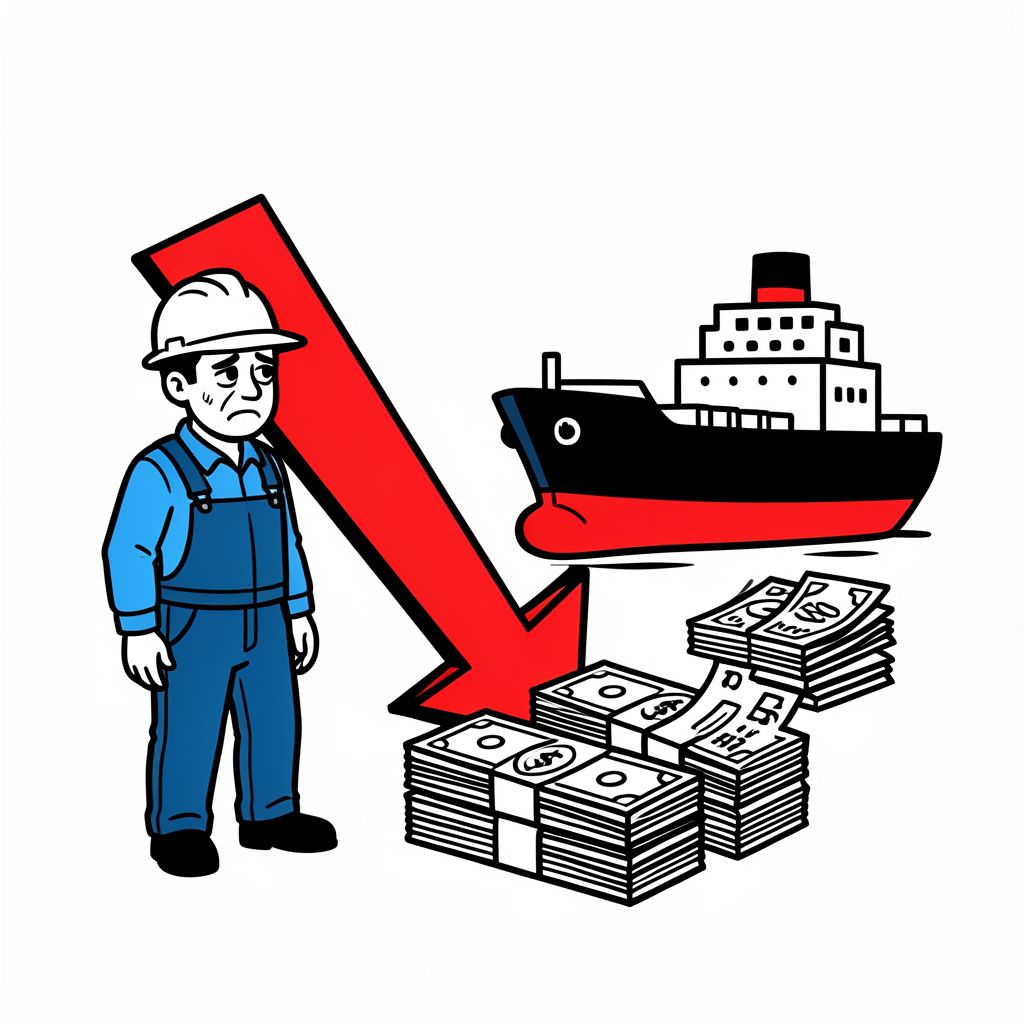
Severe reciprocal tariffs caused American exports to China to plunge in 2025, costing 148,000 U.S. jobs and cutting China’s reliance on American goods to just 6%.
Trade War Escalates: Export Collapse and Job Losses
American exports to China plummeted in 2025, driven by unprecedented reciprocal tariffs that impacted nearly all product categories [1]. The economic fallout has been severe, resulting in 148,000 fewer U.S. jobs supported by trade with China compared to 2024 levels [1]. Business leaders report that few domestic regions or industries have escaped the resulting financial strain, raising serious concerns over supply chain resilience [1]. As of October 19, 2026, China remains the third-largest export market for the United States, though import substitution strategies threaten long-term recovery [1]. The US share of China’s total exports dropped from approximately 18% in 2017–2018 to roughly 6% by mid-2025 [2]. This shift indicates a significant decoupling, with China’s total trade surplus reaching US$1.2 trillion in 2025 [2].
Agricultural Sector Under Pressure
The agricultural sector has faced disproportionate challenges, particularly in fossil fuels and farming goods [1]. In 2025, the total export value for U.S. soybeans was $16.2 billion, representing a significant deviation from the 3-year average of $22.84 billion [3]. The compound average growth rate for soybean exports from 2016 to 2025 stands at -3.38%, highlighting the long-term contraction [3]. The percentage difference from the 3-year average can be expressed as -29.072 [3]. While beef exports climbed in volume by four percent in August due to demand from Taiwan and South Korea, China remains a challenge due to ongoing trade restrictions [4]. Unresolved technical requirements continue to limit shipments of U.S. beef into the Chinese market, complicating recovery efforts for cattle producers [4].
Shifting Global Trade Dynamics
China’s export reliance on the U.S. has declined significantly, driven by strategies to expand markets beyond the U.S. following the 2024 election [2]. In the first eight months of 2026, China’s exports to the U.S. totaled approximately US$300.3 billion, a decrease from the 2018 annual peak of roughly US$486.9 billion [2]. Factors driving this supply chain diversification include rising labor costs since 2013 and pandemic-era disruptions [2]. Despite broader contractions, sectors including pharmaceuticals, medical equipment, aerospace, and semiconductors remained stable or performed well [1]. American companies and industry advocates are calling for ongoing trade negotiations to secure lasting tariff relief to expand market access [1]. Recent discussions suggest that economic engagement strengthens prospects for global trade stability [5].
Domestic Economic Ripple Effects
Specific states have experienced the largest declines in export dollar volume, including Texas, California, Louisiana, and Indiana [1]. The impact extends to consumer costs, as tariffs threaten grocery bills across various states [6]. Data highlights which food items in which U.S. states are most exposed to these import fluctuations [6]. Washington ranks #13 for food import exposure, illustrating the widespread nature of the tariff effects [6]. Policymakers are closely monitoring the data as few domestic regions have escaped the financial strain [1]. The timeline for recovery remains uncertain as negotiations continue into late 2026 [1].
Sources
- www.uschina.org
- www.linkedin.com
- www.fas.usda.gov
- www.aginfo.net
- www.facebook.com
- www.omakchronicle.com