Saudi Central Bank Departs Beijing's Digital Currency Network in Major Setback for De-Dollarization
Beijing, Tuesday, 22 September 2026.
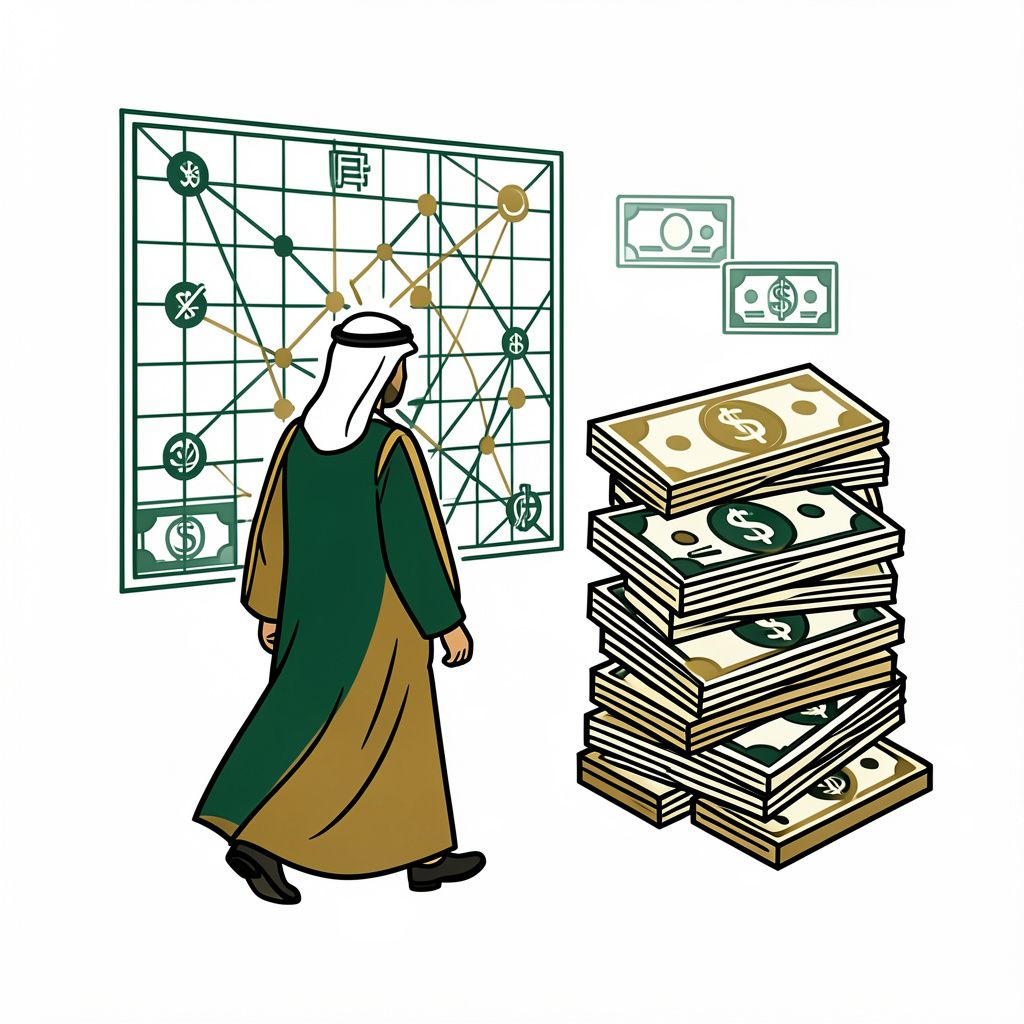
Saudi Arabia’s central bank has officially exited China’s mBridge digital payment platform following a completed trial, reinforcing the dollar’s dominance in global oil trade despite ongoing alternative settlement efforts.
Timeline of Participation and Withdrawal
The mBridge platform was originally established in 2021 through a collaboration involving the Bank for International Settlements (BIS) Innovation Hub and central banks from China, Hong Kong, Thailand, and the United Arab Emirates [1][2][3]. Saudi Arabia’s central bank, SAMA, initially joined the initiative as an observing member in 2023 for research purposes before upgrading to a full participant status in June 2024 [1][2]. The project reached its minimum viable product stage in October 2024, at which point oversight was transferred from the BIS to the participating central banks [2][3]. SAMA confirmed that it successfully completed its proof of concept on 13 May 2025, after which it ceased to be a participating member [1][2][3].
Strategic Implications of the Exit
Reports emerging in September 2026 indicate that the withdrawal was not publicly announced at the time of occurrence, with confirmation provided to the Financial Times via a central bank statement [3][4]. While the platform continues to operate and reported transaction volumes surpassing $55 billion earlier in 2026, the departure of the world’s leading oil exporter is viewed as a significant metric for the petrodollar’s resilience [1][2]. Deutsche Bank analysts note that the dollar’s dominance in cross-border trade is arguably built on the petrodollar system, where globally traded oil is priced and invoiced in USD [1]. This structural reliance suggests that alternative settlement mechanisms face substantial hurdles in displacing established fiat corridors [1].
Geopolitical Currents and External Pressures
Speculation regarding the motivation behind the exit includes potential influence from United States policymakers, particularly given the timing of bilateral agreements [4]. On 13 May 2025, the same day SAMA completed its proof of concept, President Donald Trump visited Saudi Arabia and announced a roughly $140 billion arms deal between the two nations [4]. Some media outlets suggest US pressure influenced the decision, though this remains attributed to anonymous sources and media interpretation rather than official government confirmation [2][4]. An insider source claimed SAMA continues working with the programme quietly, highlighting the ambiguity surrounding the depth of the disengagement [2].
Project Viability and Institutional Shifts
Questions regarding the technical and economic viability of the platform also persist following the BIS departure in October 2024 [1][3]. BIS General Manager Agustín Carstens stated that the institution’s exit was not politically motivated but rather a result of having “graduated out” as central banks became capable of independent operation [2][3]. However, financial analysts have argued that the project faced challenges such as expensive pre-funding requirements that may have deterred long-term commitment [4]. Despite Saudi Arabia’s exit, the network has continued to expand, with Macau joining as a participant on 2 June 2026 [2].
The Enduring Petrodollar Architecture
The petrodollar system, established in 1974, remains central to the global financial order with the USD accounting for approximately 90% of global transactions [1]. Global efforts to bypass the U.S. dollar intensified following 2022 U.S. sanctions against Russia, leading central banks to increase gold holdings and reduce reliance on U.S. Treasuries [1]. While Saudi Arabia has historically explored pricing oil sales to China in yuan, the recent withdrawal from mBridge underscores the enduring strength of existing financial architectures [1][3]. Future developments in wholesale payments may depend on Western-led alternatives such as Project Agorá to shape the next generation of settlement rails [4].