New Metal Tariffs Prompt Construction Fleets to Prioritize Repairs Over Replacements
Washington, Tuesday, 17 November 2026.
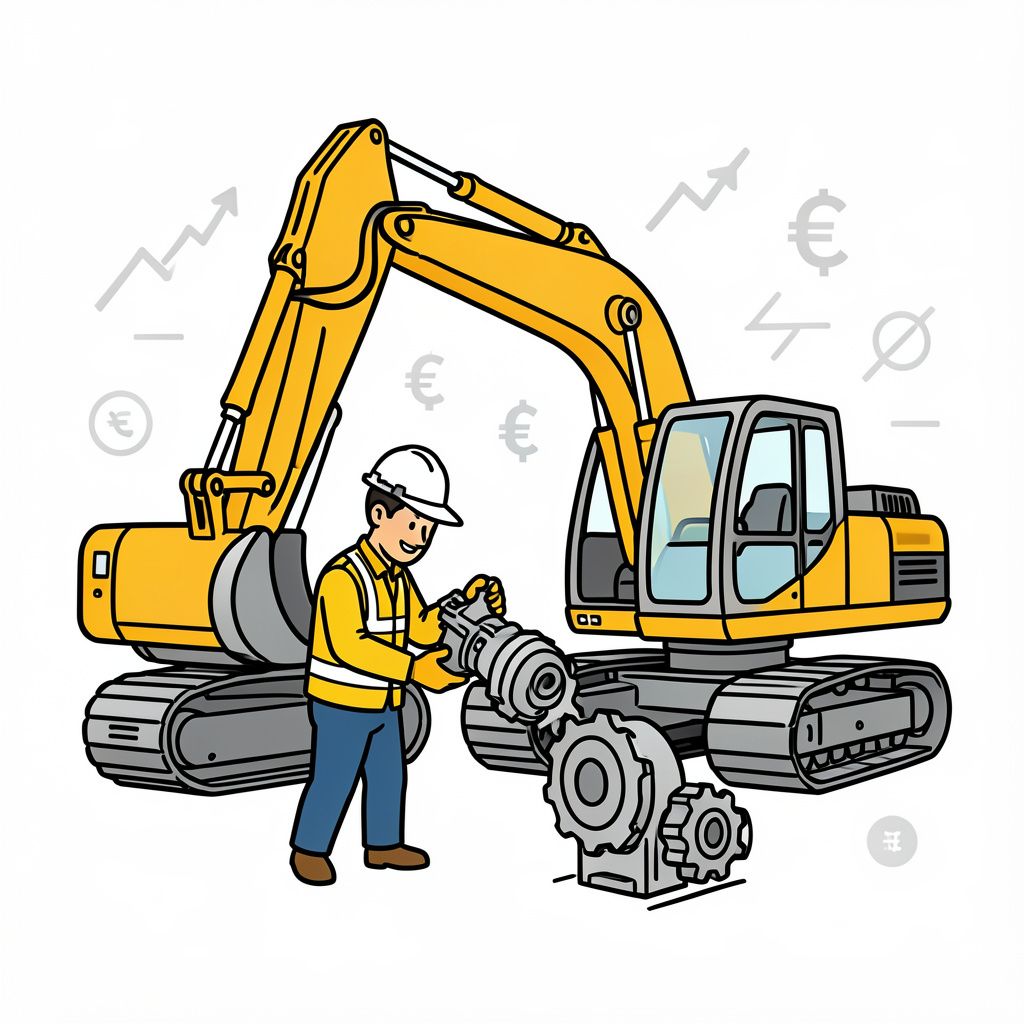
With temporary 25% import tariffs raising new machinery prices through 2027, construction fleet managers are overhauling existing equipment, turning to remanufactured hydraulic components to avoid steep capital costs.
White House Adjusts Section 232 Tariffs: A Temporary Surge in Equipment Costs
On June 1, 2026, the White House issued a presidential proclamation adjusting Section 232 tariffs on imported aluminum, steel, and copper, temporarily increasing duties on mobile industrial equipment and machinery from June 8, 2026, through December 31, 2027 [1]. Under this temporary schedule, many imported machines now carry an additional 25% duty, significantly raising the cost of new machinery purchases for construction fleets [1]. The proclamation explicitly describes construction equipment as essential to American reindustrialization, underscoring the administration’s focus on domestic manufacturing capacity [1]. Rates are scheduled to revert to the April 2026 schedule on January 1, 2028, creating a defined window of elevated costs that fleet operators must navigate [1].
Economic Ripple Effects: How Tariffs Are Reshaping Capital Expenditure Decisions
The temporary tariff adjustments have introduced a sharp divergence in the cost-benefit analysis between repairing existing machinery and purchasing new equipment. Fleet managers are recalculating depreciation schedules and total cost of ownership, with the 25% duty on imported machinery acting as a de facto tax on fleet expansion [1]. Remanufactured components—such as hydraulic pumps and motors—have emerged as a cost-effective alternative, enabling operators to extend the service life of existing assets without incurring the full brunt of the new tariffs [1]. For example, rebuilding a hydraulic motor can restore track drives and swing motors to near-original performance at a fraction of the cost of a new unit [1]. This shift reflects a broader economic trend: when capital goods become more expensive due to trade barriers, businesses tend to prioritize efficiency gains through maintenance rather than growth through acquisition [GPT].
Industry Response: Maintenance Overhauls and Strategic Delays
Construction fleet operators are adopting a two-pronged strategy to mitigate the impact of higher tariffs. First, they are accelerating comprehensive overhaul programs, focusing on components with high wear-and-tear such as hydraulic systems, engines, and drivetrains [1]. Second, they are delaying discretionary capital expenditures on new machinery, particularly for non-critical or low-utilization equipment, until the tariff window closes in late 2027 [1]. The decision to delay purchases is not purely financial; it also reflects uncertainty about future tariff regimes. While the June 2026 proclamation provides clarity through 2027, the potential for further adjustments or legislative intervention introduces risk into long-term planning [2]. This uncertainty is compounded by broader bipartisan efforts in Congress to curb presidential tariff authority, with multiple bills—such as S. 5390, S. 1272, and H.R. 7557—aimed at increasing congressional oversight and potentially reversing some tariff measures [2].
Broader Economic Implications: Supply Chains, Housing, and Investment Flows
The ripple effects of these tariffs extend beyond construction fleets. In the housing sector, where steel and aluminum are critical inputs, elevated material costs are exacerbating affordability challenges. According to the National Association of Home Builders (NAHB), framing lumber prices—while down 1.2% week-over-week as of November 13, 2025—remain historically elevated due to trade policies and supply chain constraints [4]. The NAHB reports that a 10% Section 232 tariff on Canadian lumber imports contributes to a total 35.9% duty rate, further pressuring builder margins [4]. For steel-intensive applications like data centers, tariffs are driving strategic shifts in sourcing and investment. The hot-dip galvanized steel market for data centers is projected to grow at a 12.0% compound annual growth rate (CAGR) through 2036, reaching USD 7.77 billion, as companies like Microsoft and Amazon invest in AI infrastructure [5]. However, these investments are increasingly directed toward domestic or near-zero emission steel sources to avoid tariff exposure, as seen in Microsoft’s September 2025 agreement to purchase steel from Sweden’s Stegra plant [5].
Looking Ahead: Policy Uncertainty and Market Adaptation
As of November 17, 2026, the temporary tariff regime remains in effect, but the policy landscape is fluid. The potential for congressional action to modify or repeal tariffs adds a layer of unpredictability for businesses making long-term equipment decisions [2]. Meanwhile, industry players are adapting through vertical integration, strategic partnerships, and a renewed focus on remanufacturing and repair networks [1][5]. For example, Nucor Corporation, a major U.S. steel producer, is expanding its sheet mill in West Virginia, signaling a trend toward domestic production to mitigate tariff risks [5]. However, the transition is not seamless: delays in tariff policy clarity are causing some operators to adopt a wait-and-see approach, deferring major fleet upgrades until 2028 or beyond [alert! ‘Policy uncertainty persists through 2027’].