Why the Artificial Intelligence Boom Threatens Higher Borrowing Costs
Washington, Saturday, 14 November 2026.
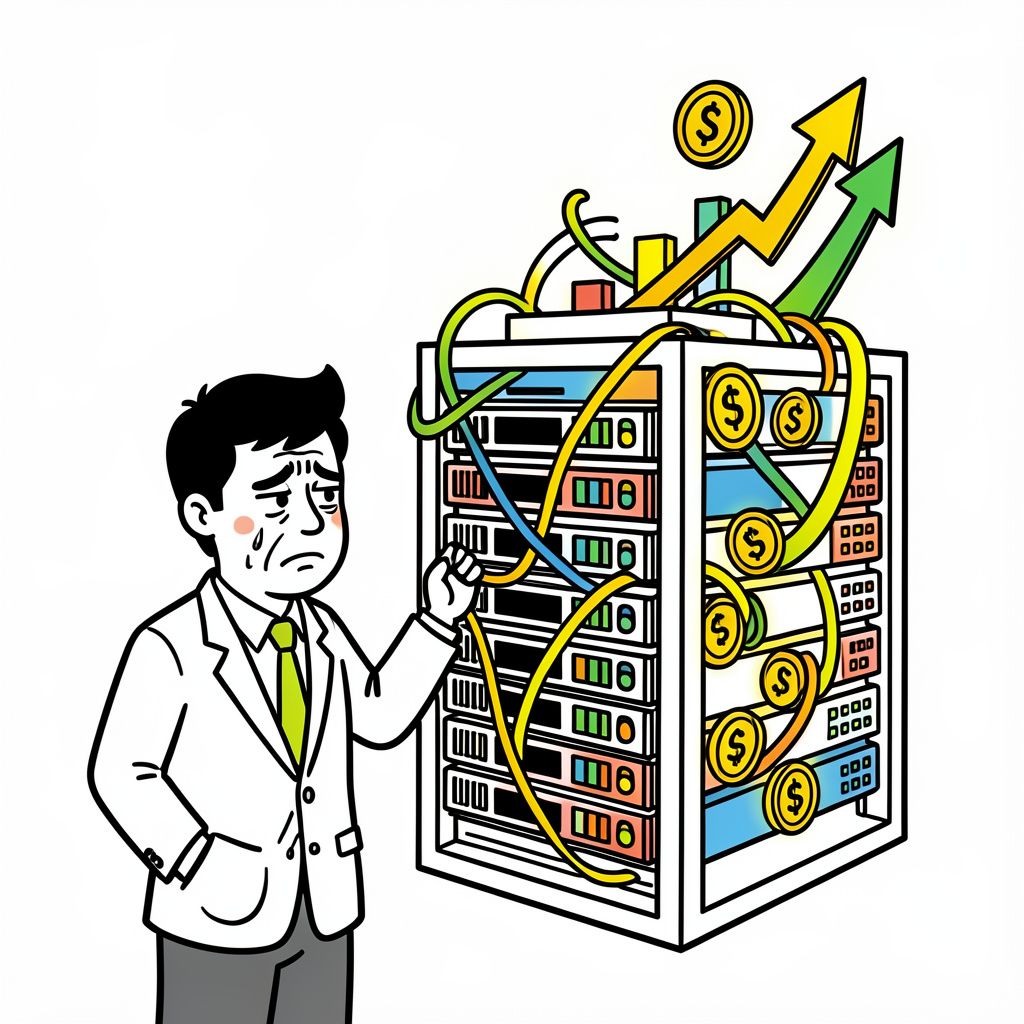
Aggressive corporate spending on data centers fuels near-term price pressures, leading Federal Reserve officials to warn that technological demand could raise baseline borrowing costs before meaningful productivity arrives.
Federal Reserve’s AI-Driven Inflation Concerns Take Center Stage
Federal Reserve Vice Chair Philip Jefferson’s November 13, 2026 speech at the University of California, San Diego underscored a growing tension between artificial intelligence’s long-term productivity promise and its near-term inflationary risks. Jefferson framed AI as a ‘slow-moving productivity story’ colliding with a stubborn inflation problem that has persisted above the Fed’s 2% target for more than five years [2]. The speech, delivered just two days after the Federal Open Market Committee (FOMC) voted to hold the federal funds rate steady in October 2026, highlighted that sustained capital spending on AI infrastructure—such as data centers and advanced computing equipment—could generate near-term inflationary pressures before productivity gains materialize [2][4].
The Productivity Paradox: AI Adoption Lags Behind Expectations
Jefferson’s remarks echoed the ‘productivity puzzle’ first articulated by Nobel laureate Robert Solow in 1987, who famously observed that ‘you can see the computer age everywhere but in the productivity statistics’ [1]. While AI adoption has accelerated—with roughly 25% of U.S. firms using AI in at least one business function as of mid-2026, and nearly 40% in knowledge-intensive sectors like professional services—its macroeconomic impact remains elusive [1]. Historical data suggests a lag between technological disruption and measurable efficiency gains: in the late 1990s, investment in IT capital contributed approximately 0.75 percentage points to annual labor productivity growth, yet the broader economy only saw widespread productivity gains in the early 2000s after sustained integration across industries [1]. Jefferson cautioned that even as AI tools like generative AI are used by 40 to 50% of working adults (though only modestly on a daily basis), their ultimate contribution to aggregate supply may require years of structural adaptation [1].
Borrowing Costs on the Rise: The Neutral Rate Dilemma
The Federal Reserve’s November 2026 Financial Stability Report, released on November 13, identified artificial intelligence as the top risk to the U.S. financial system, cited by 87% of surveyed market contacts—up from 50% in Spring 2026 and 30% in Fall 2025 [9]. This shift reflects mounting concerns about ‘circular financing’ dynamics, where companies—particularly big tech firms like Amazon, Alphabet, and Microsoft—are increasingly leveraging debt to fund AI-driven infrastructure. Advanced computing-related debt issuance surpassed $680 billion by October 2026, representing 31% of nonfinancial investment-grade corporate issuance, up from just 6% in 2023 [9]. These commitments include not-yet-commenced leases exceeding $1 trillion and off-balance-sheet obligations totaling over $2 trillion, which the Fed warns ‘may be substantially larger than suggested by their on-balance-sheet liabilities’ [9]. Jefferson and other Fed officials argue that this persistent investment cycle could push the ‘neutral rate of interest’—the rate that neither stimulates nor slows the economy—higher over time, even as near-term inflation cools [3][4].
Labor Market Disruption Amplifies Policy Risks
Beyond inflation, Jefferson highlighted structural risks in the labor market, where AI adoption could displace workers faster than they can retrain. A study of senior managers estimated that AI boosted sales per employee by just 0.5% over the three years prior to November 2026, suggesting limited near-term productivity gains despite significant investment [1]. Meanwhile, surveys indicate that while AI is being integrated into functions like sales, marketing, and IT, its adoption remains fragmented, with most firms using it in only a few areas [1]. The Fed’s Financial Stability Report further warned that hedge fund leverage has reached its highest level since 2013, concentrated in a small number of large funds, while private credit default rates have risen to the upper end of their historical range [9]. These vulnerabilities, combined with the Fed’s September 2026 quarter-point rate hike and Jefferson’s emphasis on inflation as the primary guide for future policy, underscore the delicate balance policymakers face in navigating an AI-driven economy [4][5].
Sources
- www.federalreserve.gov
- cryptobriefing.com
- finimize.com
- tradersunion.com
- www.washingtonpost.com
- www.forth.news
- www.paulhastings.com
- mlq.ai