Severe Heatwave Dries Up Main European Rivers to Historic Lows
Vienna, Sunday, 16 August 2026.
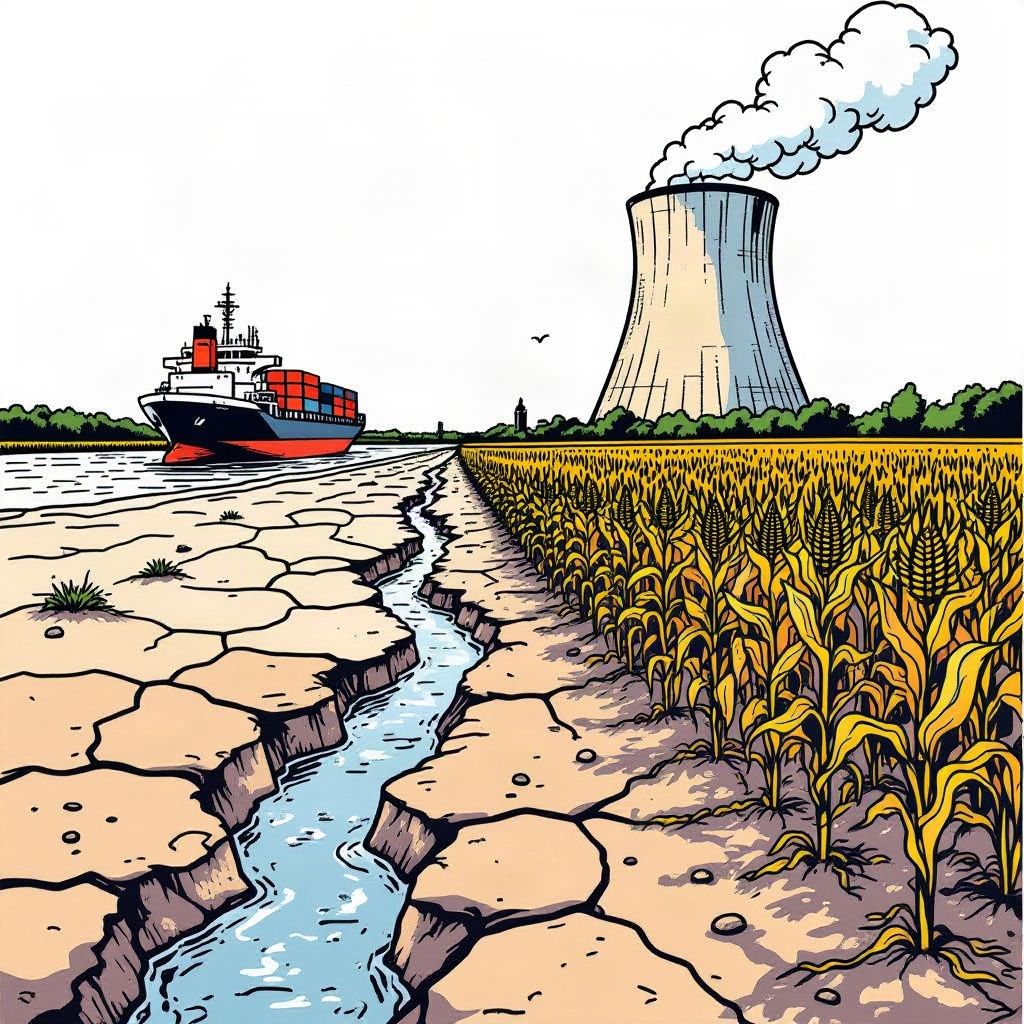
Record-low water levels along the Danube and Rhine have disrupted shipping, devastated agriculture, and forced unprecedented shutdowns of Hungarian nuclear reactors, threatening a 1% reduction in EU economic output.
Hydrological Records and Energy Disruption
The hydrological crisis deepened significantly in early August 2026, with water levels in Budapest dropping to between 14 cm and 19 cm on 4 August 2026, far below the normal average of 2 to 3 metres [1]. This severe reduction in water volume has directly impacted energy infrastructure, forcing the shutdown of all but one of Hungary’s Danube-cooled nuclear reactors, an unprecedented move in 44 years [1]. Simultaneously, the Rhine River reached critical lows, with the gauge in Kaub, Germany, recording a maximum depth of 12 cm on 12 August 2026 [3]. This represents a significant decline from the previous record low of 25 cm set during the 2018 drought, a drop in depth calculated as -52 percent [3]. The exposure of historical artifacts, including the ‘Ínség-szikla’ (Rock of Starvation) in Budapest and WWII-era wreckage, underscores the severity of the conditions across Central Europe [1][3].
Agricultural Yield Collapse
Agricultural sectors across the continent are facing catastrophic yield reductions due to persistent heatwaves and lack of precipitation. In Hungary, farmer István Somogyi reported a harvest loss of nearly 50%, with projections indicating losses could reach 70% as crops dry up completely [1]. Similar trends are observed in Bosnia, where corn yields are expected to plummet from a historical average of 6 to 7 tonnes per hectare to merely 1.5 to 2 tonnes per hectare [2]. Using the midpoints of these ranges, the yield reduction is approximately -69.231 percent [2]. In the Netherlands, potato crops are maturing one month early with significantly reduced sizes, leading to harvest reduction estimates of about one-third compared to average years [2]. Temperatures in Budapest reached nearly 42°C, exacerbating soil dryness and preventing recovery even for salt-tolerant crops like samphire which still require fresh water to develop [1][2].
Broad Economic Repercussions
The economic fallout extends beyond immediate crop losses, with Triodos Bank estimating that the 2026 heatwaves and drought could reduce European Union GDP by 1 percent, equivalent to approximately €180 billion [2]. Supply chain disruptions are intensifying as logistics operators reduce barge cargo loads on the Danube and Rhine, threatening inflationary pressures on food prices and industrial transport costs [1][3]. In regions like Szentendre, water shortages forced the distribution of 25 tonnes of water to approximately 4,000 to 5,000 households that lost access to drinking water, highlighting the social strain alongside economic costs [1]. As harvest activities for sunflowers and corn commence mid-August, the full scale of the economic damage is expected to surpass the historic dry spell of 2022, according to Hungarian Prime Minister Péter Magyar [1].