Why Delaying Retirement Savings Could Require Tripling Your Monthly Target
New York, Monday, 24 August 2026.
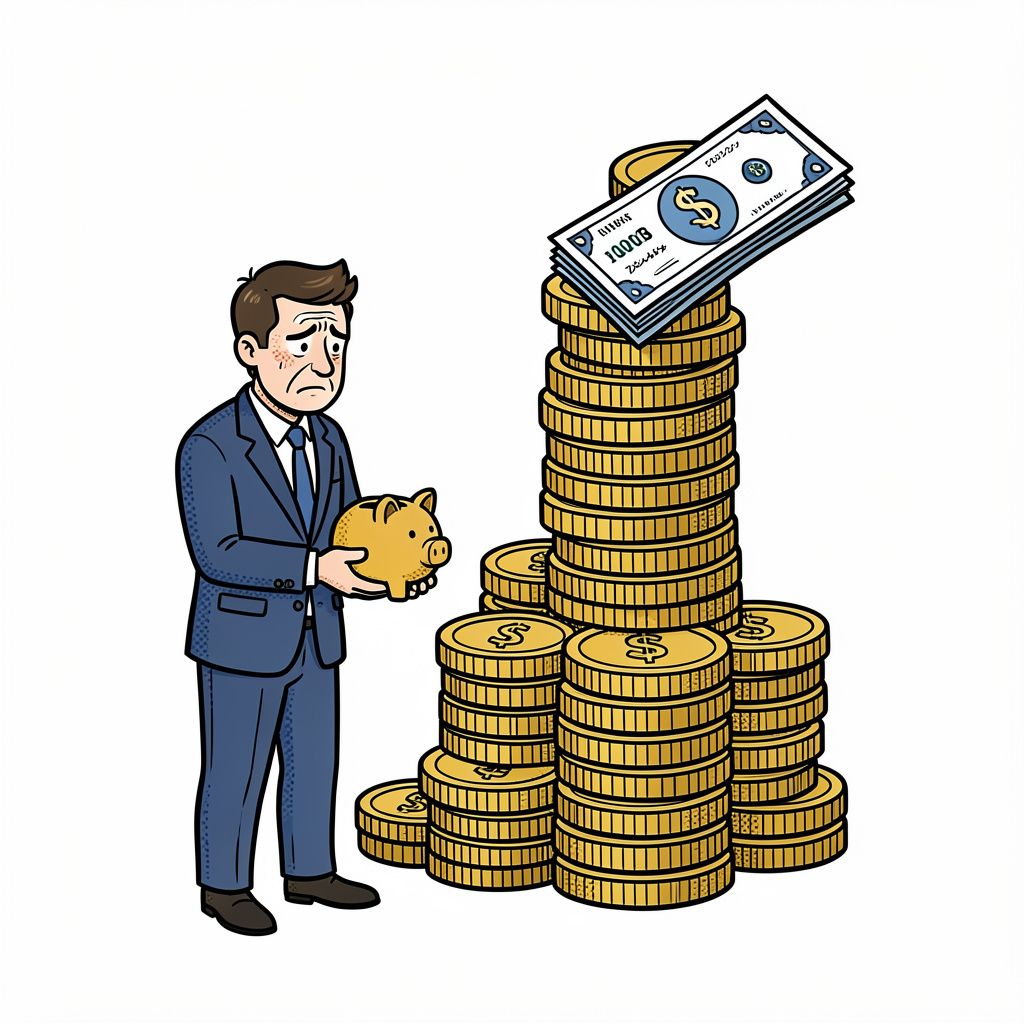
Citibank executive David Poole warns that delaying retirement savings by just a decade can force individuals to save three times as much monthly to compensate for lost compound growth.
The Compounding Cost of Procrastination
David Poole, Head of Citigold North America, identifies procrastination as the primary error in retirement planning, noting that delaying savings sacrifices the benefits of compound growth [1]. For every 10 years an individual delays starting to save for retirement, they may need to save three times as much each month to catch up because they lose years of compound growth [1]. This mathematical reality represents a 200 increase in required monthly contributions, a steep hurdle for late starters [1]. Poole emphasizes that while competing financial priorities exist, every year delayed is one less year money has to grow [1].
The Growing Retirement Gap
Recent data underscores the severity of the shortfall facing U.S. adults. According to Northwestern Mutual’s 2026 Planning & Progress Study released on April 1, 2026, Americans estimate they need $1.46 million to retire comfortably, which is a 15% increase from the previous year [1]. Despite this rising target, Federal Reserve Survey of Consumer Finances data shows median savings for ages 55–64 is $185,000 and $200,000 for ages 65–74, significantly below the required threshold [1]. Furthermore, 48% of Americans fear they will outlive their savings, and 46% do not expect to be financially prepared [1].
Benchmarks and Institutional Guidance
Financial institutions are updating guidance to help investors navigate these challenges. Fidelity retirement savings benchmarks recommend saving 3x salary by age 40, 6x by age 50, 8x by age 60, and 10x by age 67 [1]. Concurrently, Fidelity Investments posted guidance on Instagram on August 21, 2026, offering direction on retirement savings to help investors get to their back nine in top shape [2]. These institutional benchmarks provide a structured approach compared to the current reality where 36% of Americans have taken no steps to address their readiness [1].
Strategic Adjustments for 2026
To mitigate risks, Poole suggests that the idea that everyone should have the same percentage of income or retire at the same age is becoming less relevant [1]. Strategic adjustments may include saving more aggressively, delaying retirement, or thinking carefully about when to claim Social Security [1]. For 2026, contribution limits for catch-up contributions include up to $8,000 for 401(k), 403(b), or 457 plans, with an extra $1,100 on top of the $7,500 IRA limit [1]. This flexibility allows individuals to build a strategy built around their own goals as circumstances evolve [1].
Market Context and Wealth Management
Broader economic factors also influence retirement planning strategies in late August 2026. Forbes profiles regarding wealth advisors highlight the importance of expert guidance during periods of market volatility [3]. Rising Treasury yields are raising debt and stock market concerns, but history suggests higher rates are not yet a market crisis, according to analysis published on August 22, 2026 [3]. Wealth managers are therefore tasked with balancing capital safeguarding with growth opportunities in the current economic climate [1].