Wall Street Faces Growing Downturn Risks as Historic Market Rally Surpasses 1,000 Days
New York, Sunday, 12 April 2026.
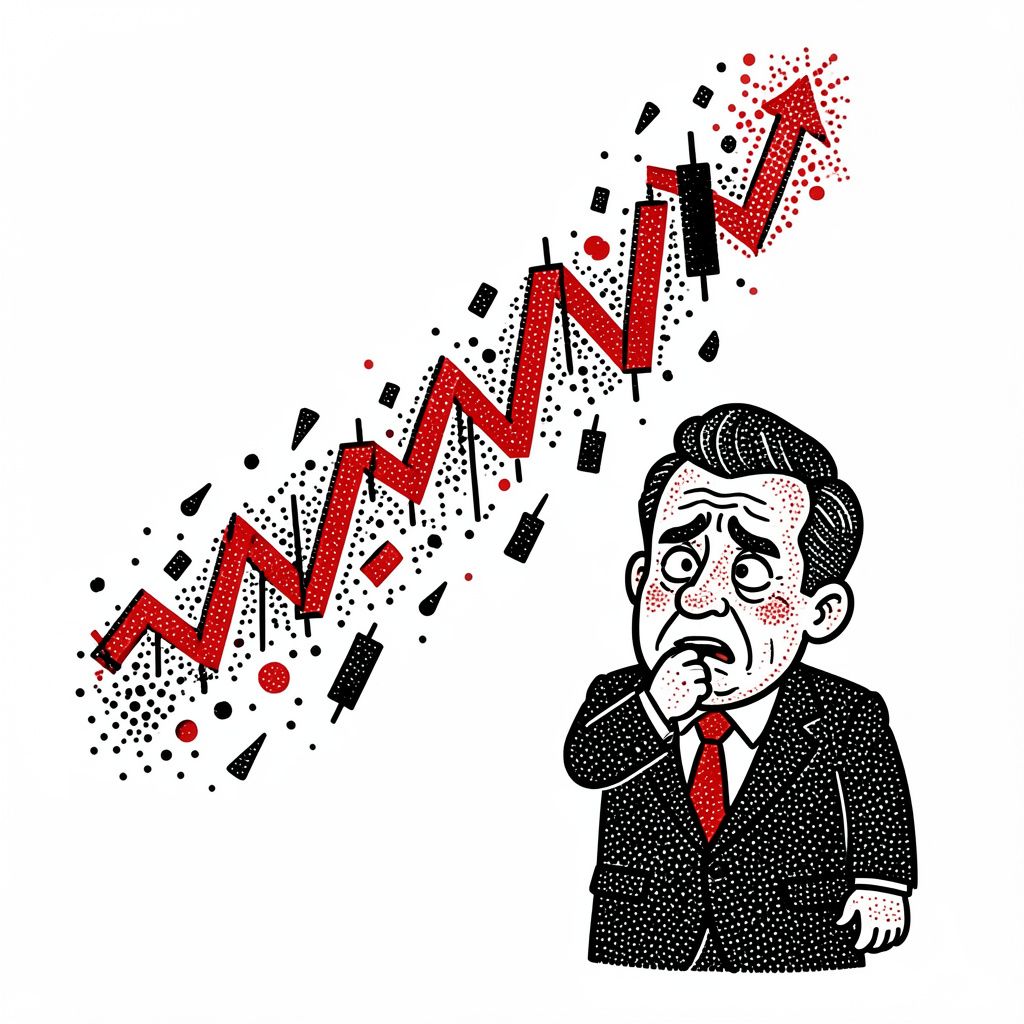
The United States market rally is the tenth in history to surpass 1,000 days. Analysts warn that extreme valuations and global conflicts drastically elevate the risk of a crash.
The “AI Bull” and Historical Extremes
The current economic landscape is witnessing a historic milestone. According to market data published by Bespoke Investment Group, the ongoing United States market rally—dubbed the “AI Bull”—eclipsed the 1,200-day mark on February 10, 2026 [1]. This makes it only the 10th bull market in history to last more than 1,000 days, based on the standard 20 percent rally and decline threshold [1]. For context, the average S&P 500 bull market endures for 1,011 calendar days [1]. This extended run has been heavily fueled by the artificial intelligence sector, which transitioned from a novelty in late 2022 to a foundational economic necessity [3]. Semiconductor exchange-traded funds (ETFs), such as the VanEck Semiconductor ETF, reported one-year returns of 71.54 percent as of late March 2026, reflecting the massive capital influx into AI infrastructure [3].
Geopolitical Shocks and Inflationary Pressures
The vulnerability of this historically expensive market is currently being severely tested by sudden geopolitical crises. On February 28, 2026, military operations commenced against Iran, leading to the closure of the Strait of Hormuz [1]. This critical bottleneck disruption has impacted 20 percent of the world’s daily liquid petroleum demand [1]. The immediate consequence of this energy shock is a renewed wave of inflationary pressure rippling across the global economy [1].
Echoes of Past Market Collapses
To understand the gravity of the current situation, economic historians are drawing parallels to previous periods of extreme market exuberance. Between 1921 and 1929, the stock market experienced a 600 percent growth, with the Dow Jones Industrial Average climbing from 63 to 381 points [2]. Much like the current AI-driven optimism, the 1920s were characterized by widespread borrowing and speculation, leading prominent economists like Irving Fisher to famously declare in October 1929 that stock prices had reached a “permanently high plateau” [2].
Navigating the Vulnerable Landscape
Corporate leaders and investors are now forced to navigate an increasingly precarious landscape. The artificial intelligence boom continues to show strong fundamental growth, with companies like Micron reporting a 686 percent year-on-year surge in adjusted PATMI to $14 billion for their fiscal year 2026 second quarter [3]. Furthermore, projections suggest that United States data center power capacity may need to triple from 2023 levels by 2027 to meet AI demand [alert! ‘This aggressive projection depends on infrastructure developments and regulatory approvals that remain highly uncertain in the current economic climate’] [3]. Yet, this localized technological strength is sharply contrasted by broader macroeconomic headwinds and geopolitical risks, including heavy supply chain concentration in Taiwan’s chip fabrication industry [3].