Major U.S. Companies Object to Blockchain Stock Trading
New York, Wednesday, 21 October 2026.
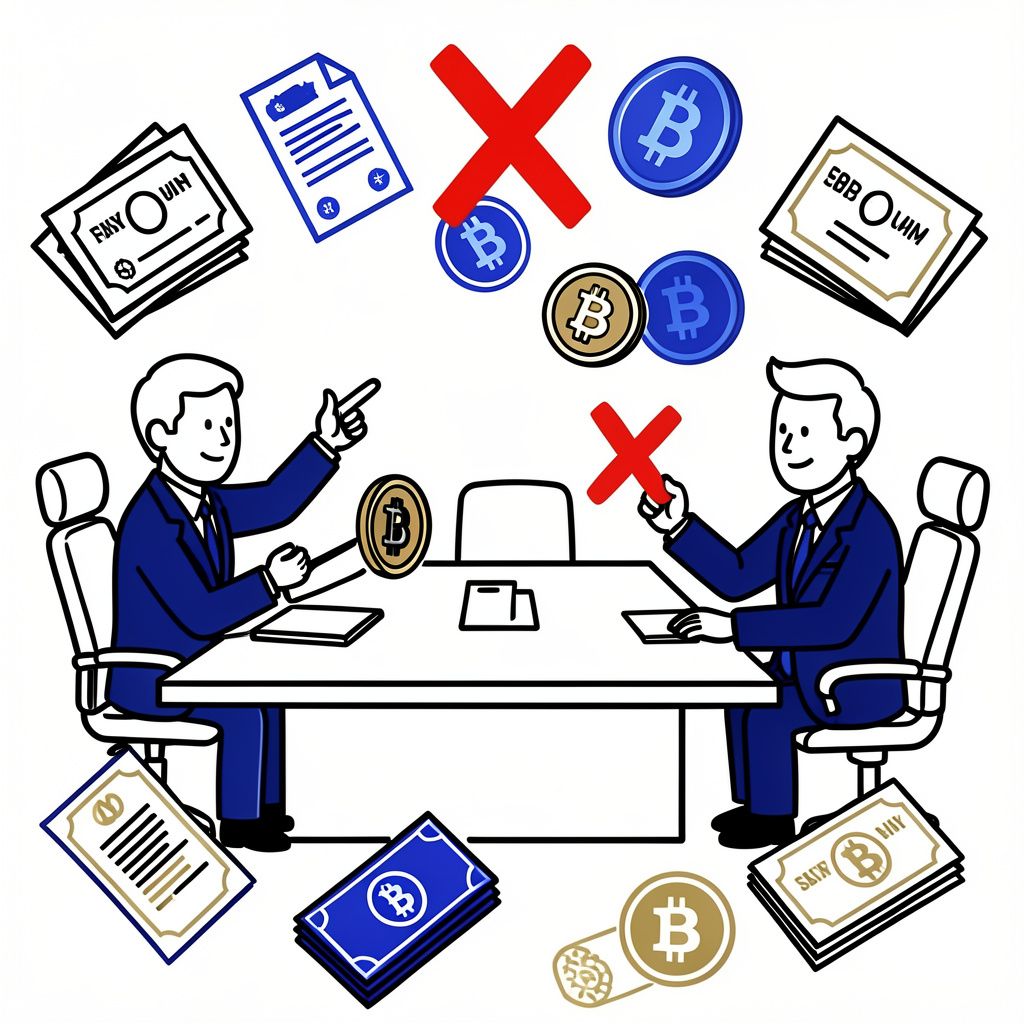
Sixteen major companies, including Goldman Sachs and Microsoft, have formally blocked tokenized versions of their shares from trading under the SEC’s new regulatory framework.
Regulatory Framework and Corporate Response
As of October 19, 2026, sixteen major corporations have formally objected to the trading of tokenized versions of their shares on the OKXICE platform, signaling significant resistance within the U.S. market [1][3]. Prominent objectors include Goldman Sachs Group Inc., Microsoft Corporation, and Alphabet Inc., citing concerns over market fragmentation and regulatory ambiguity [1][3]. This pushback occurs despite the U.S. Securities and Exchange Commission issuing an Innovation Exemption on September 17, 2026, which created a temporary pathway for tokenized stock trading venues [2][4]. Under Order 34-106402, Tokenized Securities Venues must publish a public notice at least 30 days prior to operations, allowing issuers a 30-day window to object on a venue-by-venue basis [2][4]. While the SEC framework aims to bring activity onshore into a structured regulatory environment, companies retain the right to block their shares from being traded without a blanket industry-wide opt-out [2][4].
Compliance and Operational Timelines
Companies receiving notice from a Tokenized Securities Venue must decide whether to allow third-party tokenized trading within the mandated 30-day window following receipt of that notice [2]. If a company files a timely objection, the venue is required to update its public website notice to reflect said objection within five days [2]. For stocks notified on or around October 4, 2026, the 30-day objection period was still ongoing as of October 21, 2026 [4]. While OKXICE disclosed plans to make over 60 tokenized stocks available, no specific launch date has been provided in public texts, leaving the operational status as planned but uncertain [3][alert! ‘No specific launch date provided in text; status remains planned’]. This regulatory structure places the burden on issuers to monitor venues actively to protect shareholder rights regarding voting and dividends [2][6].
International Adoption and Volume Growth
In contrast to domestic resistance, tokenized stock trading is gaining significant traction across international markets, with platforms like Robinhood and Kraken expanding access outside the United States [6][7]. Robinhood Chain experienced rapid growth in tokenized stock trading volume, rising from $526 million in July 2026 to $11.31 billion in September 2026 [1]. This expansion represents a percentage growth of 2050.19 from July to September 2026, illustrating the accelerating demand for blockchain-based equity exposure [1]. Simultaneously, Kraken’s xStocks platform has processed over $25 billion in trading volume since its 2025 launch, targeting an expansion to 500 tokens [7]. Industry data from RWA.xyz indicates that tokenized stock holders grew by over 400% during 2026, reaching 1.31 million holders by August 2026 [7].
Global Access and Market Mechanics
Proponents argue that tokenized stocks remove friction that keeps millions of people out of the stock market, enabling genuine ownership of global financial markets from anywhere [5]. The concept allows stocks to trade 24/7 while the real shares stay in a vault, an idea noted as being centuries old in financial history [8]. Robinhood operates two distinct products for non-US customers: Stock Tokens backed 1:1 by real shares on Robinhood Chain, and Classic Stock Tokens which are derivative contracts restricted to the Robinhood Europe app [6]. While Classic Stock Tokens function as derivatives between the customer and Robinhood Europe, the new Stock Tokens support self-custody and DeFi usage [6]. However, U.S. retail investors remain excluded from these specific products due to divergent securities regulations compared to the EU and EEA [7].
Risk Assessment and Market Forecasts
Tokenization introduces potential risks regarding shareholder records, proxy delivery, voting rights, and dividend distribution due to additional intermediaries between issuers and token holders [2]. Specific concerns cited by firms include thin off-hours trading, price discrepancies between tokens and primary exchange stocks, and increased insider trading risks for employees [2]. Despite these risks, Standard Chartered forecasts the broader real-world asset market, including tokenized stocks and bonds, could reach $4 trillion by the end of 2028 [7]. Additionally, Nasdaq has a scheduled launch of 23x5 trading on December 6, 2026, prompting companies to potentially revise insider trading policies regarding tokenized stock [2]. As the industry matures, companies intend to re-evaluate their tokenization objection decisions based on evolving regulatory guidance and market infrastructure [2].
Sources
- www.cnbc.com
- governancebeat.cooley.com
- www.coindesk.com
- finance.yahoo.com
- www.linkedin.com
- eco.com
- www.diamondpigs.com
- www.instagram.com