Trump Forecasts Productive Dealmaking With Incoming Democratic Congress
Washington, Friday, 20 November 2026.
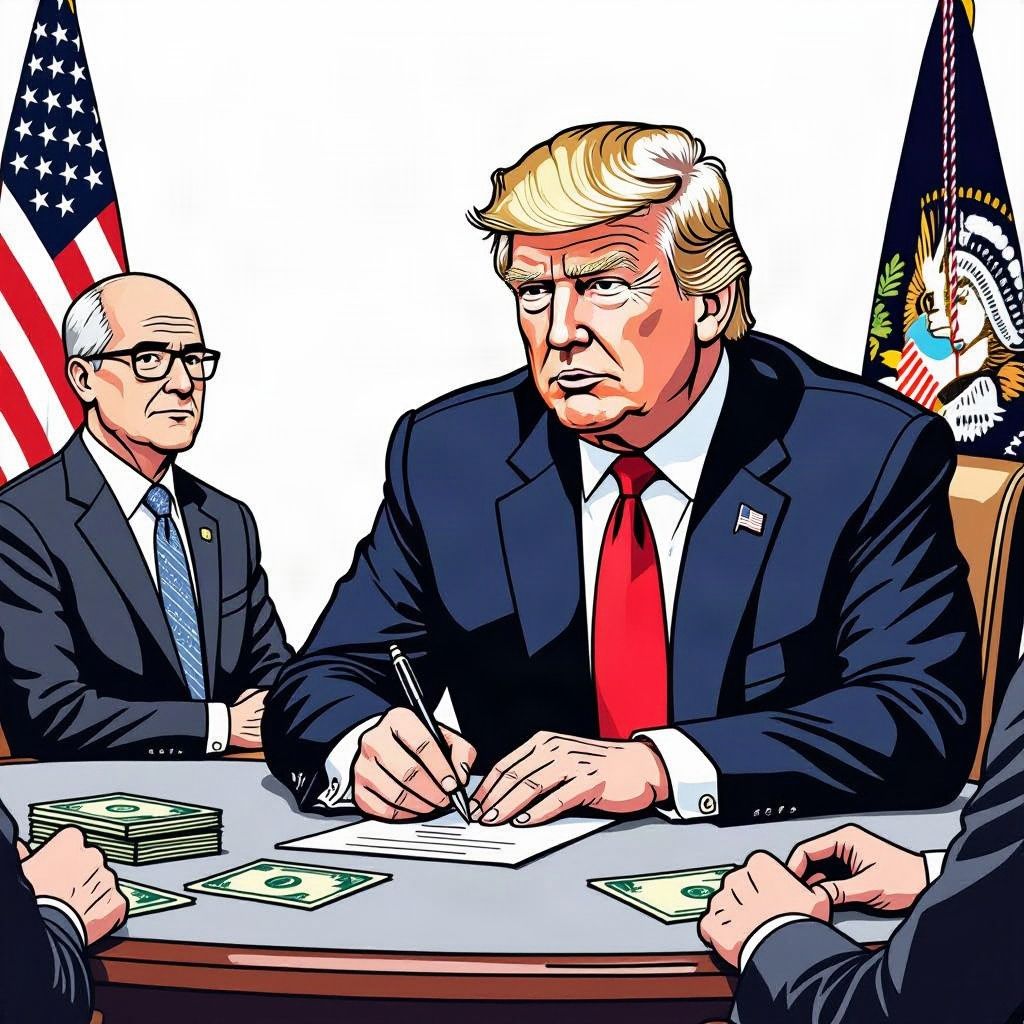
President Trump surprisingly claimed he will be more productive negotiating with the incoming Democratic-controlled Congress than with his own party, despite bracing for immediate legislative veto showdowns.
A Shift in Legislative Dynamics
In an unexpected overture, President Donald Trump predicted on November 19, 2026, that his final two years in office would yield greater legislative productivity with a Democratic-controlled Congress than during his first two years with a Republican-led legislature. Speaking from Shenzhen, China, during a trilateral summit with Chinese President Xi Jinping and Russian President Vladimir Putin, Trump framed his remarks as a recognition of the Democratic Party’s electoral victories in the November 3, 2026 midterms [1]. While the president expressed confidence in his ability to negotiate across party lines, he simultaneously warned that he would veto any legislation he deemed incompatible with his agenda, including anticipated healthcare proposals. Trump’s optimism about bipartisan cooperation contrasts sharply with his criticism of Senate Republicans, whom he blamed for the GOP’s midterm losses, calling their inaction ‘devastating’ to the party [3].
Democratic Priorities and the Looming Veto Battle
As Democrats prepare to assume control of both chambers of Congress on January 3, 2027, incoming lawmakers face immediate pressure from their constituents—particularly Latino and immigrant communities—to address pressing issues such as immigration reform and heightened oversight of Immigration and Customs Enforcement (ICE). The urgency is underscored by recent reports documenting troubling conditions within ICE custody, including the detention of over 8,500 minors in undisclosed locations such as hotels and offices since January 2025, as well as the reopening of the Dilley detention facility in Texas, which had been closed during President Joe Biden’s administration [2]. Democratic leaders, including House Minority Leader Hakeem Jeffries and incoming House Appropriations Chair Rosa DeLauro, have signaled their intent to prioritize legislation such as the American Dream and Promise Act, which would provide legal status to Dreamers. However, analysts anticipate that President Trump will veto such measures, setting the stage for a contentious legislative agenda [2][3].
Foreign Policy as a Flashpoint: Iran and Congressional Oversight
With Democrats poised to wield significant influence in the 118th Congress, some lawmakers are exploring avenues to compel the Trump administration to end U.S. involvement in the war in Iran. Incoming House Foreign Affairs Committee Chair Gregory Meeks and House Appropriations Chair DeLauro have indicated their intention to use must-pass funding bills and war powers resolutions to apply pressure, though the mechanics of such efforts remain under discussion [4]. The strategy reflects a broader Democratic pledge to curtail the conflict, which has drawn criticism for its economic and human costs. However, constitutional experts caution that Congress’ leverage over foreign policy is limited, noting that presidents have historically overridden legislative attempts to restrict military actions. Indeed, Congress has overridden only two foreign-policy vetoes in the past four decades, leaving President Trump with significant latitude to maintain current policies [5].
Oversight Agenda: Investigations and Political Tensions
Beyond legislative battles, House Democrats led by incoming Oversight Committee Chair Robert Garcia are preparing to launch a sweeping investigation into alleged misconduct within the Trump administration. On November 11, 2026, Garcia sent preservation-of-records letters to a dozen Trump associates, including family members and senior officials such as Jared Kushner, Vice President JD Vance, and White House Chief of Staff Stephen Miller, signaling the beginning of what Garcia described as a fight to ‘put an end to this Administration’s self-dealing, misconduct, and abuse’ [6]. The investigations are expected to target a range of issues, from Middle East investments to the handling of Jeffrey Epstein-related files, and may extend to the construction of a new White House ballroom. While the White House has dismissed these efforts as ‘sham investigations,’ the scope and timing of the probes underscore the heightened political tensions as Democrats prepare to assume power [6].