FBI Investigates Potential Terror Link Following Deadly Austin Bar Shooting
Austin, Sunday, 1 March 2026.
Federal authorities are investigating a potential nexus to terrorism following a deadly mass shooting in Austin, Texas, early Sunday, March 1, 2026. The attack on West 6th Street left three dead, including the gunman, and 14 injured. While Austin Police quickly neutralized the shooter outside Buford’s Backyard Beer Garden, the discovery of specific indicators on the suspect has elevated the case to the FBI’s Joint Terrorism Task Force. This potential classification as a terror act represents a critical dimension to the tragedy, distinguishing the event from isolated violence and shifting the focus toward national security concerns.
Timeline of the Attack
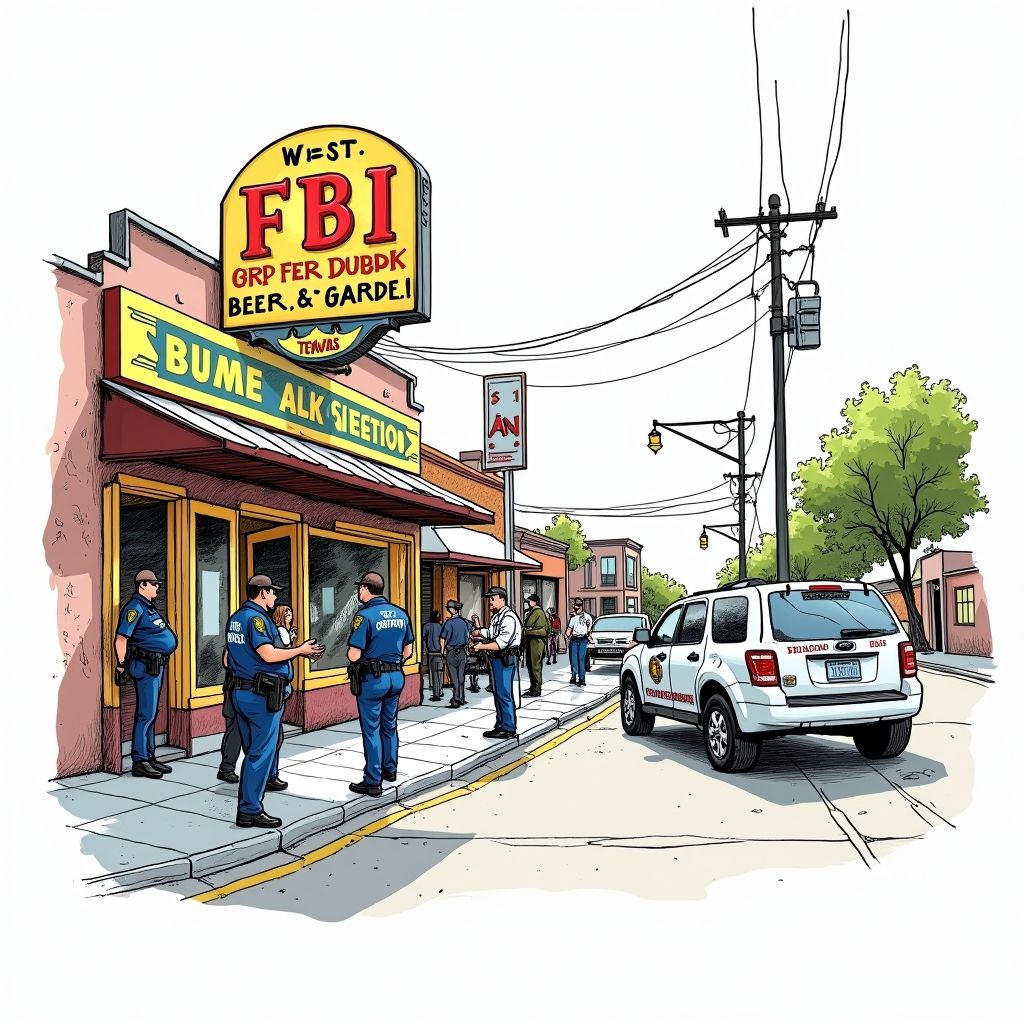
The violence unfolded rapidly in Austin’s popular entertainment district just before 2:00 a.m. on Sunday, March 1, 2026 [1][2]. According to Austin Police Chief Lisa Davis, the suspect initially drove a large SUV around the block near Buford’s Backyard Beer Garden multiple times before activating the vehicle’s hazard lights and firing a pistol from the window [1][3]. The assailant then parked, exited the vehicle armed with a rifle, and began shooting at pedestrians while moving westbound on Sixth Street [1][3]. Officers who were already stationed nearby on East Sixth Street to manage closing time crowds immediately transitioned to the scene [3][6]. Upon confronting the suspect at an intersection, three officers returned fire, fatally shooting the gunman and ending the active threat [1][3].
Federal Involvement and Investigation
While the immediate physical threat was neutralized, the investigation has shifted toward national security concerns with the involvement of the FBI’s Joint Terrorism Task Force [2][5]. Alex Doran, the acting special agent in charge of the FBI’s San Antonio office, confirmed that specific evidence discovered on the shooter and within his vehicle suggests a “potential nexus to terrorism” [2][3]. Although authorities searched the suspect’s vehicle for bomb materials and cleared it of explosives, Doran emphasized that it is “too early to make a determination” regarding the specific ideology or motivation driving the attack [1][3]. This classification allows federal resources to assist local police in determining if the shooter acted alone or as part of a broader network [4].
Critical Response Times
The casualty count stands at three dead, including the perpetrator, and 14 individuals transported to hospitals [1][3]. Of those hospitalized, three victims were listed in critical condition as of Sunday morning [1][3]. The efficiency of the emergency response likely prevented a higher loss of life; Austin-Travis County EMS Chief Robert Luckritz reported that paramedics and police began treating patients just 57 seconds after the initial call was received at 1:59 a.m. [3]. Emergency crews successfully transported all critical patients from the scene within 24 minutes [4]. Austin Mayor Kirk Watson commended this speed, noting there was no question the rapid intervention “saved lives” amidst the chaos [2][5].