Washington Reimburses TotalEnergies $928 Million to Scrap Offshore Wind for Fossil Fuels
Washington, Monday, 23 March 2026.
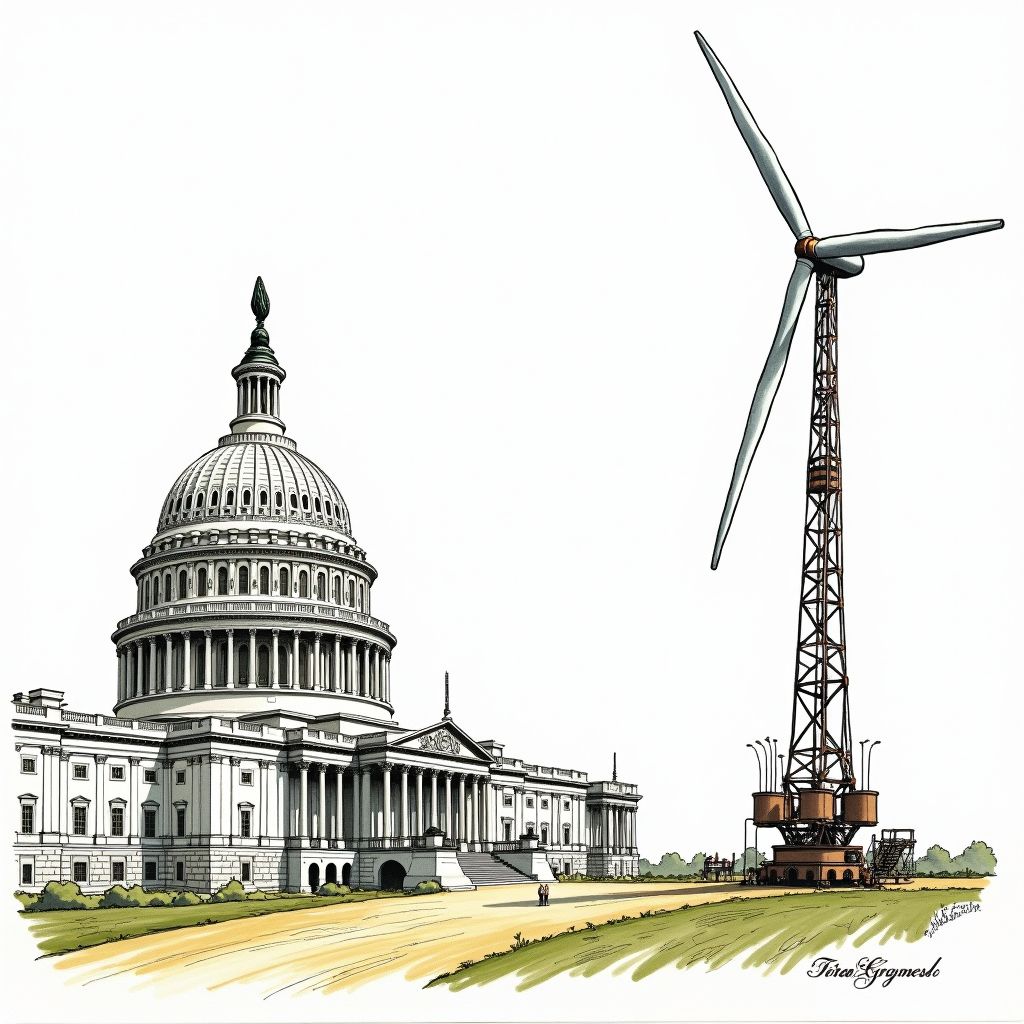
Shifting the battle from courtrooms to balance sheets, Washington will reimburse TotalEnergies $928 million to abandon American offshore wind projects and reinvest the capital into domestic fossil fuels.
A Strategic Reallocation of Capital
The newly finalized agreement, formally announced today, March 23, 2026, by the Department of the Interior (DOI), releases TotalEnergies from its commitments to develop wind farms off the coasts of New York, New Jersey, and North Carolina [2][3]. Under the terms of the deal, the federal government will reimburse the French energy conglomerate approximately $928 million for its previous lease payments [4][7]. In exchange, TotalEnergies has agreed to relinquish the New York Bight lease (OCS-A 0538) and the Carolina Long Bay lease (OCS-A 0545), both of which were initially awarded in 2022 [4]. The capital recovered from these offshore wind exits will be aggressively reinvested into domestic fossil fuel infrastructure, including shale gas production, upstream conventional oil in the Gulf of Mexico, and the Rio Grande liquefied natural gas (LNG) export facility in Texas [4][7].
Ideological Shifts in Energy Policy
This maneuver represents a calculated policy implementation by the Republican-led Trump administration to dismantle green energy initiatives championed by the previous administration [8]. Speaking at the CERAWeek by S&P Global energy conference in Houston today, Interior Secretary Doug Burgum characterized offshore wind as an “expensive, unreliable, environmentally disruptive, and subsidy-dependent” scheme [3][5][8]. For TotalEnergies, the strategic exit aligns with a reassessment of the American renewable market. CEO Patrick Pouyanné explicitly stated that developing offshore wind is no longer viewed as being in the country’s interest, noting that the company is “pleased” to support the current administration’s energy policy by pivoting back to oil and gas [4][7][8].
From Courtroom Defeats to Balance Sheet Tactics
The administration’s decision to utilize federal funds for lease buyouts follows a series of notable legal setbacks in its broader campaign against offshore wind [4]. Around December 2025, the Trump administration attempted to unilaterally halt construction on five major East Coast offshore wind projects—including Sunrise Wind, Vineyard Wind, and Empire Wind—citing national security concerns [1][2][4]. However, federal judges swiftly intervened, overturning the stop-work orders earlier this year and allowing developers to resume construction [1][4][7]. Demonstrating the momentum of these legally protected projects, developer Dominion Energy announced that its Coastal Virginia Offshore Wind project successfully began delivering power to the Virginia grid last week on March 16, 2026 [1][2][4].
The Financial Mechanics of the Buyout
Faced with a judicial firewall, the executive branch has shifted its battleground from the courts to the balance sheet [4]. By offering a lucrative financial off-ramp, the administration is effectively incentivizing developers to abandon their projects voluntarily, wiping out over 4 gigawatts of planned clean energy capacity across the two leases [1][2]. The financial mechanics of the TotalEnergies deal reveal a nearly full recovery of the company’s initial investments. The New York Bight lease was originally secured with a $795 million bid, while the Carolina Long Bay lease was won with a $160 million bid [4]. The DOI has agreed to reimburse the full $795 million for the New York lease and $133.3 million for the Carolina lease, meaning TotalEnergies is recovering 83.313% of its initial Carolina bid [4]. U.S. Attorney General Pam Bondi defended the expenditure, asserting that the agreement prioritizes consumer affordability over what she described as “ideological, ineffective energy policies” [8].
Escalating Market Risks and Political Backlash
The unprecedented nature of this buyout has sent ripples through the energy sector, raising critical questions about the durability of federal contracts and the stability of the U.S. renewable energy market [7]. Market analysts at ClearView Energy Partners warned that such settlements could severely erode confidence in federal approvals, potentially derailing bipartisan permitting reform efforts led by lawmakers like Senator Sheldon Whitehouse (D-R.I.) on Capitol Hill [7]. The financial markets reacted cautiously to the finalized deal; shares of TotalEnergies (TTE) experienced a marginal decline, dropping by $0.42 to close at $88.33, a decrease of 0.48% [8]. Industry observers are now left questioning whether this billion-dollar buyout will serve as a template for further offshore wind exits [4].
Fierce Condemnation from Democrats
Unsurprisingly, the policy pivot has drawn fierce condemnation from Democratic leaders and environmental advocates [7]. New York Governor Kathy Hochul (D) publicly criticized the prospect of the deal, labeling it “not helpful” to the state’s clean energy goals, particularly after the state had advanced TotalEnergies’ Attentive Energy project earlier in 2024 [7]. Environmental groups have been equally vocal; Ted Kelly, the clean energy director at the Environmental Defense Fund, condemned the reimbursement as an “outrageous misuse of taxpayer dollars” designed to block access to clean, affordable power exactly when Americans need it most [1][2]. As global competitors like China continue to lead the world in new offshore wind installations [1], the U.S. federal pivot away from renewables signals a deeply polarized future for American energy infrastructure [alert! ‘While China leads globally, the direct long-term economic impact of the U.S. abandoning these specific leases remains speculative and dependent on future administration policies’] [GPT].
Sources
- www.yahoo.com
- www.kare11.com
- www.bloomberg.com
- gcaptain.com
- www.washingtonpost.com
- energywatch.com
- www.politico.com
- www.foxbusiness.com