Trump Ties Potential Iran Peace Deal to Mandatory Regional Recognition of Israel
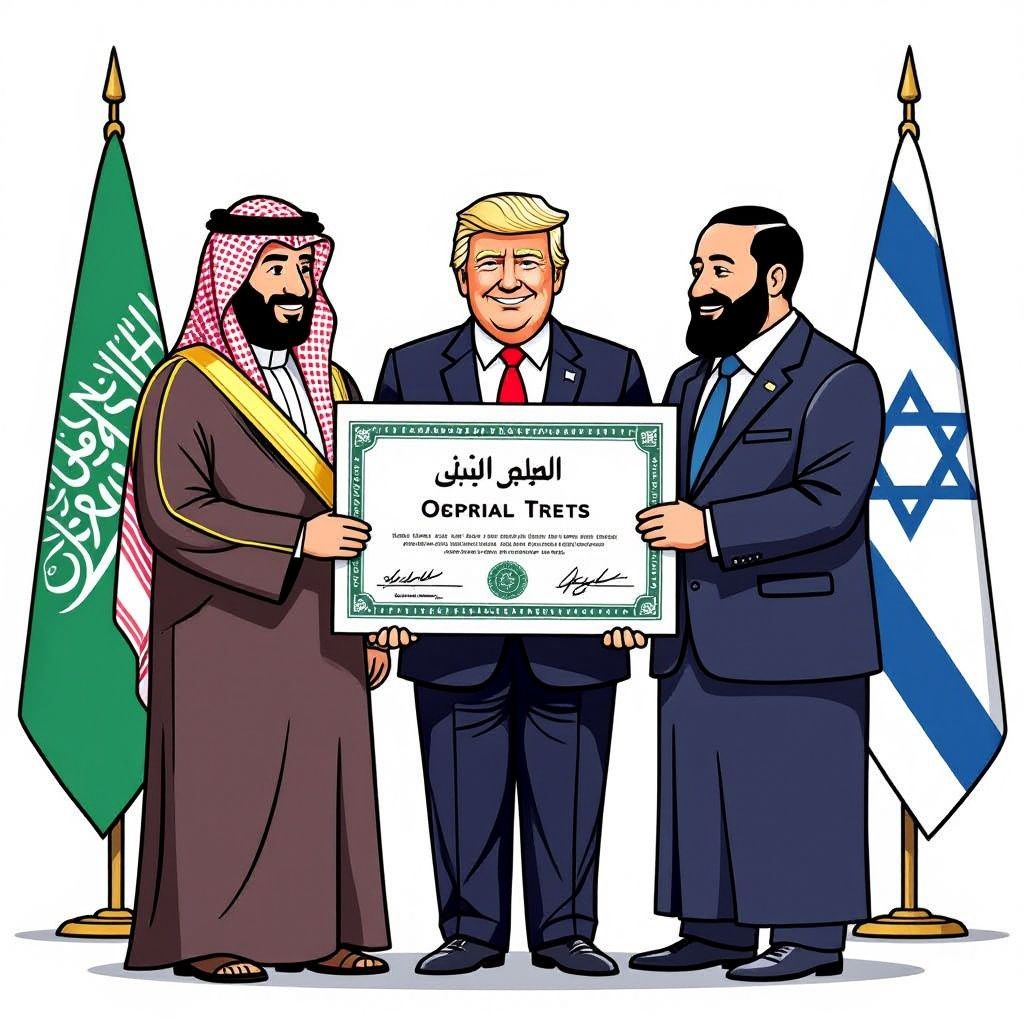
Washington, Tuesday, 26 May 2026.
President Trump is conditioning an Iran peace agreement on nations like Saudi Arabia formally recognizing Israel, an unprecedented move tying war resolution directly to broader Middle Eastern diplomatic alignment.
Shifting Geopolitical Paradigms
On Monday, May 25, 2026, U.S. President Donald Trump introduced a formidable new condition to the ongoing diplomatic efforts aimed at ending the war with Iran. He proposed that any finalized peace agreement must mandate several Muslim-majority countries—specifically Saudi Arabia, Qatar, Pakistan, Turkey, Egypt, and Jordan—to simultaneously sign the Abraham Accords and normalize relations with Israel [1][2][3]. Trump indicated that Saudi Arabia and Qatar should adopt the measure “immediately,” effectively linking the resolution of the U.S.-Iran conflict to a sweeping realignment of Middle Eastern diplomacy [1][4].
The Expanding Scope of the Abraham Accords
The Abraham Accords, initially brokered by the United States during Trump’s first administration in 2020, represent a foundational shift in regional diplomacy. In the 6 years since their inception, the agreements successfully formalized ties between Israel and the United Arab Emirates, Bahrain, Sudan, Morocco, and most recently, Kazakhstan [1][2][4]. While Egypt and Jordan already maintain long-standing peace treaties and formal recognition of Israel, Trump’s current proposal seeks to consolidate these disparate diplomatic relationships into a unified, mandatory coalition [1][3][4].
Regional Resistance and Market Implications
The ambitious proposal has already encountered significant regional friction. Pakistan promptly rejected the mandate, with a source familiar with the matter stating the country is “under no compulsion” to adhere to the demand [3]. More critically, Saudi Arabia—the custodian of Islam’s holiest sites—has historically anchored its national security position on the premise that it will not sign the Accords without an agreed-upon roadmap to Palestinian statehood [3]. Experts like Ali Vaez, the Iran project director at the International Crisis Group, have expressed skepticism, suggesting that the administration is attempting to force a fragile deal to serve as the anchor for a new regional order [3].