Chief of Staff Wiles Signals Executive Instability and Critiques Musk
Washington D.C., Tuesday, 16 December 2025.
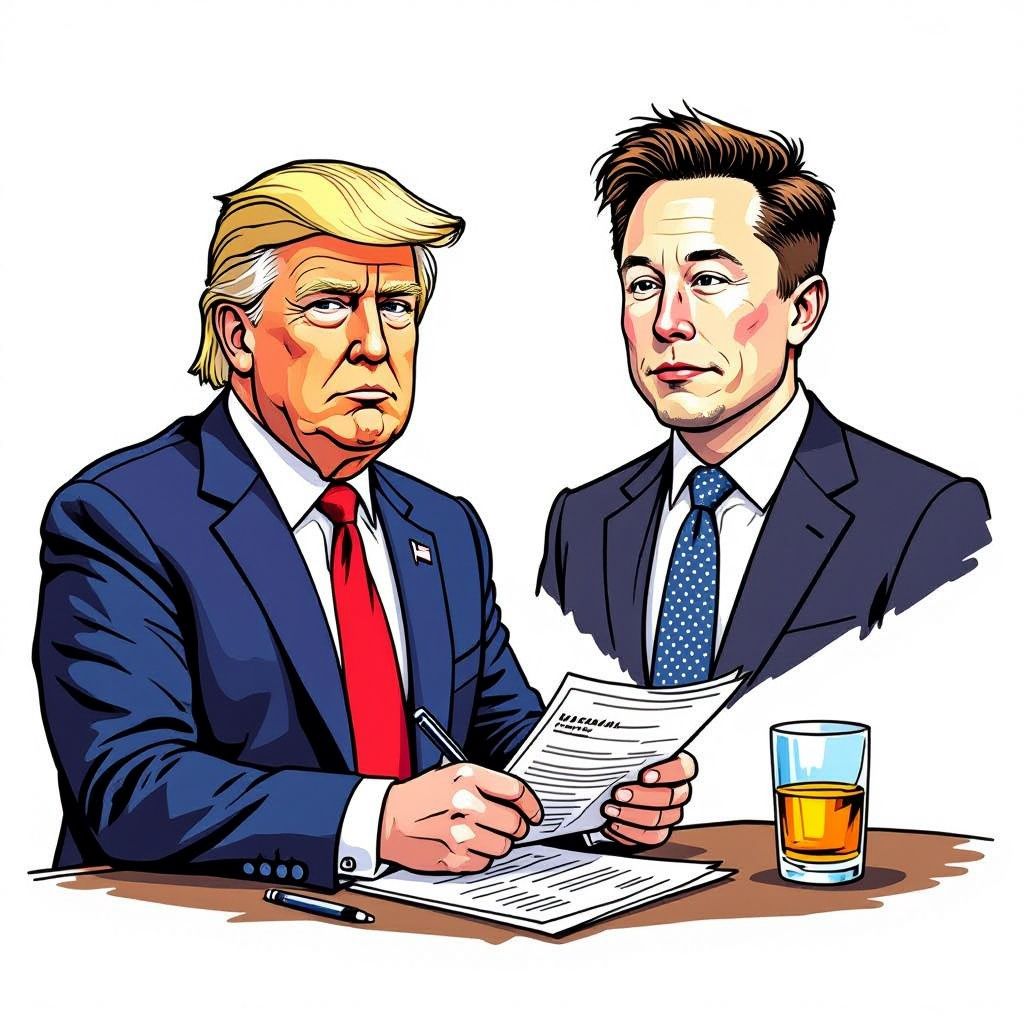
In a revealing interview, Wiles describes President Trump as having an “alcoholic’s personality” and labels Elon Musk’s deregulation efforts a “disaster,” signaling deep instability within the executive branch.
Unprecedented Candor from the West Wing
In a political landscape defined by loyalty tests, White House Chief of Staff Susie Wiles has shattered norms with a series of candid assessments regarding the inner workings of the Trump administration. Published today, December 16, 2025, in a comprehensive Vanity Fair profile, Wiles—the first woman to hold this pivotal role—offers a psychological deconstruction of President Donald Trump that is starkly at odds with the standard party line [1][2]. Drawing on her personal history as the daughter of late NFL broadcaster Pat Summerall, Wiles describes the President as possessing an “alcoholic’s personality,” despite his well-known abstinence from alcohol [3]. She posits that like high-functioning alcoholics, Trump possesses an “exaggerated” personality and operates under the belief that “there’s nothing he can’t do—nothing, zero, nothing” [3]. This psychological framing provides a lens through which the Chief of Staff interprets the administration’s tumultuous first year, suggesting that the executive branch is driven by compulsive behaviors rather than traditional governance strategies.
The “DOGE Disaster” and Musk’s Exit
Beyond the President’s psychological profile, Wiles delivers a scathing post-mortem on Elon Musk’s tenure within the administration. Musk, who led the Department of Government Efficiency (DOGE) before departing the government at the end of May 2025, is described by Wiles as an “odd, odd duck” and an “avowed ketamine [user]” who would sleep in a sleeping bag in the Executive Office Building [1][4]. Wiles admits she was “initially aghast” at Musk’s approach to deregulation, specifically his dismantling of the U.S. Agency for International Development (USAID) [4]. While Musk viewed the rapid shutdown and firing of staff as necessary to “get your rocket to the moon,” Wiles characterizes the process as a “disaster” that alienated career officials and disrupted critical aid infrastructures [1][4]. This friction culminated in an explosive falling out between Musk and President Trump over tax and spending legislation, marking a significant rupture in the alliance between the administration and the tech billionaire [4].
The Failed Truce on Political Retribution
The interview also sheds light on the administration’s use of the Justice Department for what Wiles terms “score settling.” Wiles reveals the existence of a “loose agreement” she struck with President Trump to cease politically motivated prosecutions after the first 90 days of his second term—an agreement that ultimately failed to hold [5]. While Wiles notes that Trump does not “wake up thinking about retribution,” she acknowledges that he seizes opportunities for it when they arise [5]. This impulse resulted in the pursuit of indictments against former FBI Director James Comey and New York Attorney General Letitia James, both of which were dismissed by a federal judge in November 2025 due to unlawful prosecutor appointments [5]. Wiles concedes that while the administration’s aggressive legal posturing was intended to prevent future political targeting, in specific instances like the pursuit of Letitia James, it undeniably “might be the one retribution” [5].
Internal Rifts: Vance vs. Rubio
Wiles’s commentary exposes significant ideological and personal rifts within the President’s inner circle, particularly regarding Vice President JD Vance. In a blunt assessment, Wiles dismisses Vance as having been a “conspiracy theorist for a decade,” contrasting his political evolution with that of Secretary of State Marco Rubio [2]. According to Wiles, Rubio’s alignment with the President is rooted in principled ideological transformation, whereas Vance’s pivot from a “Never Trump” stance to a loyalist is characterized as “sort of political” [2][6]. Despite these internal tensions, Wiles maintains that her role is not to control the President—a strategy she claims failed previous chiefs of staff—but to facilitate his vision, even when she disagrees [1]. This dynamic was crystallized in a February 2025 exchange where, following a query from the President about her performance, Wiles retorted, “Remember that I am the chief of staff, not the chief of you” [6].