Spain Deploys Military Forces After Mass Border Crossing in North Africa
Ceuta, Friday, 31 July 2026.
Spain deployed military forces to Ceuta on July 31, 2026, after up to 60,000 migrants crossed from Morocco in 24 hours, sparking EU-wide security concerns and political backlash.
Military Deployment and Border Security
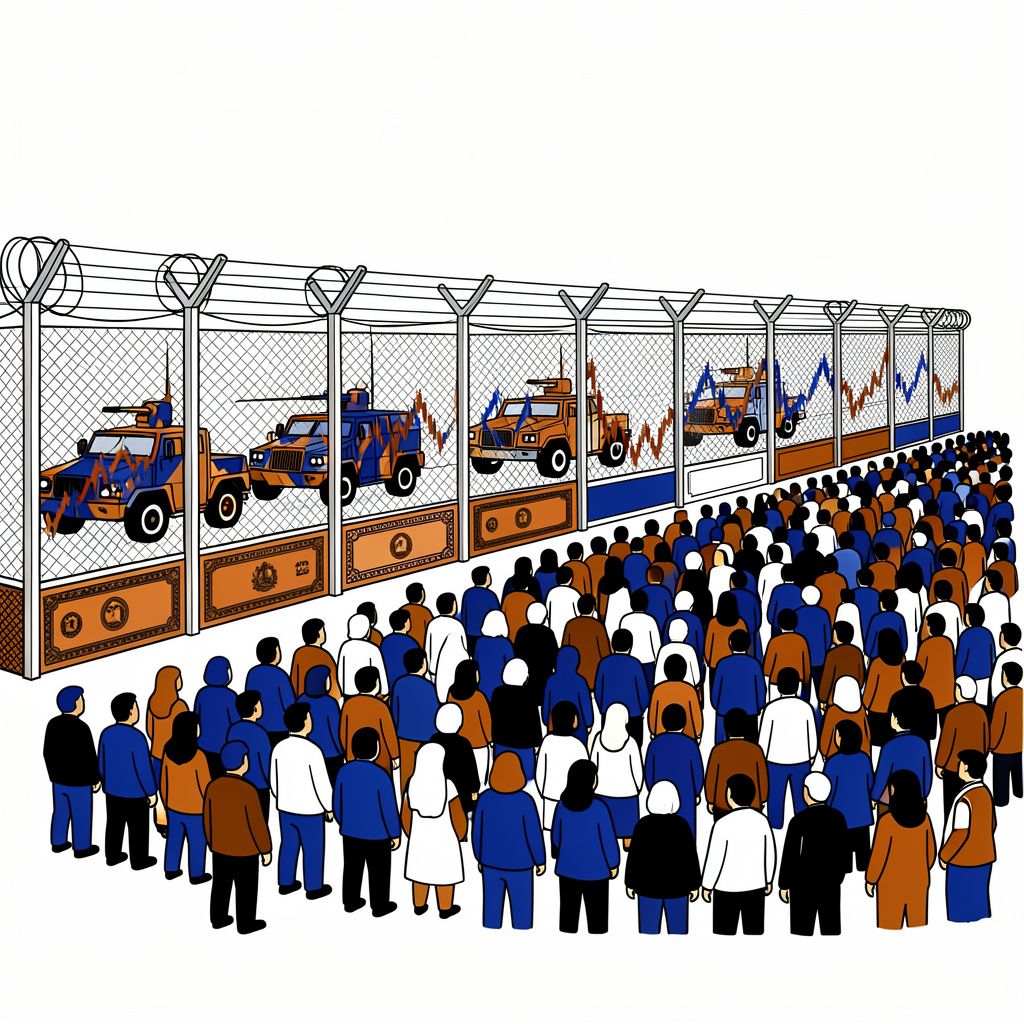
Spanish authorities deployed military forces to the North African enclave of Ceuta on July 31, 2026, following a massive influx of migrants crossing from Morocco over a 24-hour period [1][3]. The Spanish Interior Ministry confirmed that approximately 50,000 individuals entered irregularly, though local officials in Ceuta estimated the number could be as high as 60,000 [3][5]. In response, the government sent 3,000 army units to reinforce the Civil Guard and secure the territory, which has a total population of approximately 84,000 residents [3][5]. Prime Minister Pedro Sánchez visited the El Tarajal border on Friday, July 31, 2026, describing the event as a violation of Spain’s territorial integrity and announcing the installation of buoy barriers at the breakwater [3][5].
Military Deployment and Border Security
Security operations included specialized maritime assets and diving teams to manage the crisis at the border jetty [2]. The Interior Ministry stated that the armed forces would reinforce the Civil Guard to maintain security in the city, effectively doubling the existing security contingent in the zone [1][2]. While the border situation began to stabilize by July 31, 2026, with thousands observed returning to Morocco, the initial breach overwhelmed emergency services and saturation occurred at the Temporary Immigrant Stay Center (CETI) [2][4]. The government indicated it is coordinating with Moroccan authorities to facilitate the return of all individuals who crossed into Ceuta as soon as possible, though the status of this deadline remains pending [1][3].
Discrepancies in Casualty and Migration Data
Conflicting reports regarding fatalities have emerged, with initial counts of 18 drownings rising significantly as operations continued [1][3]. By July 31, 2026, El País reported 57 fatalities recovered from Ceuta’s waters, while CNN reported 34 deaths, highlighting data inconsistencies during the ongoing search operations [3][5]. Most victims drowned while attempting to swim around the El Tarajal border breakwater, where Moroccan authorities utilized water cannons to deter migrants in Fnideq [3]. The 57 migrant deaths recorded during this event bring the total number of migrant deaths in Ceuta in 2026 to 75, surpassing the 46 deaths recorded in all of 2025 [3].
Discrepancies in Casualty and Migration Data
The scale of this migration event exceeds previous crises, such as the May 2021 incident where approximately 5,000 people crossed the border in a single day [2][4]. The current influx represents a 900 increase over the 2021 crisis figures, placing immense strain on local infrastructure [2][3]. Approximately 37,500 departures were confirmed by 15:30 CEST on July 31, 2026, representing a significant portion of those who entered [3]. Despite the returns, an estimated 25,000 individuals remained in the enclave as of July 31, 2026, requiring continued humanitarian assistance [3][5].
European Political Reactions and Schengen Concerns
The crisis prompted immediate political reactions across Europe, with Italy threatening to suspend the open-border Schengen agreement with Spain [1][5]. Italian Prime Minister Giorgia Meloni stated that uncontrolled illegal immigration poses a concrete threat to the security of Europe’s borders, while Finland’s Interior Minister Mari Rantanen supported excluding Spain from the Schengen Area due to border failure [3][5]. Spanish Foreign Minister José Manuel Albares summoned the Italian ambassador to Madrid on Friday, July 31, 2026, calling such proposals improper for a partner and friendly country [3]. European Commissioner for Home Affairs Magnus Brunner denied reports of mass movement from Ceuta to continental Europe, affirming that special rules apply to autonomous cities [3].
European Political Reactions and Schengen Concerns
Domestic political pressure also intensified, with the Partido Popular requesting an urgent appearance of President Sánchez before Congress [3]. Opposition leaders criticized the central government’s response, with Vox leader Santiago Abascal accusing the administration of abandoning Spaniards to an invasion [3][5]. Meanwhile, the European Commission President Ursula von der Leyen emphasized that no one can enter the Union without complying with norms, signaling continued scrutiny of Spain’s border management [3][5]. The situation remains fluid as search operations continue and diplomatic channels engage to stabilize the Western Mediterranean region [1][3].