Bipartisan Opposition and Presidential Pushback Stall Rumored United-American Airlines Merger
Chicago, Wednesday, 22 April 2026.
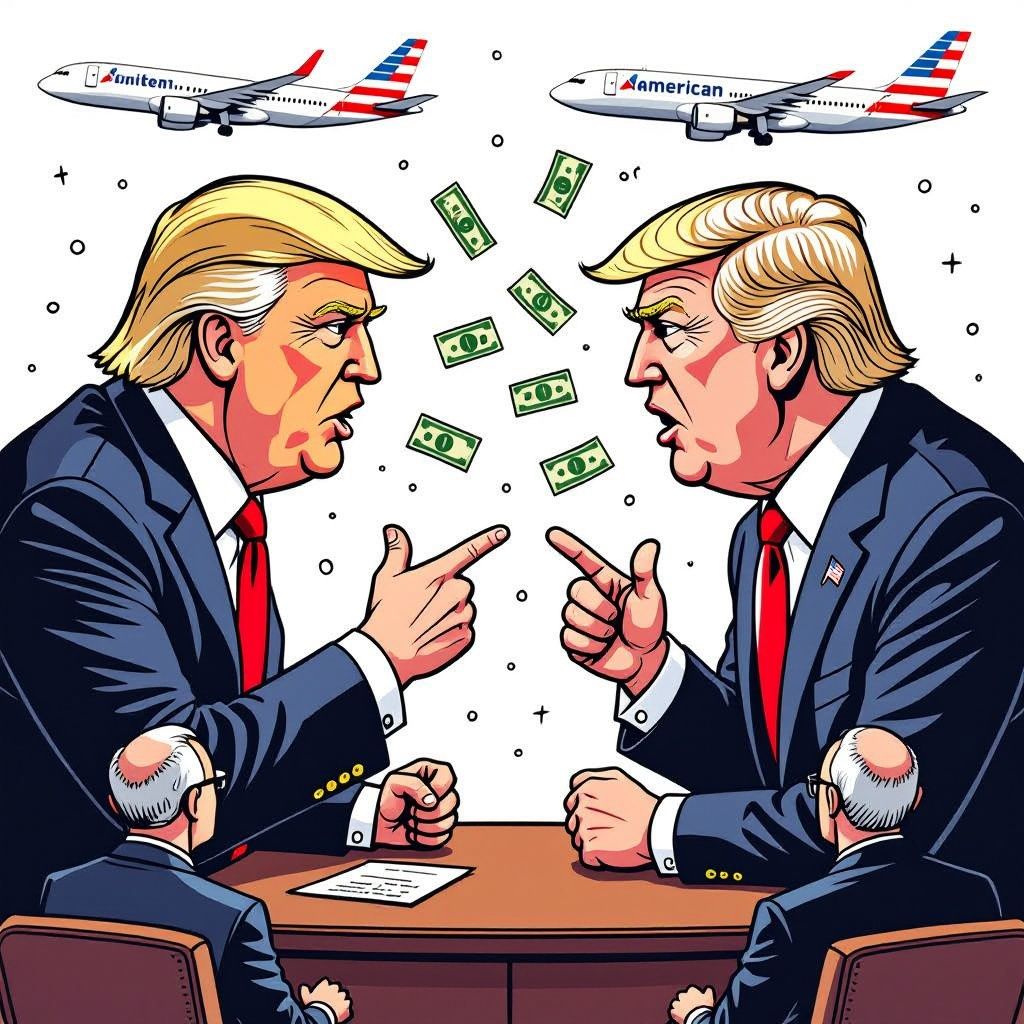
A rumored mega-merger between United and American Airlines has hit severe political turbulence, uniting President Trump and bipartisan senators in opposition over fears of drastically inflated consumer fares.
Unlikely Allies: Bipartisan Scrutiny on Capitol Hill
The prospect of combining United Airlines (UAL) and American Airlines (AAL) into a single aviation behemoth has drawn immediate and fierce scrutiny from lawmakers [GPT]. In a rare display of bipartisan alignment, Senators Elizabeth Warren, a Massachusetts Democrat, and Mike Lee, a Utah Republican, dispatched a joint letter on April 19, 2026, to United CEO Scott Kirby and American CEO Robert Isom [1]. The lawmakers issued a stark warning that a consolidation of this magnitude would severely weaken industry competition, leaving airlines with “less pressure from rivals to keep the cost of flying down” [1].
Executive Lobbying Meets Presidential Resistance
The legislative backlash follows reports that United’s chief executive, Scott Kirby, actively lobbied President Donald Trump on April 14, 2026, seeking his blessing for the ambitious tie-up [2]. A successful merger would fuse the world’s two largest carriers by available seat kilometers (ASK), creating an entity with a combined market capitalization of $3 billion that would control more than a third of the domestic market share [2]. However, the political environment for such massive consolidation appears highly restrictive [GPT].
Internal Turbulence and Leadership Pressures
The mere circulation of merger rumors has exacerbated existing leadership tensions at American Airlines [2]. On Friday, April 17, 2026, American Airlines formally distanced itself from the speculation, declaring it is “not engaged with or interested in any discussions regarding a merger with United Airlines” [1][2][3]. The Fort Worth-based carrier further emphasized that such a combination would be “negative for competition and for consumers” [1][2]. United, meanwhile, has maintained a tight-lipped stance, responding to press inquiries by stating, “We don’t have anything to share” [2].
Navigating a Restrictive Antitrust Era
As the dust settles on the United-American speculation, the focus shifts to alternative consolidation pathways within the sector [GPT]. While opposing the mega-merger, President Trump has reportedly endorsed potential deals or federal aid involving the struggling budget carrier Spirit Airlines [3]. This pivot indicates that while Washington remains deeply hostile to consolidation among the legacy carriers, there may be regulatory appetite for restructuring at the lower end of the market to prevent outright bankruptcies [GPT].