Surging Energy Costs Push Japan into Unexpected Economic Contraction
Tokyo, Monday, 16 November 2026.
Japan’s economy unexpectedly contracted by an annualized 0.1% in the third quarter of 2026, as expired utility subsidies and surging oil import costs curbed household consumption.
Unexpected Contraction Defies Economic Forecasts
Japan’s Cabinet Office announced on 16 November 2026 that real gross domestic product (GDP) declined by 0.02% quarter-on-quarter in Q3 2026, translating to an annualized contraction of 0.1% [1][2][4][8][9]. This marks Japan’s first negative growth in four consecutive quarters, defying market expectations of a 0.3% expansion [1][7]. The contraction was driven by a 0.3% decline in private consumption—the second consecutive quarterly decline—which accounts for over half of Japan’s GDP [2][9]. This decline was compounded by a 2.5% increase in imports, primarily due to higher energy costs, while exports fell by 0.2% [2][9].
Expiration of Subsidies Amplifies Energy Price Shocks
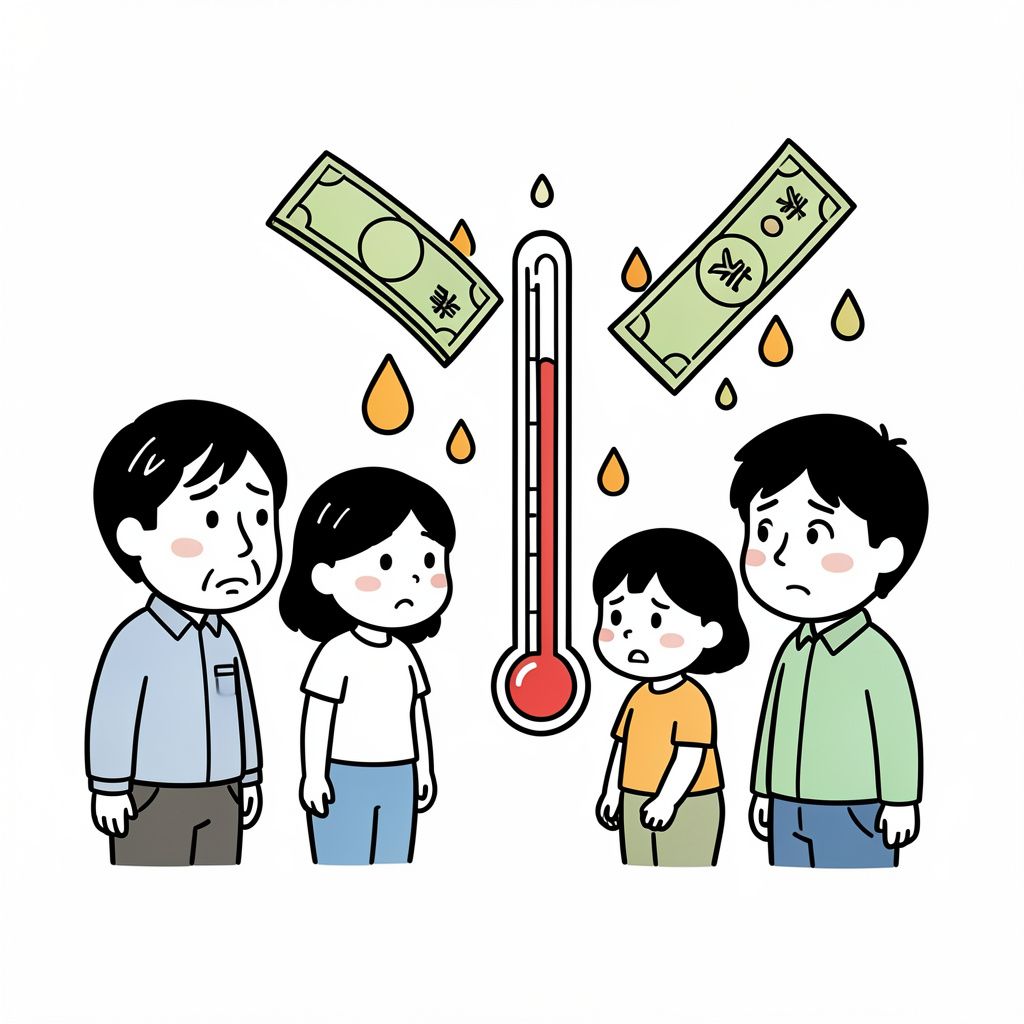
The economic downturn coincides with the expiration of government utility subsidies in September 2026, which had temporarily shielded households from rising energy prices [1]. The removal of these subsidies exposed consumers to the full brunt of elevated global oil prices, which have been driven higher by disruptions in the Strait of Hormuz linked to the ongoing conflict involving Iran [1][2][10]. According to the Nikkei, the expiration of subsidies and subsequent inflationary pressures contributed significantly to the 0.3% drop in private consumption [2]. The National Livelihood Institute corroborated this trend, noting that the surge in energy import costs reduced real purchasing power, further dampening household spending [4].
External Sector Drags Down Growth Amidst Weak Global Demand
Net exports contributed negatively to GDP growth for the first time in three quarters, subtracting 0.6% from the quarterly figure [2][4]. While Japan’s exports performed better than expected for two of the three months in Q3, the rise in energy-related imports—particularly crude oil—outweighed these gains [1]. The Cabinet Office reported that imports surged by 2.5% due to alternative crude procurement strategies following Middle Eastern supply disruptions [2][9]. Inbound tourism consumption also declined by 2.4%, exacerbating the drag on net exports [2].
Policy Implications and Future Outlook
The unexpected contraction has intensified speculation that the Bank of Japan (BoJ) may proceed with another interest rate hike at its December 2026 meeting [1]. The BoJ’s policy stance has been closely watched as inflationary pressures persist, despite the economic slowdown. The Nikkei reported that private consumption, which accounts for roughly 50% of GDP, remains subdued due to both the expiration of subsidies and lingering inflationary pressures [2]. The National Livelihood Institute forecasted a modest recovery in Q4 2026, projecting annualized growth in the mid-0% range, contingent on the dissipation of weather-related disruptions and a stabilization of energy prices [4]. However, the Institute cautioned that without sustained wage growth or structural reforms, the recovery is likely to remain fragile [4].
Sources
- www.cnbc.com
- www.nikkei.com
- www.youtube.com
- www.nli-research.co.jp
- news.yahoo.co.jp
- www.oanda.jp
- www.asahi.com
- china.kyodonews.net
- www.esri.cao.go.jp
- www.cnbc.com