Tariff Policies Force Historic North Carolina Lumber Mill to Close
Roper, Sunday, 25 January 2026.
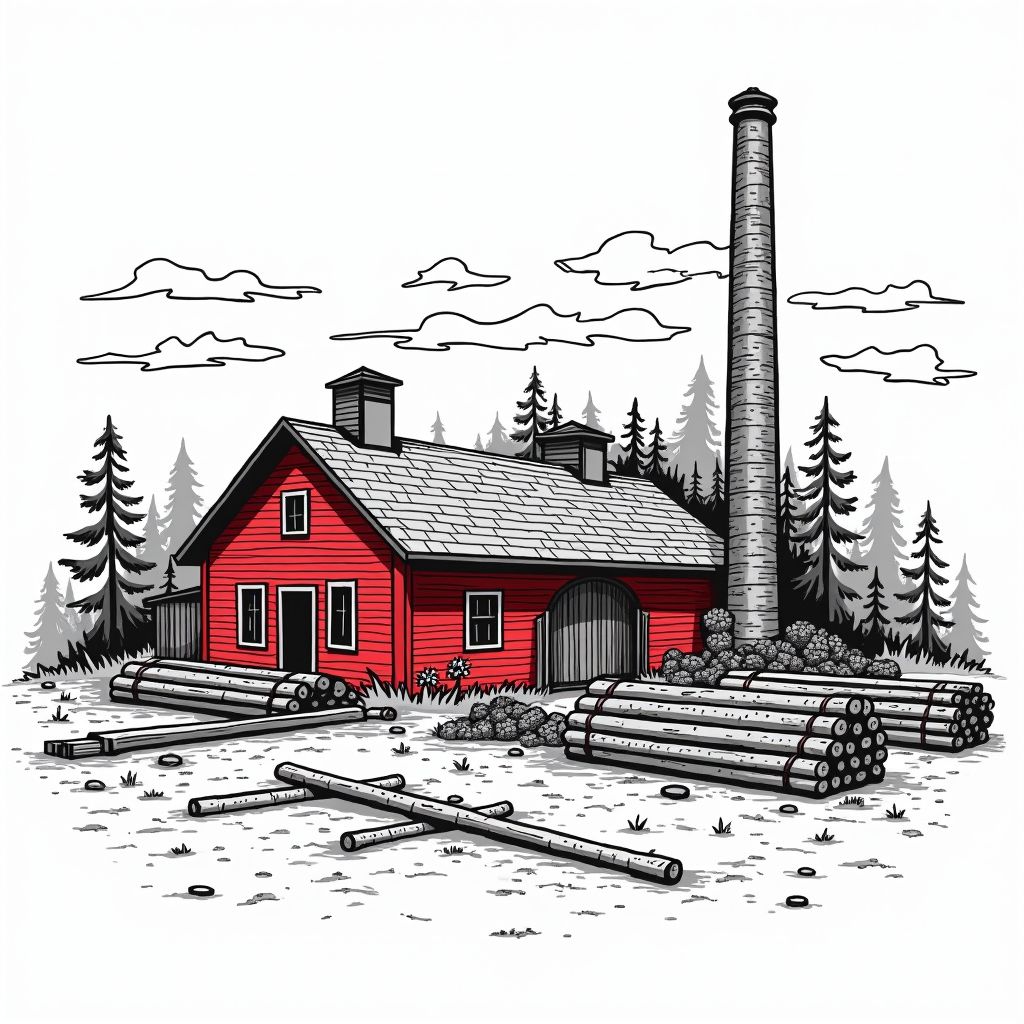
Mackeys Ferry Sawmill has shuttered, citing restrictive trade policies. The closure underscores a sector-wide trend, with 78,000 manufacturing jobs lost in 2025 despite policies intended to boost domestic production.
The Human Cost of Trade Wars
The silence at Mackeys Ferry Sawmill, where the final board came off the production line on September 29, 2025, stands in stark contrast to the stated goals of the “Liberation Day” tariffs introduced on April 2, 2025 [1]. While the administration argued these measures would secure domestic industry, mill owner Wilson Jones contends that the tariffs effectively “liberated” him from his business entirely [1]. The closure resulted in the immediate termination of 50 employees in a rural economy ill-equipped to absorb them; only 10 of the displaced workers were able to secure employment at another mill located an hour away [1]. Jones, who supported the administration in previous elections, noted the irony of the policy’s outcome, stating, “You’re not helping a few — you’re hurting a lot” [1].
Manufacturing in Retreat
The contraction observed in North Carolina reflects a broader deterioration in the U.S. manufacturing labor market. Since the beginning of 2025, the sector has shed 78,000 jobs, a figure that includes 42,000 losses recorded specifically after the April tariff implementation [1]. Data indicates a significant cooling in labor demand, with job openings plummeting by 76,000 and new hires decreasing by 18,000 in the period following the policy enactment [1]. Despite a brief statistical rise in job openings to 462,000 in July 2025, actual hiring activity remained depressed, falling 5% year-over-year [1]. Furthermore, the efficiency of the labor market has degraded, with the average time to fill positions lengthening from 40 to 42 days [1].
Regional and Sector Impacts
The adverse effects of the trade barriers have been felt acutely across specific regions and supply chains. In the lumber sector, tariffs on Canadian softwood escalated to 45%, squeezing margins for domestic processors like Mackeys Ferry [1]. Regional surveys corroborate this stress: a May 2025 report indicated that 88% of manufacturers in the Fifth District were forced to alter operations due to tariffs, while the Federal Reserve Bank of Dallas reported in August 2025 that over 70% of Texas manufacturing firms experienced negative impacts [1]. Beyond lumber, the steel and aluminum sectors saw approximately 1,400 layoffs attributed directly to these tariff policies [1].
The Cost of Uncertainty
Beyond labor market disruptions, the tariff policies have catalyzed volatility in consumer prices and financial markets. Following the initial tariff announcements in April 2025, U.S. equity markets lost $6.6 trillion in value within 48 hours [1]. Consumer goods have also seen sharp inflationary spikes; between August 2024 and August 2025, furniture prices rose by 9.5%, while coffee and beef steak prices surged by 20.9% and 16.6%, respectively [1]. Although the administration attempted to mitigate these costs by removing tariffs on beef, coffee, and tropical fruits on November 14, 2025, the economic damage had already materialized for many businesses [1].
Future Economic Outlook
Looking ahead, the financial burden on American households is projected to intensify. The Tax Foundation estimates that the average tax increase per family will rise from $1,200 in 2025 to $1,600 in 2026, representing a projected increase of 33.333 percent in tariff-related costs [1]. The Joint Economic Committee further warns that the uncertainty associated with these trade policies could reduce manufacturing investment by over 13% annually, potentially costing the economy $490 billion by 2029 [1]. As economist Betsey Stevenson notes, the administration made a “policy choice to sow this much uncertainty,” a choice that businesses like Mackeys Ferry are now paying for with their existence [1].