U.S. Escalates Threats Against Cuba While Secret High-Level Talks Continue
Washington, D.C., Sunday, 22 March 2026.
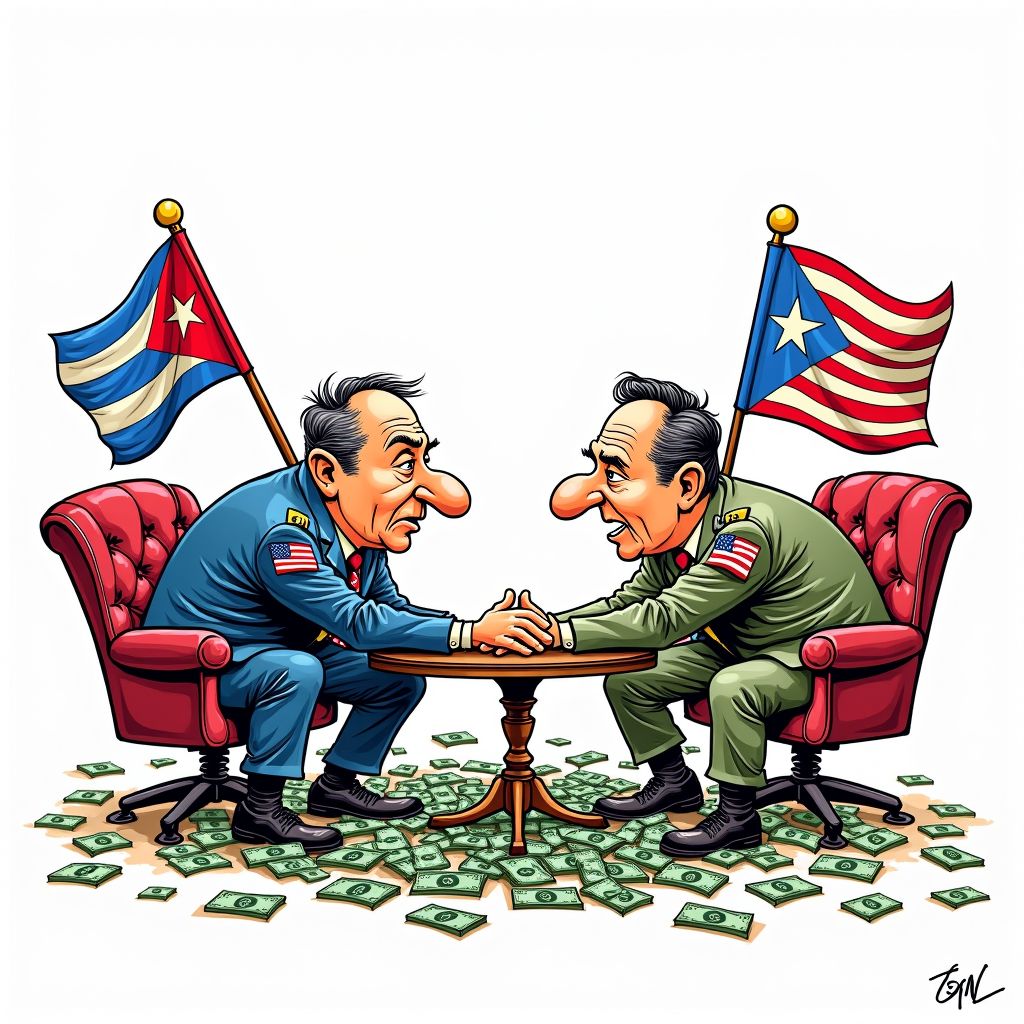
Despite President Trump’s threats of a U.S. takeover, Cuban officials declare military readiness while secretly engaging in high-level back-channel negotiations with Washington regarding the island’s future.
Economic Strangulation and Domestic Unrest
The foundation of the Trump administration’s current pressure campaign is a comprehensive, newly implemented energy blockade. In January 2026, at President Trump’s direct request, Venezuelan Vice President Delcy Rodriguez halted critical oil shipments to Havana [7]. The U.S. has subsequently blocked maritime routes and threatened secondary sanctions against any nation supplying crude to the island [6][7]. This has resulted in a “complete dislocation” of Cuba’s electrical grid, with medical professionals in Havana reporting fatalities directly linked to the fuel shortage [6]. The economic toll is severe; after shrinking by an average of 2.75% annually since 2020, the economic contraction accelerated to 5% in 2025, representing an 81.818% relative increase in the rate of economic decline [7].
The Secret Diplomatic Back-Channel
Despite the public hostility and the Trump administration’s stated intent to end the 1959 revolution, a complex web of secret diplomacy is actively unfolding [3][6]. President Miguel Díaz-Canel acknowledged the existence of these quiet talks on March 13, reversing his government’s denials from just days prior [3][4]. The negotiations are reportedly being led on the U.S. side by senior advisors to Secretary Rubio, who met with Col. Raúl Guillermo Rodríguez Castro—grandson of Raúl Castro and a key figure in his private security detail—in St. Kitts on February 25, 2026 [4][6]. Analysts note that targeting the younger Castro suggests a U.S. strategy aimed at convincing the emerging generation of Cuban leadership to adopt a new economic model in exchange for sanctions relief [4][7].