Soaring Energy Costs Leave Rural China Freezing as Gas Subsidies Expire
Beijing, Saturday, 10 January 2026.
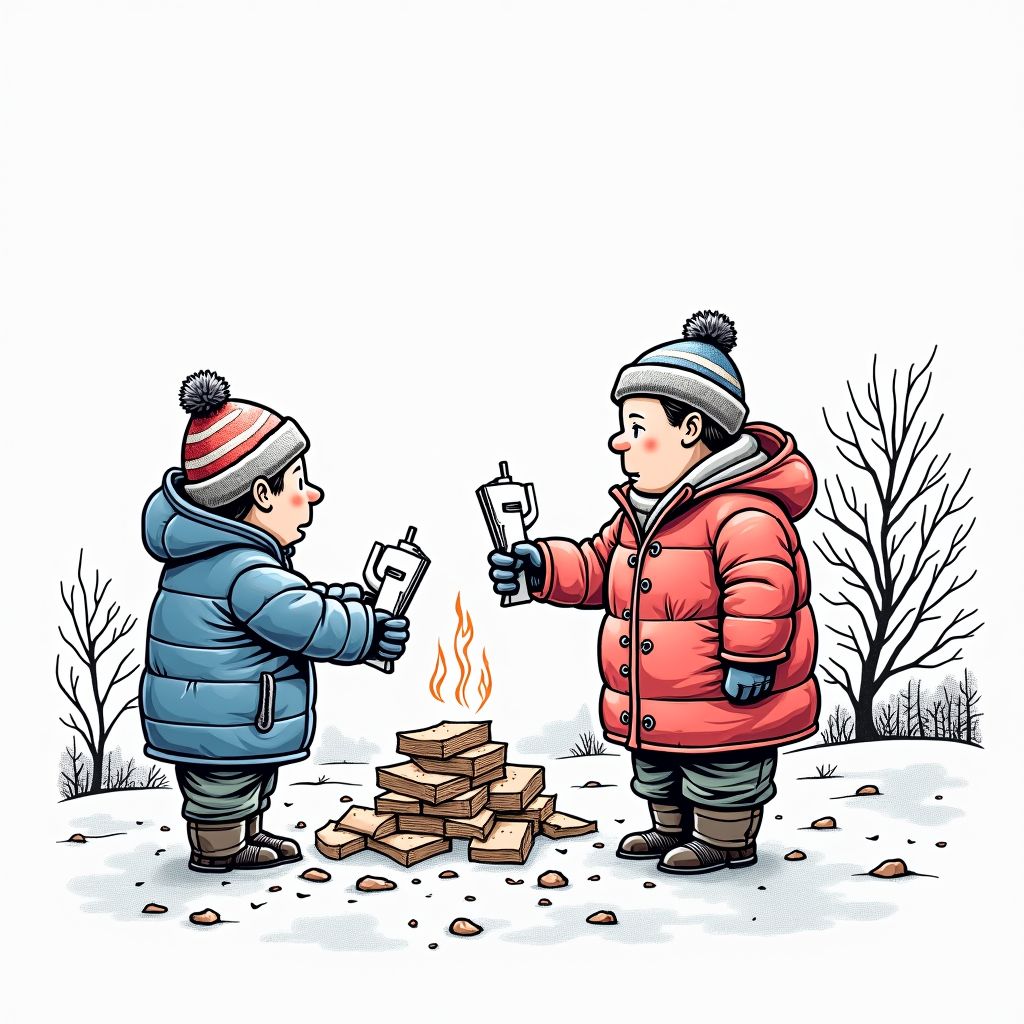
As of January 2026, the phase-out of government subsidies for the “coal-to-gas” transition has precipitated a severe heating crisis across rural Hebei. With local governments tightening fiscal belts, villagers now face natural gas prices reaching 3.4 yuan per cubic meter—rates paradoxically higher than those in wealthy urban Beijing. Consequently, adequate winter heating now costs over 5,000 yuan annually, consuming roughly 25% of the average rural per capita income of 22,000 yuan. This economic disparity has forced households to revert to burning biomass or endure sub-freezing indoor temperatures, exposing the fragile economics behind China’s environmental mandates when central financial support is withdrawn.
The Economics of the Freeze
The financial burden on rural households has reached a critical tipping point in the winter of 2026. While the ‘Coal-to-Gas’ initiative launched in 2017 successfully reduced smog, the economic architecture supporting it has crumbled for the average villager [2]. In a stark illustration of regional inequality, rural residents in Hebei are currently paying up to 3.4 yuan per cubic meter for natural gas, a rate that is 30.769% higher than the 2.6 yuan per cubic meter paid by residents in the affluent capital of Beijing [2]. This price disparity is particularly punishing given the income gap; with the average disposable income for rural Hebei residents recorded at 22,000 yuan in 2024, a heating bill of 5,000 yuan absorbs nearly a quarter of their annual earnings [6]. For elderly residents relying on meager pensions—such as one 73-year-old villager in Langfang receiving just over 233 yuan monthly—the cost is simply insurmountable, forcing a choice between food and warmth [4].
The Subsidy Cliff
The current crisis stems from the expiration of fiscal support mechanisms designed to ease the transition away from coal. When the policy was mandated in 2017, the central government provided significant subsidies for equipment installation and gas usage, but these operational subsidies were generally designed to last only three years before being phased out [2][6]. As of January 2026, local support has evaporated or been drastically reduced due to tightening local government budgets [4]. In Shijiazhuang, the provincial capital of Hebei, the current subsidy has been slashed to just 0.2 yuan per cubic meter with a strict ceiling, capping the total annual relief at a mere 240 yuan per household [5][6]. This amount is negligible against winter heating bills that can range from 7,560 yuan to 11,340 yuan for a standard 100-square-meter home aiming to maintain a temperature of 18 degrees Celsius [4].
Infrastructure Mismatch and Health Risks
Compounding the pricing issue is the structural inefficiency of rural housing, which was never designed for expensive gas heating. Unlike urban apartments with centralized insulation, rural homes often suffer from poor thermal retention, requiring significantly more energy to heat [4]. Experts note that to keep a poorly insulated 100-square-meter rural house at a livable temperature, a family must burn between 20 and 30 cubic meters of gas daily, resulting in daily costs between 63 and 94.5 yuan [4]. Faced with these prohibitive costs, many villagers have ceased using their gas wall-hung boilers entirely, reverting to burning corn cobs, firewood, or relying solely on electric blankets and thick quilts while indoor temperatures hover near freezing [2][6]. This regression undermines the original environmental goals of the ‘Blue Sky Defense War’ and exposes vulnerable demographics to severe health risks associated with prolonged exposure to extreme cold [4][6].
Conclusion
The winter of 2026 highlights a significant misalignment between China’s environmental ambitions and the economic realities of its rural population. While the transition to clean energy has improved air quality in the Beijing-Tianjin-Hebei region, the financial mechanism for sustaining this transition has shifted the burden onto those least able to afford it [2][4]. Without a renewed fiscal strategy that accounts for the structural inefficiencies of rural housing and the stark income disparities between urban and rural centers, the energy transition risks becoming a source of deepening social inequality rather than a tool for modernization.