California Advances Legislation to Legalize Plug-In Solar Power for Renters
Sacramento, Wednesday, 26 August 2026.
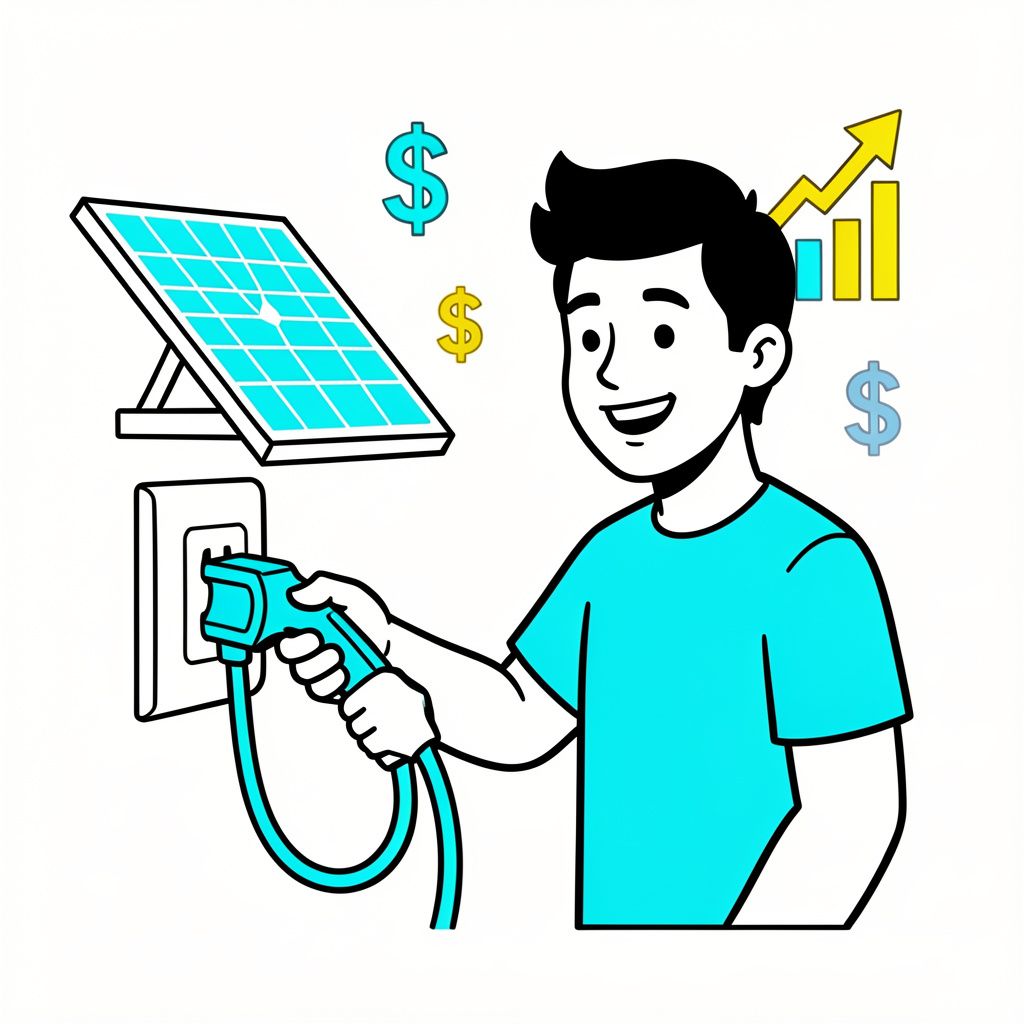
California lawmakers passed Senate Bill 868, allowing renters to plug 1,200-watt solar setups into standard wall outlets, potentially cutting annual electricity bills by $250 without utility approval.
Legislative Status and Bill Provisions
The California State Assembly passed Senate Bill 868, known as the Plug and Play Solar Act, on August 25, 2026, moving the legislation one step closer to becoming law [1][3]. The bill now awaits final concurrence from the Senate on minor amendments before reaching Governor Gavin Newsom’s desk for signature [1][4]. If enacted, the law would permit residents to utilize portable solar generation devices with a maximum output of 1,200 watts that plug into standard electrical receptacles without requiring utility interconnection agreements [2][3]. This legislative shift aims to streamline grid integration for DIY residential solar systems, potentially unlocking a massive market for portable clean energy manufacturers [1].
Safety and certification remain central to the bill’s framework, requiring devices to meet National Electrical Code and California Electrical Code standards [2]. Systems must be certified by Underwriters Laboratories or an equivalent nationally recognized testing laboratory to ensure they include anti-backfeed isolation features [4][5]. These provisions are designed to protect grid stability while allowing homeowners and renters to offset electricity consumption without complex permitting processes [3]. The legislation represents a significant regulatory change, as California legislators have not overridden a gubernatorial veto since 1979, placing weight on the upcoming executive decision [1].
Technical Standards and Grid Integration
Under the current provisions of SB 868, utilities are prohibited from charging fees for portable solar devices or electricity fed into building systems until the exemption expires [2]. However, utilities may require simple online registration of the device’s address, make, model, and size to maintain grid awareness [2][4]. This balance seeks to reduce barriers to entry for consumers while maintaining necessary oversight for grid operators [1]. The bill defines a portable solar generation device as a system connecting via a receptacle with specific safety certifications to prevent hazards during grid failures [2].
The interconnection exemption and installation rights are set to expire on January 1, 2030, due to amendments added during the legislative process [1][3]. Beginning on this date, the sale of portable photovoltaic energy generation devices designed for receptacle connection that do not meet the defined criteria will be prohibited in California [2]. This sunset provision was influenced by pressure from utility companies, including PG&E and SDG&E, who fought the legislation until the end [5]. The temporary nature of the exemption creates a defined timeline for evaluating the technology’s impact on the state’s energy infrastructure [3].
Economic Implications for Renters
California contains approximately 14 million rental units, representing roughly 40% of households in the state, making this legislation particularly impactful for renters [4][5]. A single 400-watt balcony solar system can offset approximately 14% of an average apartment’s electricity usage, saving users about $250 per year [3]. If fully adopted across the rental market, the potential annual savings could reach 3.500 billion, though actual adoption rates will depend on consumer uptake and market conditions [3][4]. Current systems start at roughly $500, offering a relatively low barrier to entry compared to traditional rooftop solar installations [3].
The bill targets the rising cost of electricity, which the Legislature finds is a barrier to basic necessities for many residents [2]. Extreme heat events in California have increased by 55% statewide, exacerbating public health risks related to unaffordable cooling costs [3]. By enabling renters to generate their own power, the legislation aims to provide a tangible affordability solution for everyday consumers struggling with energy bills [3][5]. This economic relief is positioned as a critical component of the state’s broader clean energy and affordability goals [1].
Political Dynamics and Future Outlook
Senator Scott Wiener authored the bill, carrying it through multiple sessions with support from organizations like the Environmental Working Group and The Sierra Club [1][3]. While the bill passed both houses with broad support, it faces potential risk from the Governor, who has a 30-day window to take action on the legislation [3][5]. Governor Newsom has until September 30, 2026, to sign or veto the bill, with advocates urging immediate action to finalize the policy [5][7]. If signed, the law takes effect on January 1, 2027, marking a major renewable energy shift for the state [1].
Should Governor Newsom sign the bill, California would become the eleventh U.S. state to pass such legislation, following pioneers like Utah which enacted the first balcony solar law in 2025 [1][3]. Supporters argue that if California gets this across the finish line, the market will change permanently due to economies of scale and increased manufacturer interest [1]. However, the outcome remains uncertain until the Governor makes a decision, with advocates monitoring the situation closely [alert! ‘Governor’s decision pending’] [5]. The nation is watching what happens in California, as the state’s market size could radically transform and accelerate the adoption of plug-in solar technology [1][3].