US Assumes Temporary Governance of Venezuela Following Military Capture of Maduro
Caracas, Saturday, 3 January 2026.
In a decisive geopolitical shift, U.S. military forces executed a complex operation early Saturday, January 3, 2026, resulting in the capture of Venezuelan President Nicolás Maduro and First Lady Cilia Flores. President Trump subsequently announced that the United States will temporarily administer Venezuela’s governance to ensure a stable transition of power, while Maduro faces narco-terrorism charges in New York. Crucially for global markets, the administration signaled a strategic pivot to directly manage Venezuela’s energy sector—home to the world’s largest proven oil reserves—with plans for major U.S. oil companies to rebuild the nation’s infrastructure. While the operation was executed without U.S. casualties, the move has ignited significant diplomatic controversy, drawing sharp condemnation from China, France, and Russia regarding the violation of national sovereignty.
Operational Details and Immediate Transition
For a detailed account of the initial capture, readers can refer to our previous coverage: U.S. Military Captures Venezuelan President Maduro to Face Charges in New York. Following the strategic strikes that facilitated the apprehension of Nicolás Maduro, President Donald Trump declared on Saturday that the United States intends to “run” Venezuela until a “safe, proper and judicious transition” can be established [1][4]. The military operation, which commenced at 22:46 ET on January 1 and saw U.S. forces arrive at Maduro’s compound by 01:01 ET on January 2, involved over 150 aircraft, including B1 Stealth bombers [1]. While the operation was described by Defense Secretary Pete Hegseth as “flawlessly executed,” it was not without resistance; one U.S. helicopter was struck by Venezuelan defense weaponry—though it remained flyable—and several U.S. troops sustained injuries, currently reported in stable condition [1]. Maduro and his wife, Cilia Flores, are now in U.S. custody aboard the USS Iwo Jima and are being transported to New York to face unsealed indictments for narco-terrorism conspiracy [1][7]. Officials anticipate a court appearance for the former leader as early as Monday evening [1].
Strategic Control of Energy Assets
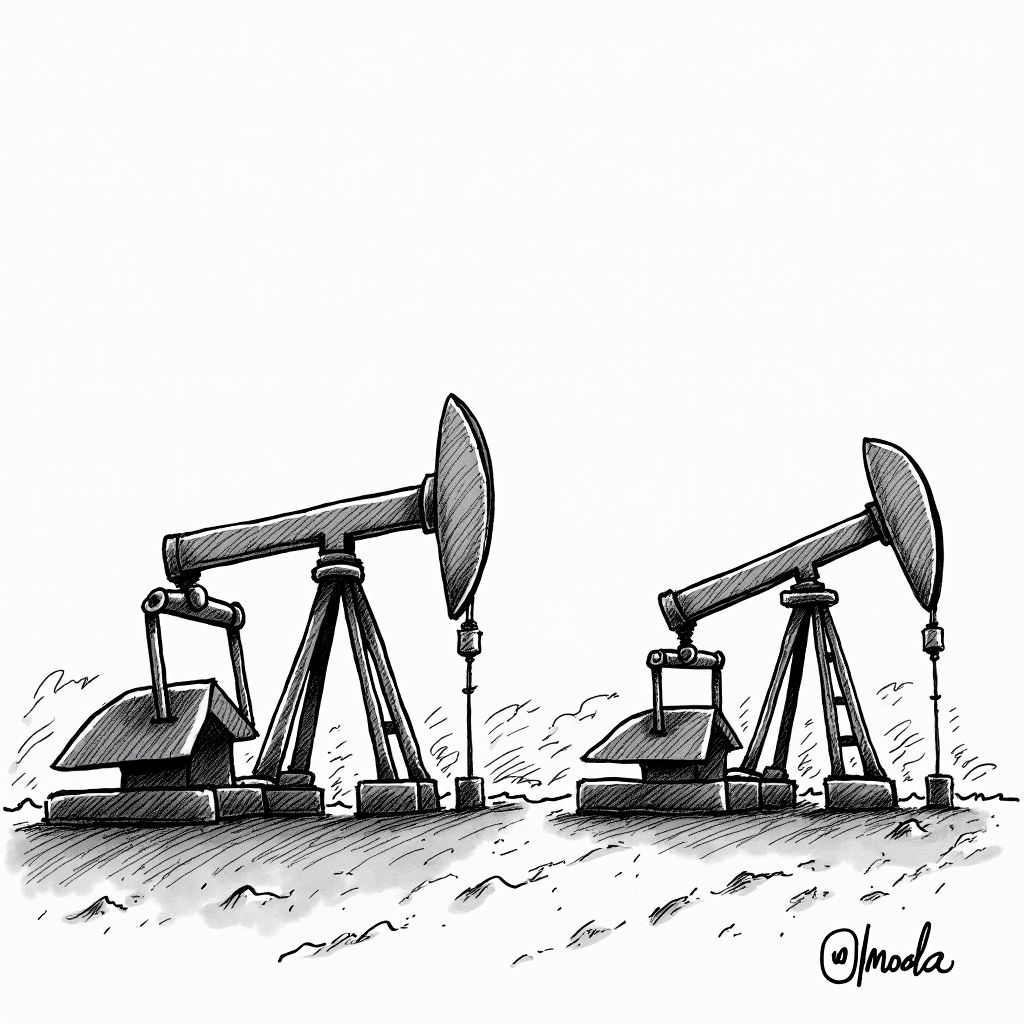
A central pillar of the administration’s post-capture strategy focuses heavily on Venezuela’s energy sector, which holds the world’s largest proven oil reserves—estimated at 303 billion barrels, or roughly 17% of the global total [3]. On Saturday, President Trump explicitly stated that the U.S. would be “very strongly involved” in the nation’s oil industry [3][5]. The administration plans to deploy major U.S. oil companies to invest billions of dollars to repair Venezuela’s “badly broken infrastructure” and restore production capabilities [1][6]. This infrastructure has suffered significant decay; according to the Energy Institute and EIA data, many pipelines are over 50 years old, and restoring production to 1990s levels would require an estimated investment exceeding $8 billion [6]. Currently, Chevron is the only U.S. major operating in the country under a limited license, though the company has stated it remains focused on employee safety and asset integrity amidst the turmoil [5][6].
Geopolitical Fallout and Domestic Governance
The unilateral nature of the operation has triggered immediate diplomatic friction, particularly with nations that have historically supported the Maduro regime. China, Venezuela’s largest oil customer, condemned the removal of Maduro through its Ministry of Foreign Affairs, labeling the U.S. action as a serious violation of international law and sovereignty [6]. Similarly, Russia’s Ministry of Foreign Affairs described the strikes as a “deeply concerning” act of aggression, while France’s foreign minister noted that the operation contravenes the principle of non-use of force [1]. Domestically, the political landscape in Venezuela remains fluid. In a surprising development on January 2, Vice President Delcy Rodríguez was sworn in as president and has reportedly agreed to work with the U.S. during this interim period [1]. Meanwhile, Vice President JD Vance reinforced the administration’s hardline economic stance, asserting that “stolen oil must be returned to the United States” [7].
Sources
- www.nbcnews.com
- www.aljazeera.com
- thehill.com
- www.bbc.com
- www.axios.com
- www.nbcnews.com
- www.theguardian.com