Democratic Absences Derail Bid to Impeach Defense Secretary
Washington, Wednesday, 11 November 2026.
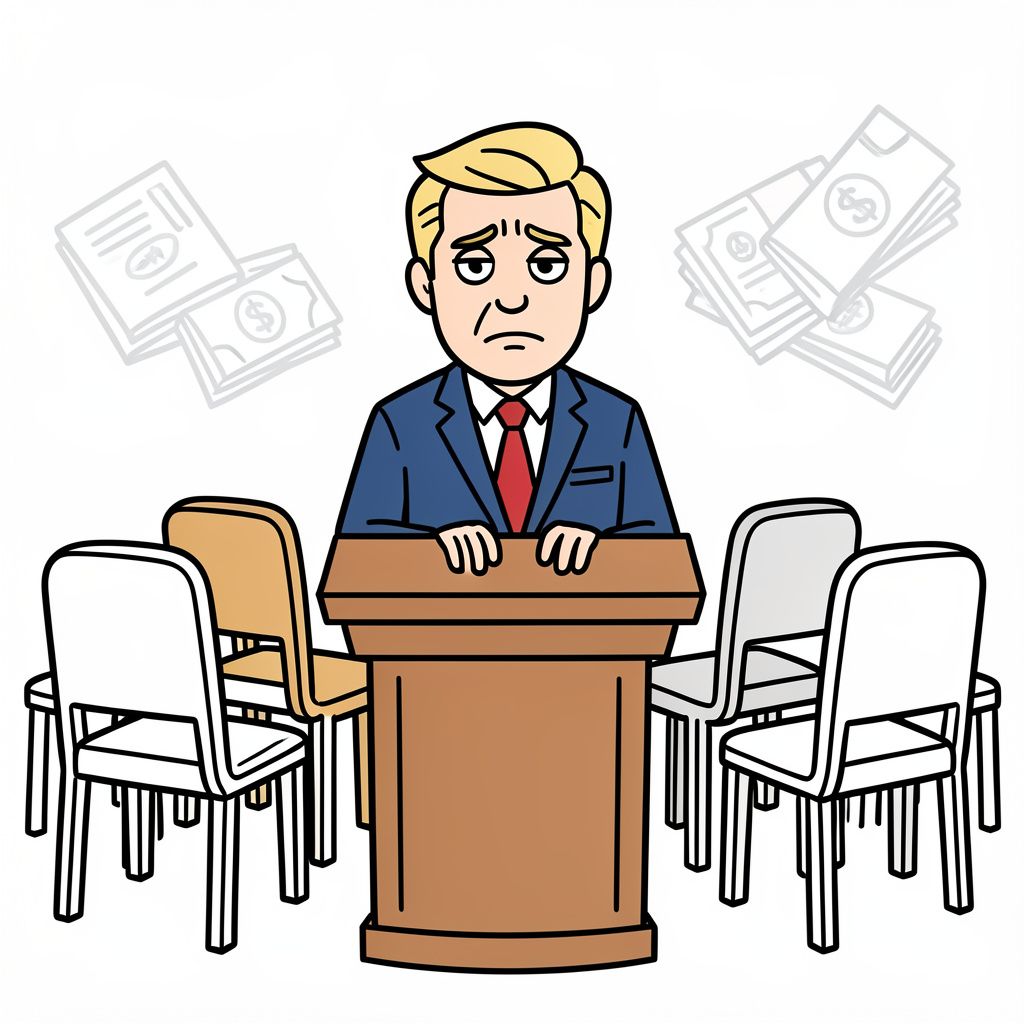
Eleven absent Democrats caused an impeachment measure against Defense Secretary Pete Hegseth to fail by seven votes, sparking immediate scrutiny over party leadership and discipline.
A Failed Vote Exposes Leadership Tensions
The impeachment resolution against Defense Secretary Pete Hegseth, spearheaded by Republican Representative Thomas Massie, collapsed on Monday, 10 November 2026, after failing by a margin of 211-204 in the U.S. House of Representatives. The measure was derailed by the absence of 11 Democratic members, including prominent figures such as Representatives Lou Correa, Nancy Pelosi, and Marilyn Strickland, alongside seven Republican absences [1][2][3][4][5]. This outcome has intensified scrutiny of House Minority Leader Hakeem Jeffries’ leadership, particularly as he seeks to ascend to the speakership in the upcoming 119th Congress [1][2][3][4][5]. Critics within his own caucus argue that the failure reflects a broader ‘serious leadership problem,’ with progressive lawmakers questioning why Jeffries did not enforce stricter party discipline during the vote [1][2][3][4][5].
The Impeachment Resolution: Scope and Controversy
The impeachment articles, reintroduced by Representative Massie on Monday, 9 November 2026, alleged eight counts of misconduct against Secretary Hegseth, including violations of the War Powers Resolution of 1973, unauthorized military actions in Iran, and the controversial invasion of Venezuela [2][3][5]. The resolution also cited extrajudicial killings in the Caribbean Sea and Eastern Pacific Ocean, as well as the suppression of free speech within the Pentagon [1][3][4]. These accusations stem from a series of contentious policies implemented under Hegseth’s tenure, which have drawn bipartisan criticism. Notably, the articles accuse Hegseth of orchestrating a ‘reckless and costly war of choice in Iran,’ a claim echoed by Jeffries during his endorsement of the resolution on Sunday, 8 November 2026 [2][3][4][5]. Jeffries stated, ‘The so-called secretary of defense has abused his power, undermined our national security, and engineered this reckless and costly war of choice in Iran, which has skyrocketed prices on the American people and made the country less safe. Pete Hegseth has got to go’ [2][3][4][5].
Jeffries’ Strategic Shift and Internal Backlash
Jeffries’ public endorsement of the impeachment resolution on 8 November 2026 marked a significant strategic shift, aligning him with progressive factions of the Democratic Party. However, his failure to secure the votes of all 11 absent Democrats has fueled accusations that he lacks the requisite influence to unite his caucus [1][2][3][4][5]. Representative Laura Bassett, a writer for Common Dreams, criticized Jeffries for not ‘whipping the vote’ and allowing members to ‘vote their conscience,’ which resulted in the absence of key Democratic lawmakers during a critical procedural moment [1]. This criticism underscores broader concerns about Jeffries’ ability to lead, particularly as he positions himself as a potential speaker in the next Congress [1][2][3][4][5]. The internal dissent suggests that while Jeffries may articulate strong policy positions, his capacity to enforce party discipline remains unproven [1][2][3][4][5].
Hegseth’s Defiance and Political Fallout
Secretary Hegseth has dismissed the impeachment effort as a ‘farce’ and ‘political spectacle,’ arguing that the allegations amount to ‘partisan policy disagreements’ rather than ‘high crimes or misdemeanors’ [1][3][4][5]. In a Tuesday morning press conference, Hegseth stated, ‘None of these are high crimes or misdemeanors… They’re partisan policy disagreements from people who want to politicize our military’ [1][3][4][5]. His defiance reflects the broader polarization surrounding the issue, with President Donald Trump publicly defending Hegseth and asserting that he intends to keep him in office [2][3][5]. Trump’s stance, articulated during a 5 November 2026 press conference, further complicates the political landscape, as Democrats prepare to assume control of the House with a 254-seat majority [2][3][5][6]. This majority, while sufficient to pass impeachment articles, falls short of the two-thirds threshold required for removal in the Senate [6].
Implications for Upcoming Legislative Battles
The failed impeachment vote signals potential volatility in upcoming legislative battles, particularly concerning defense spending, budget deliberations, and regulatory oversight hearings. The rift within the Democratic caucus may embolden progressive lawmakers to challenge Jeffries’ leadership, particularly as they seek to advance their policy priorities in the 119th Congress [1][2][3][4][5]. Corporate leaders and policy analysts monitoring legislative stability will likely view this episode as indicative of broader factional friction within congressional leadership, which could disrupt bipartisan negotiations on critical issues [GPT]. With Democrats poised to take control of the House in January 2027, the fallout from this vote may set the stage for contentious debates over military policy, foreign interventions, and executive accountability [2][3][5][6].
Sources
- www.commondreams.org
- abcnews.com
- www.nbcnews.com
- www.theguardian.com
- www.bbc.com
- www.washingtonpost.com
- www.youtube.com
- www.facebook.com
- wsnext.com