America's $40 Trillion Debt Pressure Risks Economic Growth and Rising Borrowing Costs
Washington, Saturday, 26 September 2026.
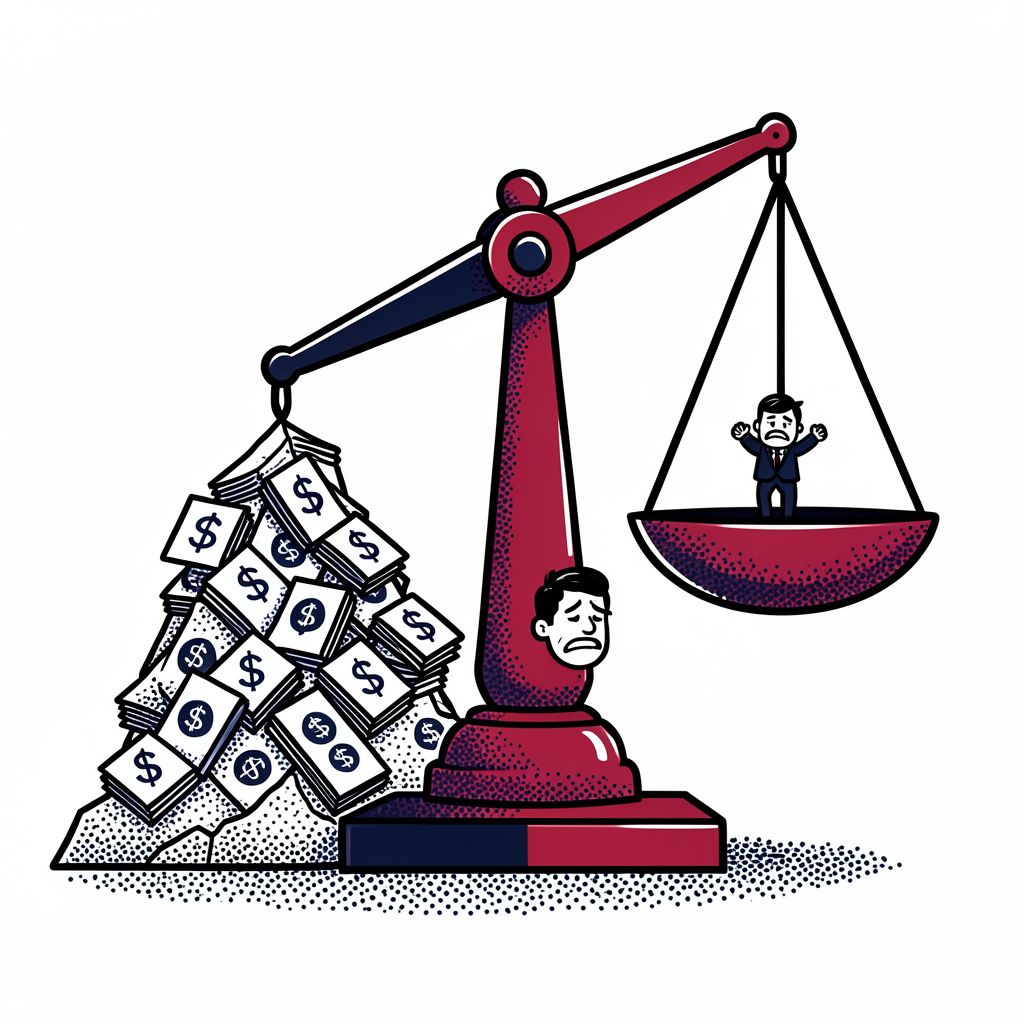
Surpassing $40 trillion, America’s growing national debt leaves the net-debtor nation vulnerable, as surging annual interest payments exceeding $1.25 trillion push consumer borrowing costs higher and limit fiscal capacity.
Debt Milestone and International Comparisons
The United States gross national debt surpassed $40 trillion for the first time during the week of September 21, 2026, marking a doubling of the financial deficit in less than a decade [3]. While the U.S. debt-to-GDP ratio remains roughly between 122% and 126%, which is lower than Japan’s 207% and Singapore’s 172%, economists warn that these ratios overlook critical structural differences [1]. The U.S. government is accumulating debt at a rate of approximately $7 billion per day, which compounds to 2555 billion annually, reducing fiscal capacity to address recessions through standard stimulus measures [1][2].
Creditor versus Debtor Nations
Japan remains the world’s largest creditor nation holding significant net foreign assets, whereas the United States operates as the world’s largest debtor nation [1]. Jack Salmon, a research fellow at the Mercatus Center at George Mason University, noted that Japan was never a comforting counterexample to concerns about U.S. debt because the dynamics are fundamentally different [1]. This debtor status leaves American fiscal health more vulnerable to external financing conditions and shifting global capital flows compared to Japan’s insulated position [1][3].
Structural Vulnerabilities in Debt Holdings
Japan’s economic stability differs significantly because approximately 90% of its debt is held domestically by local banks and insurance funds, reducing vulnerability to foreign investor withdrawal [1]. In contrast, the United States relies more heavily on overseas bondholders, and the U.S. has never entered a recession with this little fiscal buffer [1]. Torsten Slok, Apollo chief economist, argued that the standard recession playbook breaks down when the sovereign borrower is already stretched [1].
Domestic Stability versus External Reliance
Japan’s household savings rate is equivalent to roughly one-third of its GDP, which is double the U.S. rate, further insulating the Japanese economy from reliance on overseas bondholders [1]. Conversely, the U.S. federal government has not recorded a budget surplus since 2001, with consecutive annual deficits resulting from tax cuts and spending increases under both Democratic and Republican administrations [3]. This structural disparity means that even if Japan tests the limits of debt tolerance, the U.S. faces unique risks as the world’s largest debtor [1].
Escalating Interest Costs and Budgetary Pressure
Long-term bond yields are rising, and U.S. national debt interest payments have reached $1.25 trillion annually, a development experts describe as uncharted territory [1]. With the government running an annual budget deficit of 6 percent of gross domestic product, the debt will rise another $7 billion by the end of today and each subsequent day [2]. Treasury secretary Scott Bessent recently asserted that with 3% growth, the U.S. can grow its way out of this, but sustainable 3% growth is difficult to achieve [2].
Interest Expenses Exceeding Defense
Annual interest service costs now exceed defense spending by an enormous 16 percent, and these costs continue to rise even if growth projections are met [2]. If federal spending is to stay constant as a percentage of GDP, growing interest expense will have to eat into expenditure on actual government services essential to the welfare and security of Americans [2]. Analysts warn that the current debt trajectory is unsustainable, noting that rising interest rates are expected to depress economic output [3].
Household Impact and Growth Projections
Rising federal debt necessitates the issuance of higher volumes of Treasury bonds, which forces creditors to demand higher yields to mitigate the increased risk of non-repayment, subsequently elevating borrowing costs for mortgages, auto loans, and credit cards [3]. The Congressional Budget Office projects a growth rate of roughly 1.8 percent going forward, which is significantly lower than the 3 percent required to stabilize the debt-to-GDP ratio according to Treasury arguments [2]. If the CBO is right, and Bessent wrong, debt-to-GDP soars, impacting Americans’ cost of living and ability to afford necessities today [2][3].
Consumer Costs and Future Outlook
Shai Akabas, vice president of economic policy at the Bipartisan Policy Center, stated that the debt is already affecting people’s cost of living today and their ability to afford their necessities [3]. While some economists like Jonathan Berk suggest it is not necessarily the doomsday scenario that people paint, the pressure on interest rates remains a tangible concern for households [1][3]. The federal debt is one of the things putting upward pressure on interest rates, and while not the only factor, it is a significant driver of current economic conditions [3].