AI Power Crunch Drives Tech Giants Toward Nuclear Energy Solutions
San Francisco, Saturday, 7 February 2026.
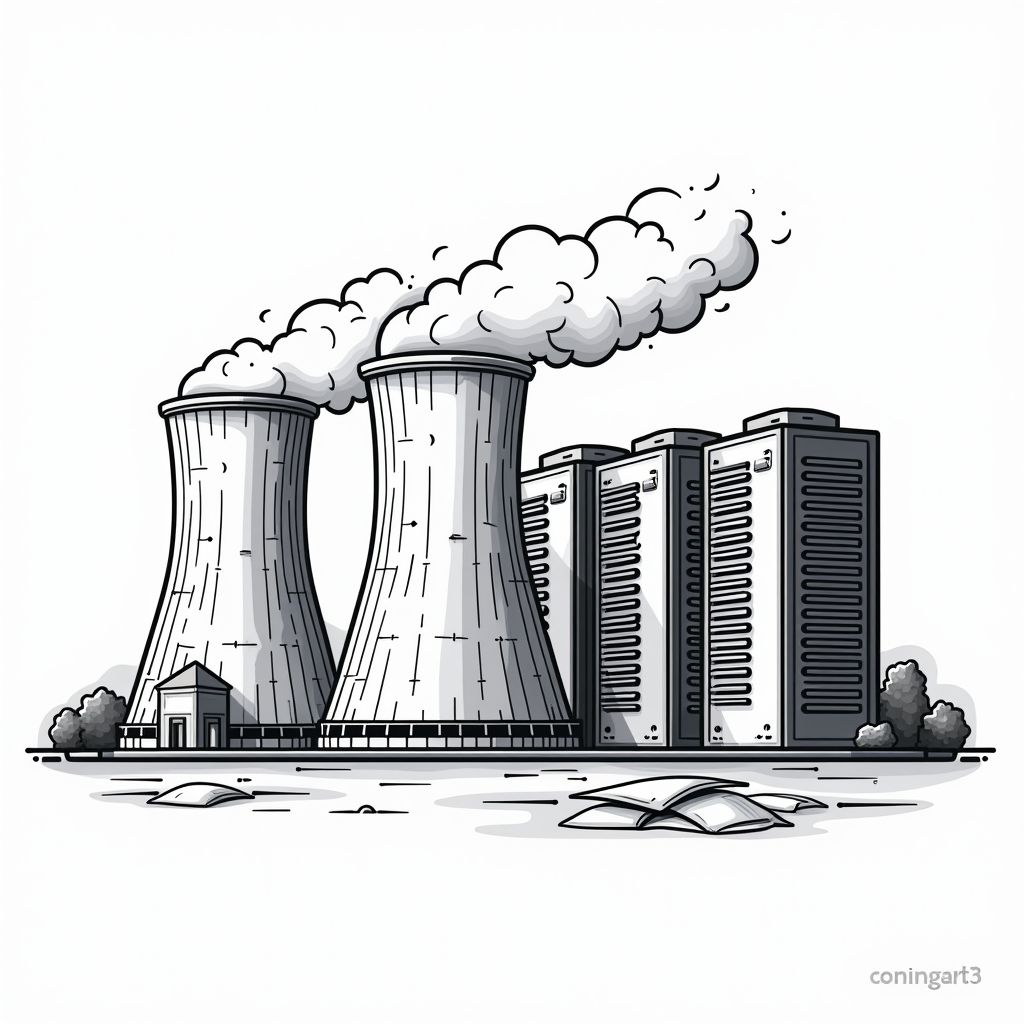
Major tech firms are pivoting to nuclear energy to satisfy AI’s voracious power appetite, bolstered by new federal environmental exemptions. However, analysts warn of a critical supply gap, projecting that only 10% of the required 90 gigawatts will be available by 2030.
Regulatory Tailwinds and Corporate Strategy
The push for nuclear integration by Big Tech received a decisive regulatory acceleration earlier this week. On February 2, 2026, President Trump exempted new reactors from environmental reviews, a move designed to expedite the deployment of carbon-free baseload power [1]. This executive action supports a broader federal initiative in collaboration with Westinghouse to commission 10 new reactors across the United States, with construction slated to begin in 2030 [1]. Major technology corporations are moving swiftly to capitalize on this shift. In January 2026, Meta finalized a deal to expand three existing nuclear plants and reopen a dormant reactor in Illinois [1]. Similarly, Microsoft intends to revive the Three Mile Island facility in Pennsylvania, while Amazon and Google are directing capital toward the development of next-generation reactor technologies [1].
The Capacity Gap: A Race Against Time
Despite these aggressive corporate maneuvers, a stark disparity exists between the immediate energy needs of artificial intelligence and the timeline for nuclear deployment. Goldman Sachs analysis indicates that while the technology sector requires between 85 and 90 gigawatts (GW) of new nuclear capacity to support AI data centers, only 10% of this necessary infrastructure will be available by 2030 [1]. This lag is particularly acute given the reliance on Small Modular Reactors (SMRs)—units that are one-tenth to one-fourth the size of legacy reactors [1]. While Google plans to bring its first SMR online by 2030 with further deployments by 2035 [1], industry veterans remain cautious. Allison Macfarlane, former chair of the U.S. Nuclear Regulatory Commission, identifies the primary obstacles as high costs and the reality that SMRs are currently unproven technologies [1]. Furthermore, the United States currently trails significantly in nuclear adoption, generating only 19% of its electricity from nuclear sources compared to 65% in France—a difference of 46 percentage points [1].
Financial Markets React to the Nuclear Renaissance
The financial sector has recognized the scale of this energy transition, with Bank of America estimating that nuclear energy represents a potential $10 trillion market opportunity [5]. Morgan Stanley projects that 586 GW of new nuclear capacity could be added by 2050, requiring approximately $2.2 trillion in investment [5]. This optimism is reflected in the equity markets, where specialized firms are seeing substantial volatility and growth. Nano Nuclear Energy (NNE), which specializes in micro-reactors, has seen its shares rise nearly 600% since its IPO [6]. In comparison, established utility giants like Constellation Energy are also growing, albeit at a more measured pace; Constellation reported $19.1 billion in revenue for the first nine months of 2025, a 7% year-over-year increase [6]. Consequently, Nano’s stock performance over the past three years has outpaced Constellation’s 34% growth by 561 percentage points [6].
Operational Risks and Consumer Costs
While the market outlook is bullish, the operational history of nuclear construction presents a sobering counter-narrative. Westinghouse, now a key partner in the administration’s 2030 plan, previously managed a reactor project in Georgia that arrived seven years late, exceeded its budget by $18 billion, and drove the company into bankruptcy [1]. To mitigate such risks, Westinghouse intends to utilize Google’s AI to streamline development for future projects [1]. However, the costs of this infrastructure expansion may trickle down to consumers. In regions with high data center density, such as Virginia, residents could see their monthly electricity bills increase by $14 to $37 by 2040 due to the surging demand [1].
Sources
- www.pcmag.com
- www.pcmag.com
- www.technologyreview.com
- www.youtube.com
- thehill.com
- www.theglobeandmail.com
- www.facebook.com
- www.youtube.com