Autonomous Software Begins Direct Execution of Corporate Financial Transfers
New York, Tuesday, 17 November 2026.
Enterprise software agents are now executing micro-payments independently under strict limits, with over 138 million transactions recorded as corporate treasury shifts toward automated, machine-to-machine financial settlements.
The Dawn of Machine-to-Machine Corporate Finance
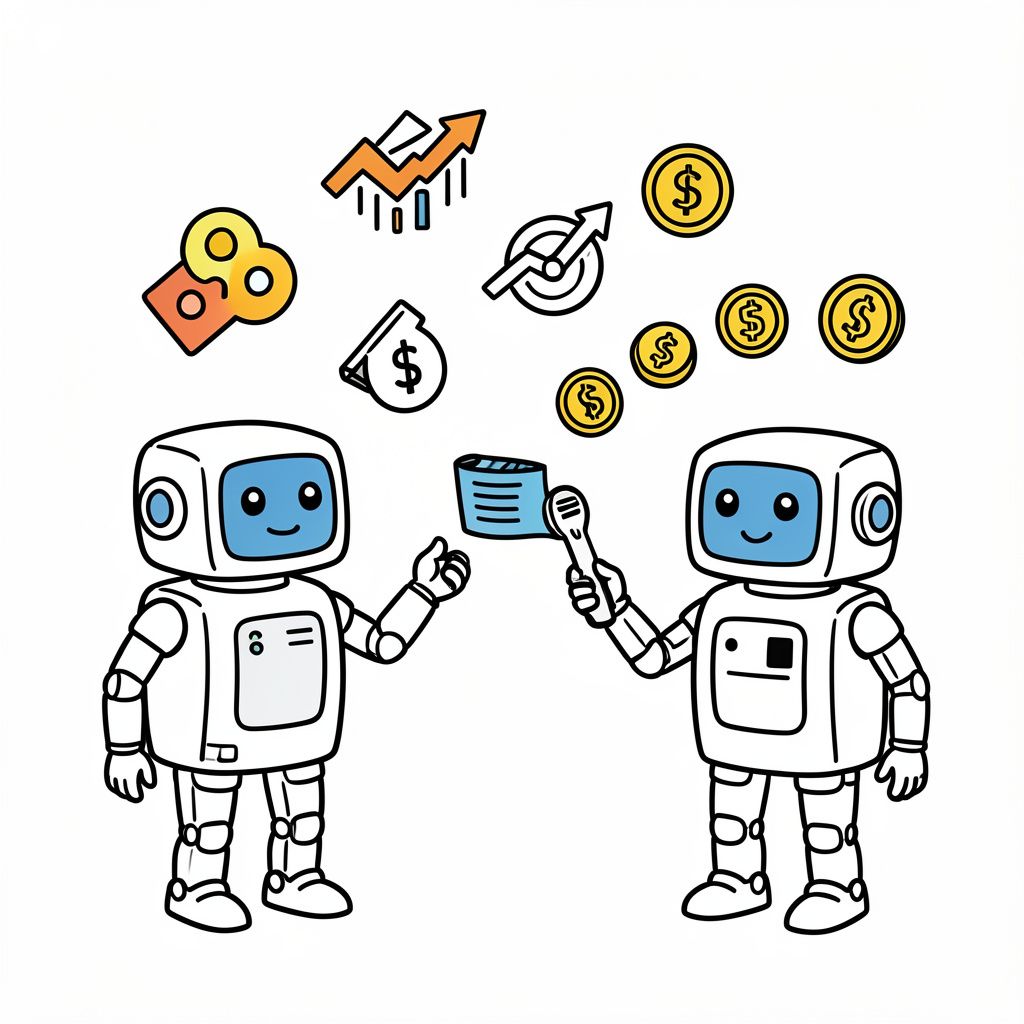
On Monday, 16 November 2026, autonomous software agents officially began executing direct onchain financial transactions within preset corporate governance frameworks, marking a watershed moment in enterprise treasury operations [1][6]. These AI-driven systems now autonomously initiate, balance, and complete micro-payments across decentralized networks without human intervention, constrained solely by predefined treasury limits and permission boundaries. The shift represents more than technological advancement; it is an evolutionary leap in corporate cash management, reducing operational latency from days to seconds while simultaneously introducing unprecedented governance challenges regarding algorithmic accountability and real-time financial oversight [1][6][8].
Quantifying the AI Payment Economy
The scale of this transformation is already quantifiable. According to Chainalysis data published on 24 June 2026, AI agents executed over 138 million onchain payments via the x402 protocol on Base during the 12 months prior to July 2026 [3]. This staggering volume underscores the rapid adoption of autonomous financial agents, with median time between wallet funding and first payment collapsing from 73 days in late 2025 to just 18 minutes by Q3 2026 [alert! ‘Calculation based on reported cohort transition: 70.6% to 89.3% within 30 days’] [3]. The geographic distribution reveals stark concentration patterns, with US-funded wallets accounting for 88.1% of AI model-inference payments, while Chinese-linked wallets dominate security and code-analysis transactions at 90%—primarily flowing to Solidity auditing tools like AgentLISA [3].
Infrastructure Evolution: Pharos Leads the Architectural Shift
At the technical forefront, Pharos has emerged as a key architect of this new financial infrastructure. The Cayman Islands-based foundation announced on 17 November 2026 the development of protocol-level programmable gas and a dedicated payment plane, designed specifically for machine-to-machine economies [1]. Pharos’s mainnet currently provides EVM-compatible execution and base settlement capabilities, while advanced features like gas sponsorship and agent identity standards (KYA) remain in testnet validation [1][6]. This architecture separates base execution from payment routing—a critical innovation that differentiates it from application-layer solutions like ERC-4337 Paymasters and EIP-7702 delegation [1][5]. The system’s continuous operational uptime eliminates the need for idle capital reserves to cover network fees, utilizing settlement finality and consensus mechanisms to mitigate latency and settlement risk in machine-to-machine transactions [1].
Real-World Integration and Regulatory Challenges
The practical applications extend far beyond theoretical models. In industrial environments, AI agents now interact with IoT sensors, automated warehousing systems, and billing platforms to process invoices, settle utility consumption, and track asset depreciation through onchain rails [1]. RealFi markets—where decentralized finance converges with physical commerce—are applying cryptographic settlement to supply chain logistics, equipment leasing, and infrastructure financing [1]. However, institutional adoption faces formidable hurdles. Chief executives and corporate treasurers must navigate compliance requirements, security protocols, strict regulatory adherence, data privacy standards, verifiable audit trails, and complex account permissions [1][8]. A 2026 survey by a major research firm across the US, UK, and Canada revealed that 75% of online adults remain uncomfortable with AI agents executing payments independently, even with spending limits—a psychological barrier that may slow adoption despite technical readiness [8].
The Governance Paradox: Innovation vs. Accountability
This technological leap creates a paradox at the heart of modern corporate finance. While autonomous agents slash transaction costs and accelerate settlement cycles, they simultaneously obscure the chain of accountability. As highlighted by Hoolie Tejwani of Coinbase Ventures, every AI agent represents a new economic actor—a ‘user’ of the blockchain that operates beyond traditional legal frameworks [3]. The question of liability remains officially unsolved as of November 2026, with major exchanges having launched AI agent tools while the regulatory landscape struggles to catch up [8]. Circle’s observation that stablecoin rails provide the infrastructure for ‘machine-to-machine settlements too small for card economics’ underscores both the opportunity and the risk in this emerging ecosystem [3]. As corporations deploy these systems, they must grapple with fundamental questions: Who bears responsibility when an AI agent initiates an unauthorized payment? How do existing compliance frameworks adapt to instantaneous, algorithmic decision-making? And perhaps most critically, can traditional corporate governance structures maintain oversight over systems that operate at machine speed?
Sources
- www.einpresswire.com
- www.youtube.com
- coinmarketcap.com
- www.4soft.co
- www.openpr.com
- www.crossmint.com
- trustswap.com
- www.instagram.com